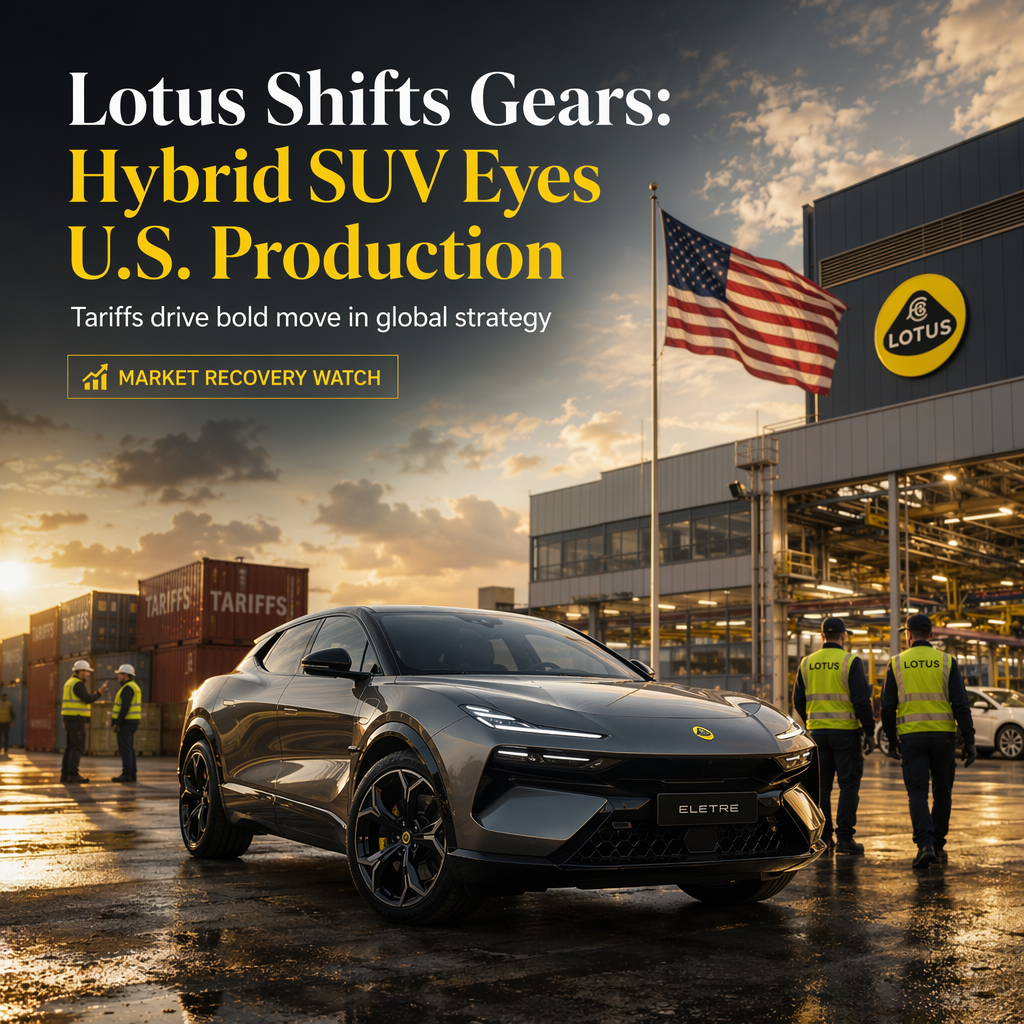
British sportscar maker Lotus, owned by China's Geely, is considering manufacturing its new plug-in hybrid SUV in the United States as a direct response to tariffs that have significantly reduced sales of its Chinese-made electric vehicles in the American market [1]. In 2025, Lotus reported a 46% decline in global deliveries, dropping to 6,520 vehicles, highlighting the severity of the impact from international trade tensions and tariff barriers [1].
The company views the introduction of a locally produced hybrid SUV as a critical strategy to regain market share in the U.S., its largest overseas market, after suffering substantial losses due to the tariffs [1]. By shifting production to the U.S., Lotus aims to circumvent these trade barriers, improve its competitive positioning, and better align with consumer preferences for performance and sustainability [1].
Market analysts cited in the article suggest that local production could significantly enhance Lotus's competitiveness and price positioning, potentially restoring growth in sales volumes [1]. The company's efforts are being closely monitored by investors and industry observers, as its performance in the U.S. market is seen as a key indicator of its broader global recovery prospects [1].
Lotus's strategic pivot mirrors a broader trend among Chinese automakers, who are adapting their global operations in response to evolving regulatory landscapes and market challenges [1].
CONCLUSION
Lotus's consideration of U.S. production for its new hybrid SUV marks a pivotal response to tariff-related sales declines. The company's success in the American market will be crucial for its global recovery, with local production expected to enhance competitiveness and potentially restore sales growth. Investors and industry analysts are watching closely as Lotus navigates these challenges.