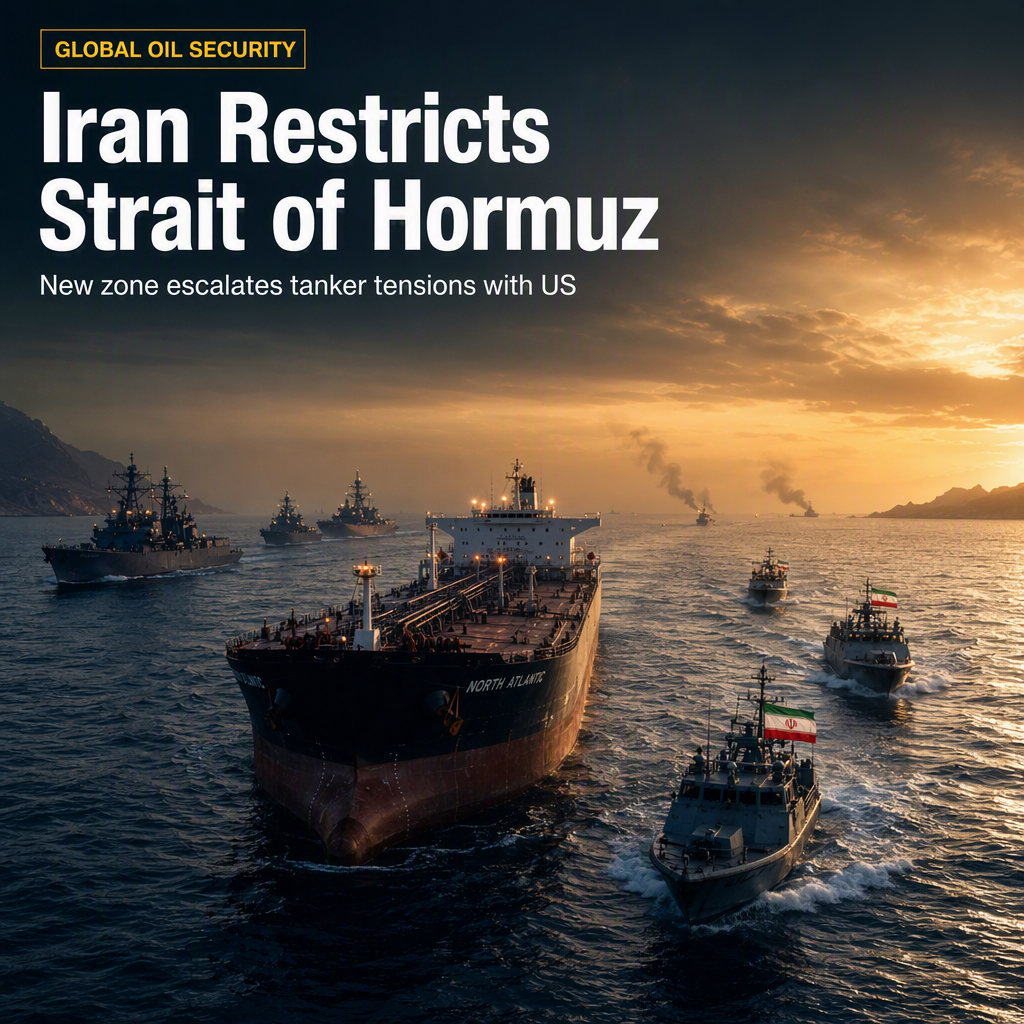
Iran has announced that it targeted three oil tankers using what it described as unauthorized routes through the Strait of Hormuz, as well as several US-linked ships, in retaliation for US attacks on Iranian tankers over the weekend, according to Bloomberg as cited by fxstreet [1]. Mohsen Rezaee, Iran’s top security official, stated that the country will establish a new restricted zone near the critical waterway in the coming days [1]. Rezaee specified that the zone will begin from the US Navy’s blockade line and extend into parts of the Persian Gulf, warning that any ship entering this new zone will be placed on Iran’s sanctions list [1].
Additionally, Rezaee announced that Iran and Oman are set to sign an agreement in the coming days regarding a new corridor through the Strait of Hormuz, with entry and exit points under Iranian control [1]. The Strait of Hormuz is a vital chokepoint for global oil shipments, and any disruption or new restrictions in this area could have significant implications for oil supply and prices [1].
While the article does not provide specific market reactions or price movements, it highlights that political instability, wars, and sanctions—such as those currently unfolding—are key drivers of WTI oil prices [1]. The establishment of a restricted zone and the targeting of tankers in this strategic region are likely to heighten concerns over oil supply security and could impact global oil markets [1].
No forward-looking statements or analyst opinions are provided in the article beyond the official Iranian statements and the planned Iran-Oman agreement [1].
CONCLUSION
Iran’s announcement of a new restricted zone in the Strait of Hormuz and its targeting of tankers in response to US actions mark a significant escalation in regional tensions. Given the strategic importance of the Strait for global oil shipments, these developments are likely to increase market uncertainty and could drive volatility in oil prices.