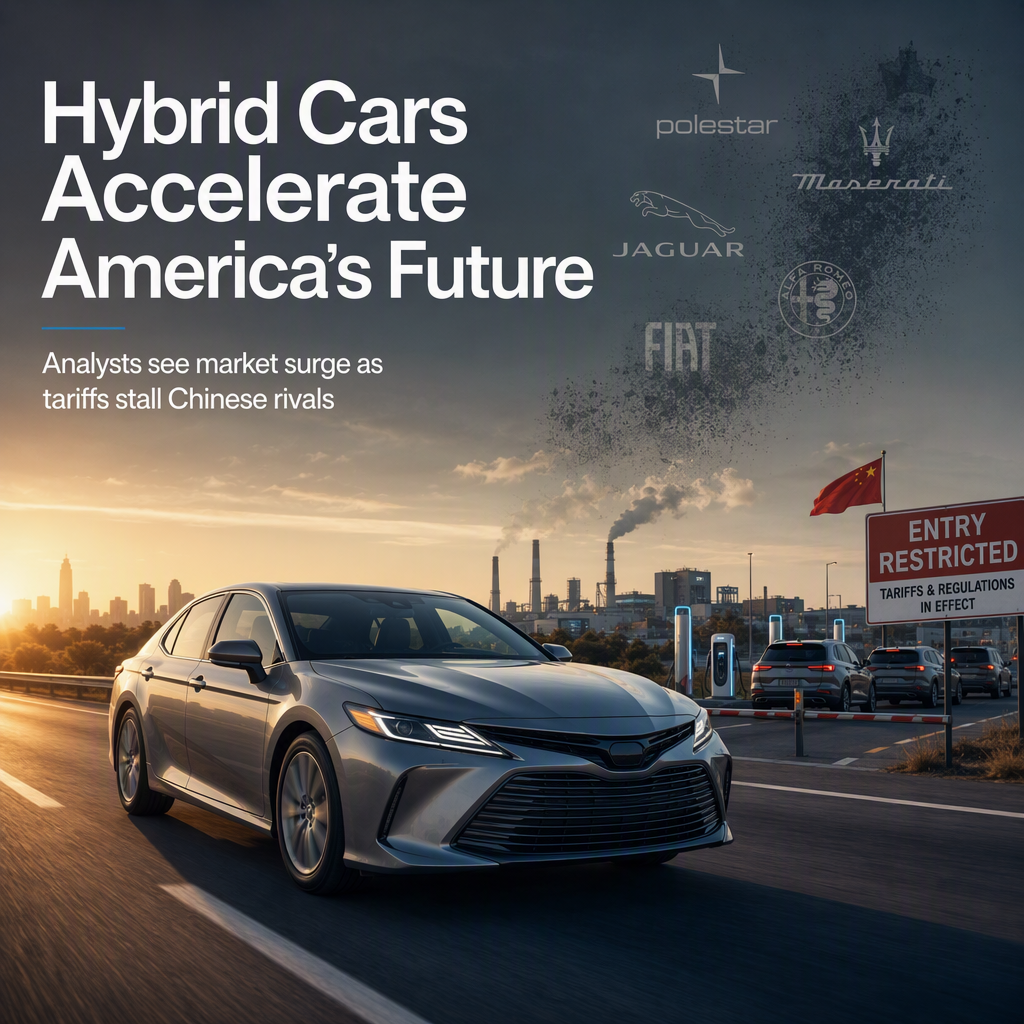
Automotive analyst John Murphy released his latest outlook for the U.S. auto market, forecasting significant changes by 2030. Murphy stated that despite speculation about Chinese automakers entering the U.S. market, there is little appetite among U.S. lawmakers to allow such entry, primarily due to concerns over the impact on domestic automakers and production [1]. Vehicles built in China and imported into the U.S. currently face a 100% tariff, a policy that has kept nearly all Chinese brands out of the country [1]. Additionally, starting next year, the Commerce Department will ban automakers from importing and selling vehicles in the U.S. that contain technology developed or manufactured by Chinese companies [1].
Murphy noted that beginning this fall, a small number of Chinese automakers, including BYD and Geely, are expected to start selling vehicles in Canada, but not in the U.S. [1]. As global competition from Chinese automakers intensifies, Murphy predicts that between five and ten auto brands currently sold in the U.S. could disappear over the next decade. Out of the 38 brands currently in the U.S., Polestar (owned by Geely), Maserati, Alfa Romeo, Jaguar, and Fiat are listed as most at risk of being eliminated from sale in the U.S. [1]. Polestar will no longer be able to sell new vehicles in the U.S. starting in 2027 due to new connected-car rules, while the other brands have not indicated plans to exit the market [1].
Murphy expects demand for gas-electric hybrids to surge, projecting that hybrids will account for 34% of the U.S. auto market by 2030. He emphasized that regular hybrids, which do not require plugging in and offer strong fuel economy, are being well received by mainstream consumers [1]. According to J.D. Power, more than 18% of vehicles sold in the U.S. this year through July were hybrids [1].
Regarding pure electric vehicles (EVs), Murphy sees only slight growth in the segment through 2030. The industry is still adjusting after the Trump administration ended federal tax breaks for EVs, leading to scrapped plans and capital investments in new EV models [1].
CONCLUSION
John Murphy's outlook suggests the U.S. auto market will see a significant shift toward hybrids, with their market share expected to nearly double by 2030. Chinese automakers are unlikely to enter the U.S. market soon due to tariffs and regulatory bans, while several established brands face risk of exit. The EV segment is projected to grow only modestly, reflecting ongoing industry adjustments to policy changes.