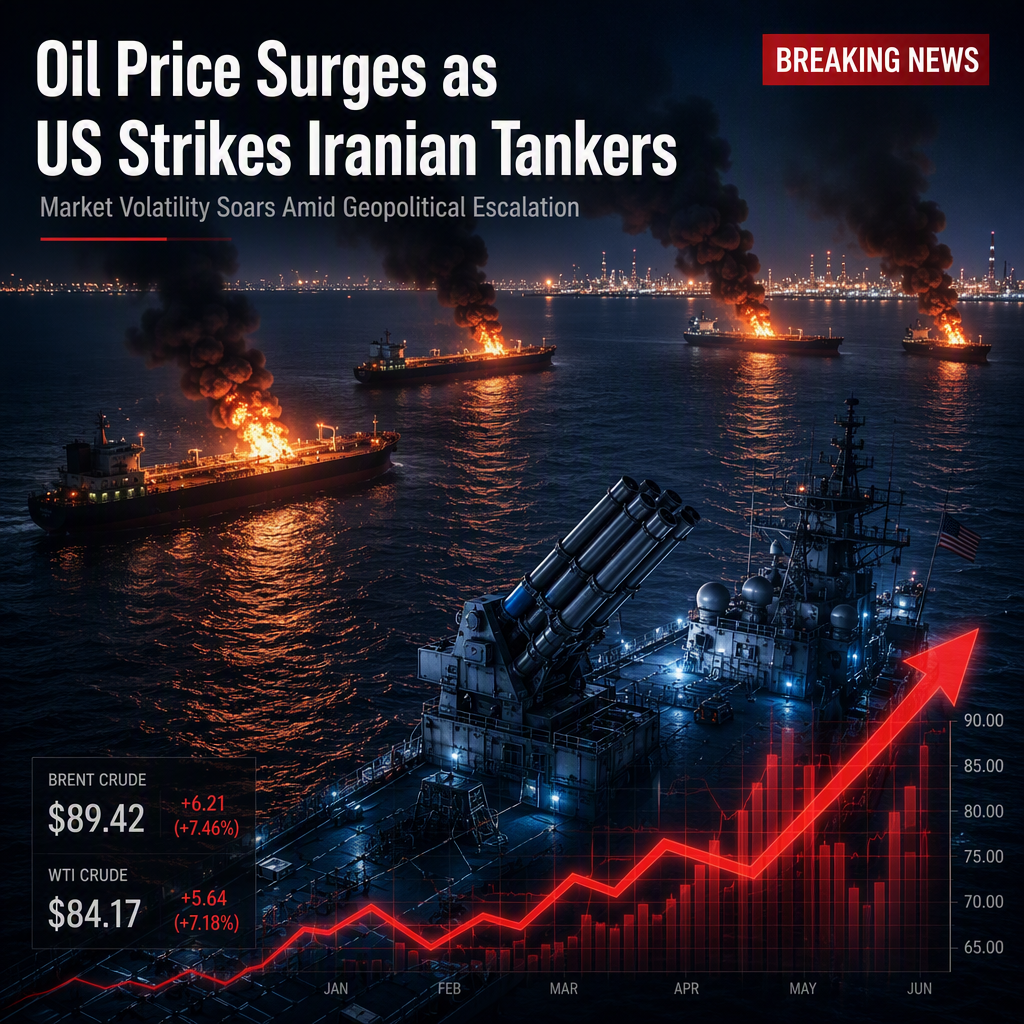
The United States destroyed five Iranian oil tankers in the Gulf of Oman following an attack on an American warship by Iran, escalating tensions between the two countries and causing significant disruption in global energy markets [1]. This military action led to immediate volatility, with Brent crude oil futures jumping over 6% in early trading to nearly $108 per barrel, marking the highest level since early 2023. West Texas Intermediate (WTI) crude also surged, trading above $104 per barrel [1].
The spike in oil prices has had a direct impact on gasoline prices, with some regional markets reporting increases of up to 30 cents per gallon overnight [1]. Energy traders and analysts warn that continued conflict could push oil prices even higher, with resistance levels for Brent crude forecasted at $115 per barrel and WTI at $110. Technical analysts note that the price surge has broken key resistance levels, and unless diplomatic efforts succeed, new highs could be tested in the coming weeks [1].
Market sentiment remains tense, with investors moving towards safe-haven assets and energy stocks rallying on expectations of sustained price increases. Notably, oil-related equities such as ExxonMobil and Chevron saw gains of 4-7% in pre-market trading [1]. President Donald Trump has threatened additional economic measures, including a possible ban on some food and alcohol imports from Canada, adding further uncertainty to commodity markets [1].
Technical indicators such as RSI and MACD are showing strong bullish momentum, suggesting that short-term rallies could continue unless geopolitical risks are reduced. Energy analysts expect continued volatility, recommending hedging exposure and maintaining tight stop-loss orders due to the unpredictable nature of the conflict. The consensus among market participants is that any further escalation will likely result in additional spikes in oil and gas prices, affecting both financial markets and consumers globally [1].
CONCLUSION
The destruction of five Iranian oil tankers by the US has sharply escalated tensions and driven oil prices to their highest levels in years, with significant volatility expected to persist. Market participants are bracing for further price spikes and disruptions, as the situation remains highly unpredictable and sensitive to additional geopolitical developments.