
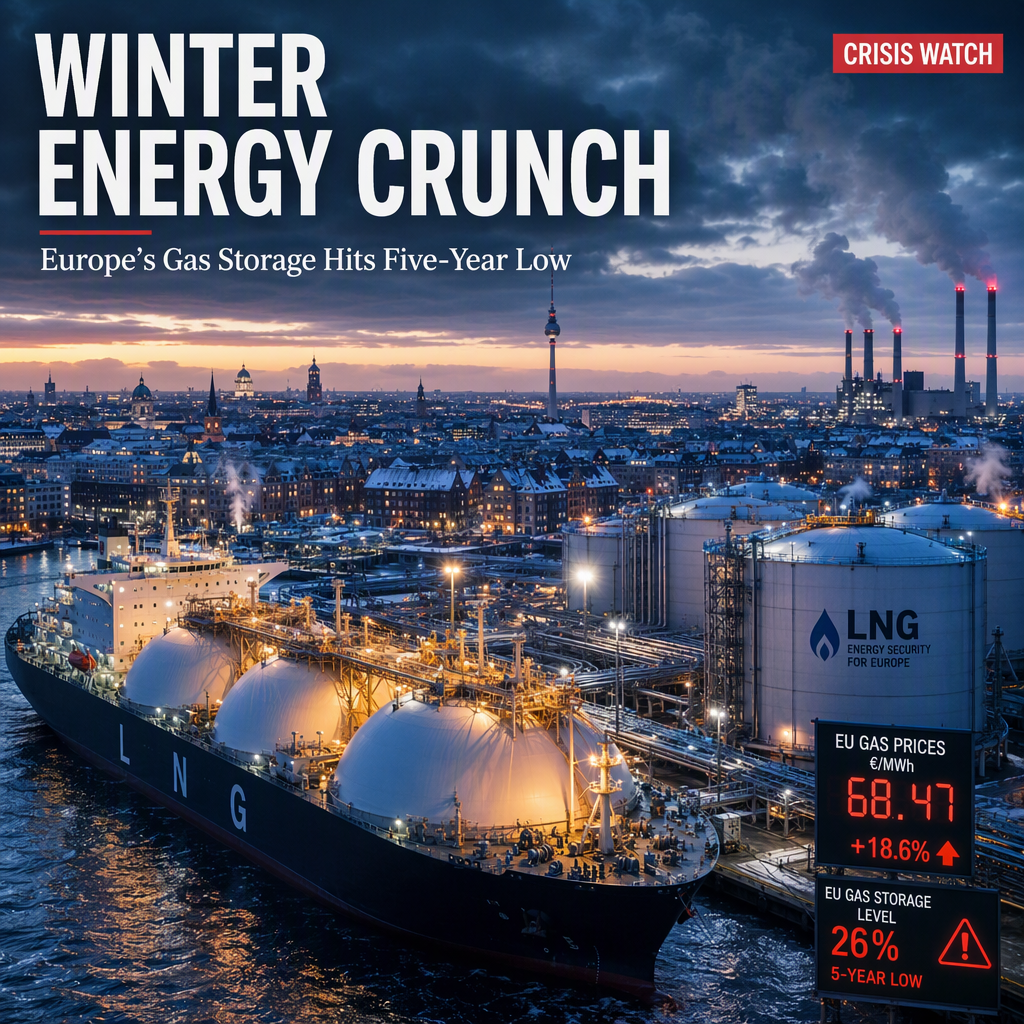
Europe is confronting a potential winter energy crunch as natural gas storage levels have fallen to their lowest point in five years, according to data from the Swiss Federal Office of Energy. This situation is exacerbated by Western Europe experiencing its hottest summer on record, surpassing the previous high set in 2003. The increased demand for cooling during the summer has drawn down natural-gas inventories, leaving countries like Germany and France in particularly precarious positions regarding energy reserves [1].
Despite these challenges, European leaders maintain that the EU's gas supply remains stable. However, this stability is largely attributed to significant imports of American liquefied natural gas (LNG). U.S. LNG exports have become a critical lifeline for Europe, especially after the sabotage of Qatari gas supplies, which has increased the continent's reliance on both U.S. and Russian LNG. The article notes that Europe continues to purchase billions of dollars' worth of natural gas from Russia, now primarily via ships rather than the Nord Stream pipeline [1].
On the oil front, flows through the Strait of Hormuz have increased, with more ships passing safely and oil prices showing signs of moderation. Goldman Sachs reported that Persian Gulf exports have returned to their 2025 average after doubling in September, and the firm expects Brent crude prices to moderate to $85 per barrel by the end of the year. This trend is seen as positive news for both the United States and China, potentially easing some market pressures [1].
The article highlights ongoing concerns about energy poverty in the U.K., rising electricity costs impacting industrial companies, and the broader implications for European economies. While worst-case scenarios of natural-gas shortfalls have been avoided so far due to mild weather, the current low storage levels and high prices suggest that Europe could still face a long and expensive winter unless conditions improve or additional supplies are secured [1].
CONCLUSION
Europe's energy outlook remains uncertain as low natural gas storage and record heat drive up demand and prices. U.S. LNG exports are playing a pivotal role in maintaining supply stability, but the risk of a challenging winter persists. Oil market relief may offer some respite, but the continent's energy security is far from assured.