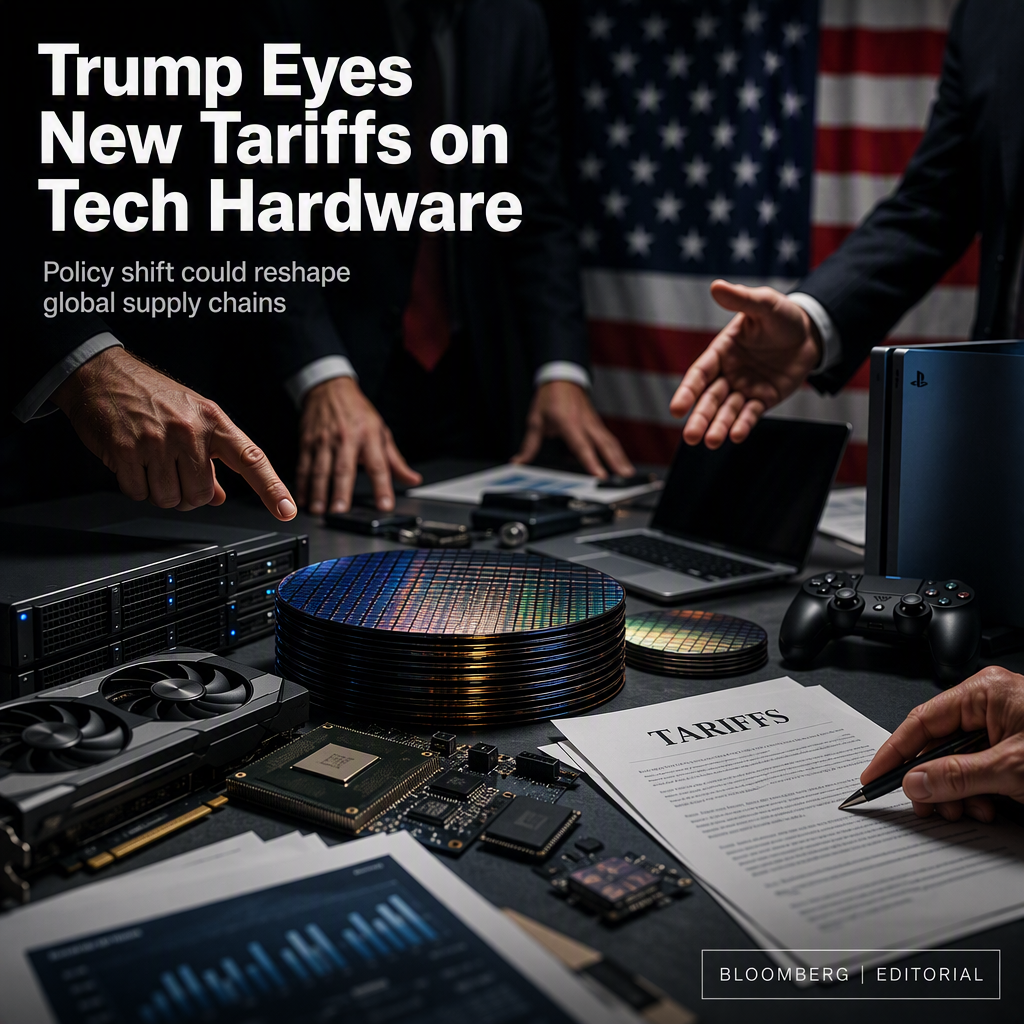
The Trump administration is reportedly considering a new and broader set of tariffs targeting the semiconductor sector, according to a Politico report cited by CNBC. These potential tariffs would extend beyond semiconductors to include servers, laptops, and gaming hardware, as confirmed by eight individuals familiar with the matter. The measures are still in the early planning stages and may undergo significant changes in the coming months, with a staggered roll-out period anticipated if implemented [1].
A White House spokesperson told Politico that 'reshoring semiconductor manufacturing is a top priority for President Trump, whose policies have already secured hundreds of billions of dollars of investments in this key sector.' The White House did not immediately respond to CNBC's request for comment [1].
Existing tariffs on Chinese semiconductors were put in place during President Joe Biden's administration. President Trump previously announced intentions to impose tariffs of 'approximately 100%' on semiconductors and chips, with exemptions for companies manufacturing domestically, but these measures were not enacted at that time. In January, the Trump administration did implement a 25% tariff on certain AI chips [1].
The report also notes that Chinese firms have managed to access Nvidia's chips despite U.S. export restrictions, with industry observers highlighting the role of overseas cloud providers in supporting Chinese AI development. U.S. lawmakers are discussing legislation to address this loophole, though experts caution that significant obstacles remain before any new measures would take effect [1].
CONCLUSION
The Trump administration's consideration of expanded tariffs on semiconductors and related tech hardware signals a potential escalation in U.S. trade policy targeting the tech sector. If enacted, these measures could have significant implications for global supply chains and the ongoing competition with China in AI and semiconductor manufacturing.