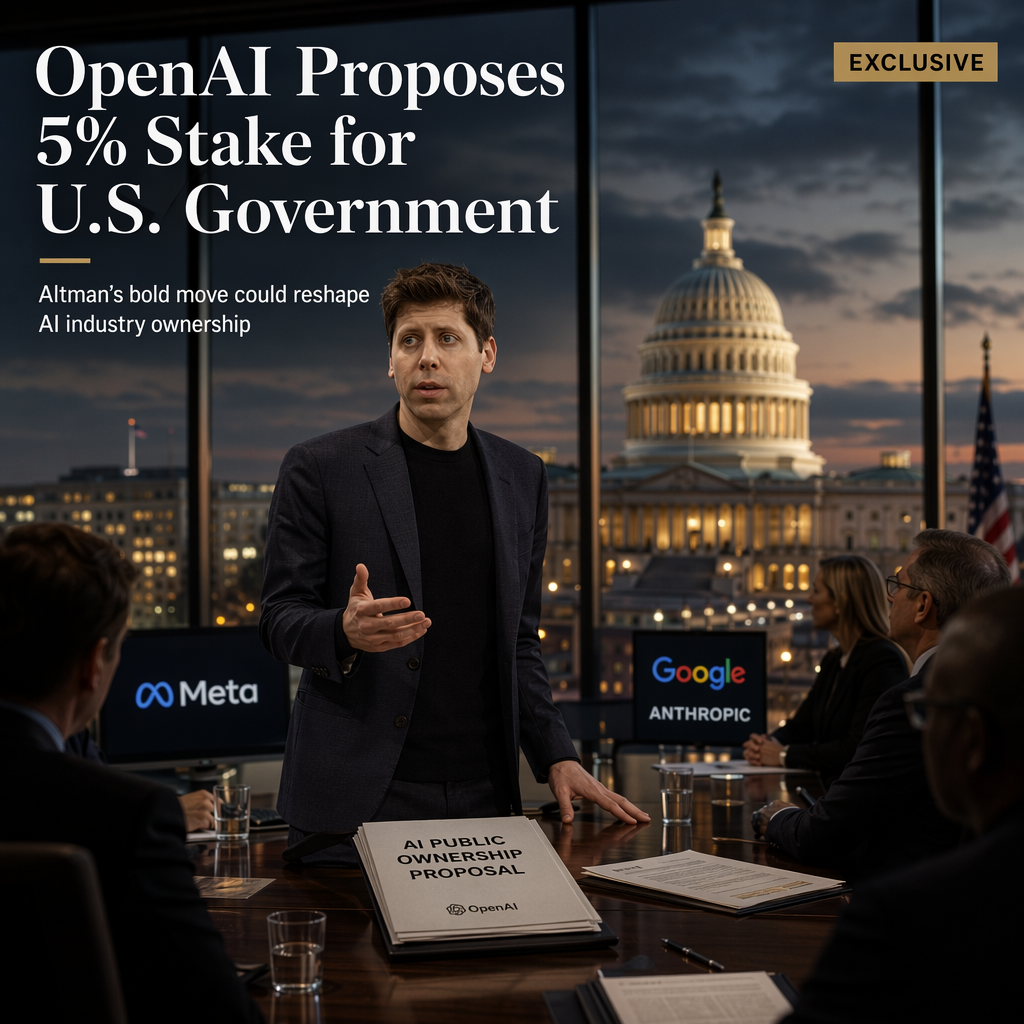
OpenAI founder and CEO Sam Altman is considering offering a 5% stake in his company to the U.S. government, contingent on other major AI competitors such as Meta, Google, and Anthropic agreeing to the same provision, according to a report by the Financial Times cited by Fox News [1]. Altman reportedly discussed this proposal in meetings with President Donald Trump, Commerce Secretary Howard Lutnick, and Treasury Secretary Scott Bessent, as part of a broader plan to make OpenAI public to some degree [1].
Altman also met with Senator Bernie Sanders, who has advocated for broad public ownership of AI companies, suggesting that U.S. taxpayers should own up to half of these firms. Altman is said to believe that partial public ownership is the best way to distribute the benefits of the rapidly expanding AI sector to the American people [1]. However, Altman’s willingness to offer a 5% stake is conditional on competitors like Meta, Google, and Anthropic making similar commitments. Anthropic, the maker of ChatGPT rival Claude, has recently renewed its relationship with the White House and President Trump after previously being excluded from the executive branch, and was recently removed from a Pentagon supply chain risk blacklist [1].
The article notes that Altman’s public proposal may be aimed at avoiding the challenges faced by Anthropic and positioning OpenAI favorably with the Trump administration, potentially adding OpenAI to the U.S. government’s growing portfolio of corporate stakes. The report references previous government investments, including a 10% stake in Intel acquired in August 2025, a 15% equity purchase in MP Minerals, and stakes in U.S. Steel and several quantum companies [1].
Both OpenAI and Anthropic are reportedly considering going public soon, with the Financial Times suggesting that early engagement with government policy could be crucial for the success of leading AI firms during the initial phase of the AI industry boom [1].
CONCLUSION
Sam Altman's proposal to offer a 5% stake in OpenAI to the U.S. government, contingent on similar moves by competitors, signals a strategic effort to align with public interests and government policy. The move could influence the competitive landscape of the AI sector, especially as major players consider public offerings and seek favorable regulatory relationships.