
The S&P 500 closed September with a modest gain of less than 1%, defying its historical trend as the worst-performing month for the index. This positive performance sets the stage for October, which has historically averaged a 0.9% gain, making it one of the stronger months for the market, though not as robust as November or December [1].
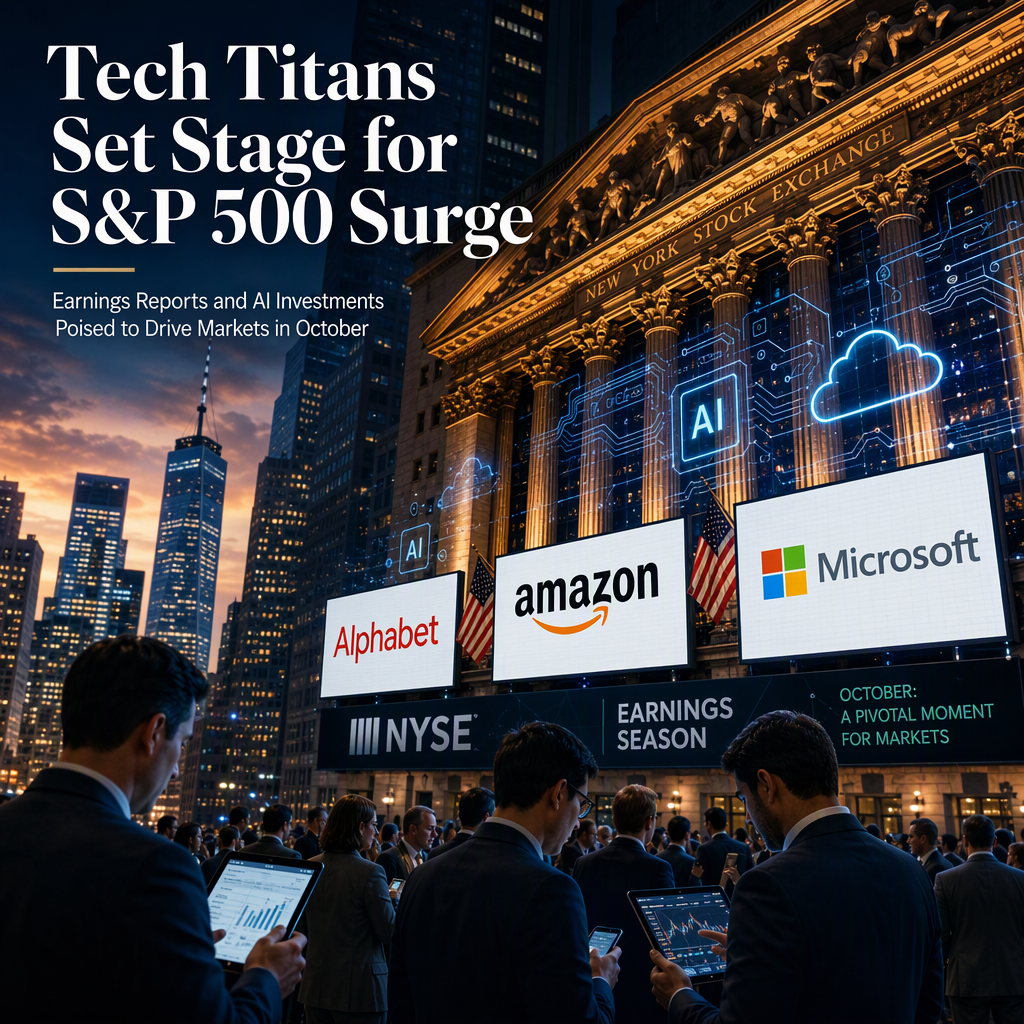
October marks the beginning of the fourth quarter and brings with it a wave of highly anticipated third-quarter earnings reports, particularly from major technology companies such as Alphabet (GOOGL), Amazon (AMZN), and Microsoft (MSFT). These companies, referred to as AI hyperscalers, are expected to provide updates in the second half of the month that could significantly influence market sentiment and direction through the end of 2026 [1].
Currently, Alphabet, Amazon, and Microsoft are investing hundreds of billions of dollars to expand their AI computing capacity in data centers. The growth rates in their cloud computing businesses have so far justified these massive expenditures. For example, Alphabet's Google Cloud reported an 82% year-over-year revenue increase in Q2, with a 36% operating margin [1]. There is speculation that these companies may use their upcoming earnings reports to announce 2027 capital expenditure guidance, which could trigger substantial market movements depending on the scale of their planned investments [1].
Strong performance from these tech giants, which collectively represent more than a third of the S&P 500's value, could lift the broader market. Additionally, positive results and increased spending by these firms would likely benefit chipmakers such as Nvidia, Taiwan Semiconductor Manufacturing, and Broadcom, given their significant roles in the tech supply chain [1].
CONCLUSION
October is shaping up to be a pivotal month for the stock market, with major tech companies set to report earnings and potentially announce significant future investments. The performance and guidance from Alphabet, Amazon, and Microsoft could drive the S&P 500 higher and have broad implications for related sectors. Market participants are closely watching these developments for cues on the direction of Wall Street.