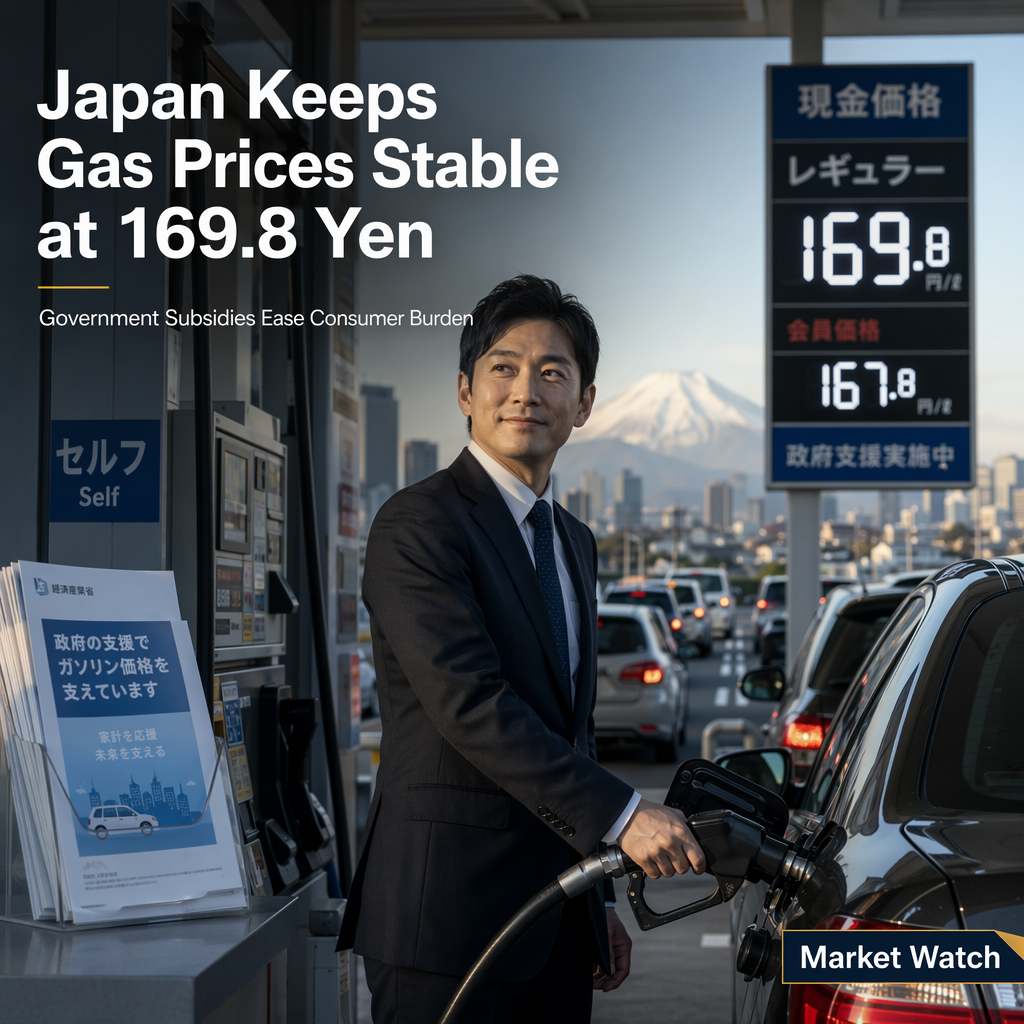
The national average price of gasoline in Japan has reached 169.8 yen, with government subsidies maintaining prices around the 170 yen level according to the latest survey results [1][2]. The government has implemented subsidies to suppress the rise in gasoline prices, aiming to stabilize costs for consumers [1][2]. Market participants have indicated that without these subsidies, gasoline prices would likely have increased further, suggesting the effectiveness of the government's intervention [1][2].
Both sources highlight that the subsidies are directly mitigating the burden on consumers, preventing a sharp increase in gasoline expenses [1][2]. One source notes that as long as the subsidy policy continues, consumers are unlikely to face sudden price hikes [2]. However, both articles caution that future fluctuations in crude oil prices and currency exchange rates could impact gasoline prices, and ongoing vigilance regarding market movements is advised [1][2].
There are no specific forward-looking statements or analyst opinions beyond the general expectation that price stability depends on continued government support and external market factors [1][2].
CONCLUSION
Government subsidies are currently keeping Japan's gasoline prices stable at 169.8 yen, preventing further increases and easing consumer burden. Market observers warn that future changes in crude oil prices and exchange rates could affect this stability, making continued monitoring essential. The overall market sentiment is cautiously positive, contingent on ongoing government intervention.