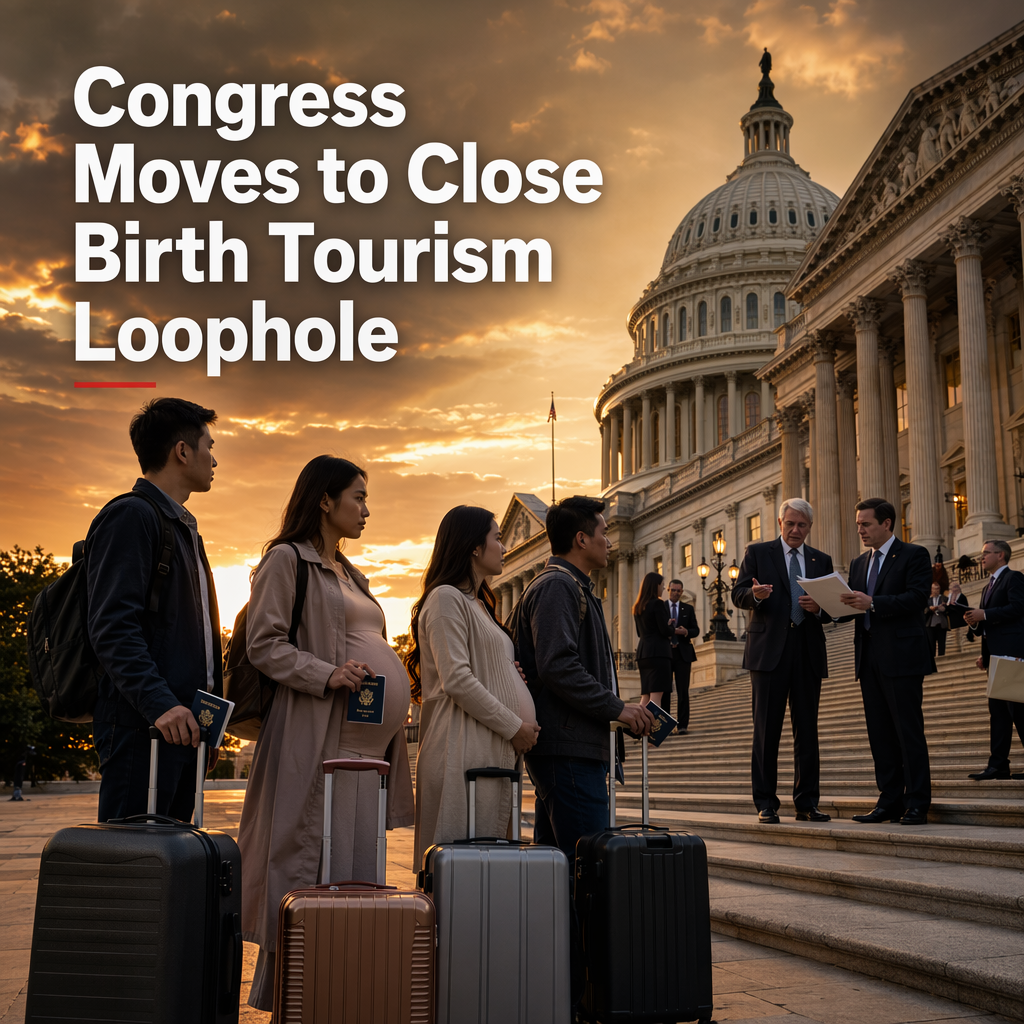
A recent Supreme Court decision blocking the Trump administration's attempt to limit birthright citizenship has ignited a legislative race in Congress to address what lawmakers describe as a multibillion-dollar global birth tourism industry [1]. In response, Sen. Tim Scott, R-S.C., is drafting legislation aimed at preventing children born in the U.S. to women on tourism visas from automatically receiving American citizenship [1]. Scott emphasized that his proposal is designed to garner bipartisan support and reach the president's desk, noting the necessity of Democratic backing in the Senate to effectively address the issue [1].
Scott argued that the current interpretation of the 14th Amendment is illogical, stating, "If you are on vacation in America, you certainly should not have a child while you're here and think in any way, shape or form that kid is going to somehow, some way be an American citizen" [1]. He further asserted that thousands of companies facilitate hundreds of thousands of women coming to the U.S. to give birth, and his legislation seeks to end this practice entirely [1].
President Donald Trump has called for legislative action rather than pursuing a constitutional amendment, which some Senate Republicans have suggested but Scott acknowledged is not feasible in the current political climate [1]. In the House, Rep. Andy Ogles, R-Tenn., introduced the Anchors Away Act, which would allow the government to bar pregnant foreigners from entering the U.S. as another measure to combat birth tourism [1].
While the articles do not provide specific market reactions or analyst opinions, the legislative efforts signal potential changes to immigration policy that could impact industries connected to travel, tourism, and related services [1].
CONCLUSION
Congressional Republicans are moving swiftly to address birth tourism following the Supreme Court's ruling, with multiple legislative proposals targeting the practice. While the outcome remains uncertain, the push reflects heightened political momentum to close what lawmakers describe as a costly loophole.