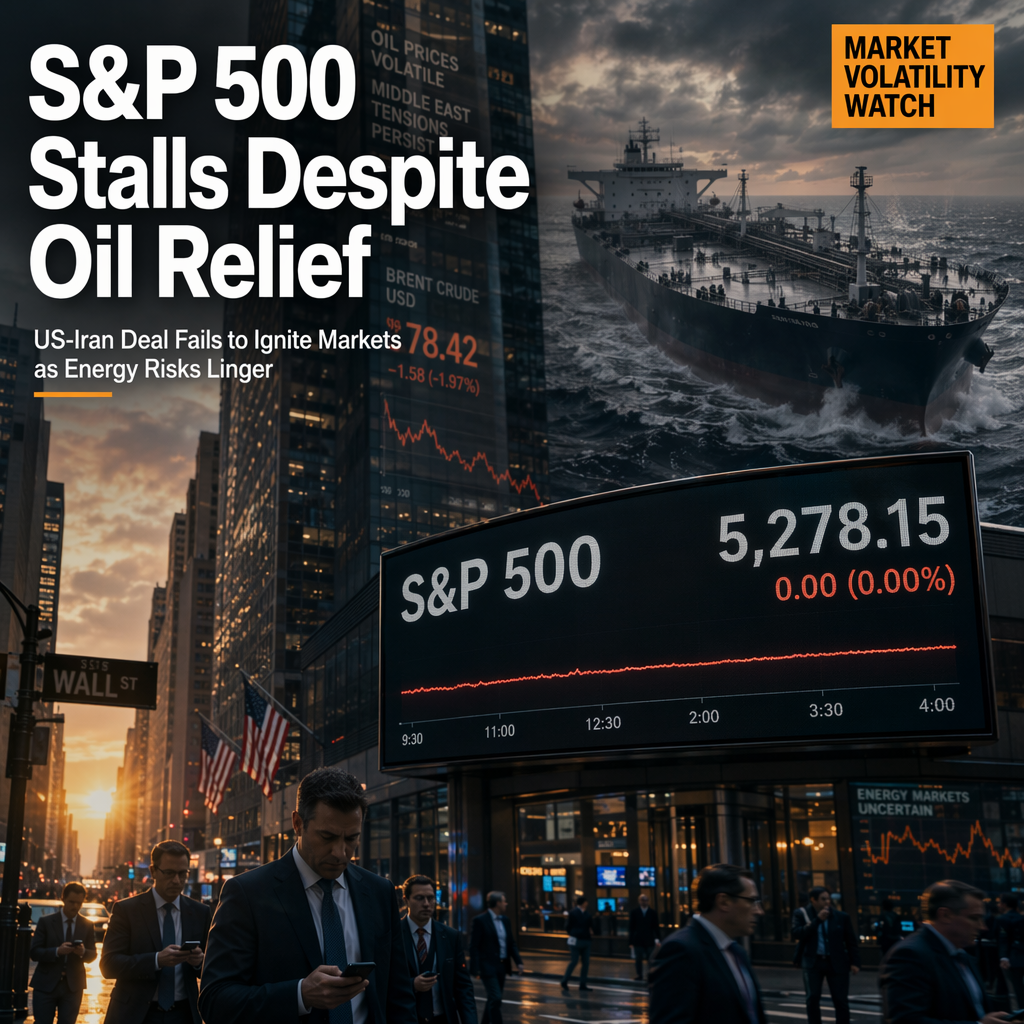
The recent interim deal between the US and Iran was a significant event for global markets, leading to a considerable fall in oil prices and easing stagflation fears, according to Deutsche Bank’s Henry Allen [1]. Despite these developments, the S&P 500 has not seen substantial gains and remains below its early-June record high. Credit spreads have widened, and other measures of financial stress have increased, indicating that risk assets have not benefited much from the macro relief [1]. Allen attributes this muted response to stretched valuations following a historic 16% two-month rally in the S&P 500 over April and May, which pushed the CAPE ratio to its highest level since 2000, around the time of the dotcom bubble burst [1]. Additionally, higher US real yields and a more hawkish Federal Reserve have offset the positive impact of lower oil prices, capping further gains in US equities [1].
Rabobank’s Senior Macro Strategist Teeuwe Mevissen emphasizes that oil and broader energy markets remain central to the global macro backdrop, with ongoing Middle East tensions continuing to drive volatility [2]. Disruptions in the Strait of Hormuz earlier this year triggered sharp spikes in oil prices and accelerated global inventory drawdowns [2]. While US–Iran negotiations have raised hopes for a partial normalization in energy flows, Mevissen cautions that the adjustment process will be gradual, potentially taking months for oil production and shipping to return to pre-conflict levels [2]. The energy shock is feeding inflation across transportation, food, and industrial prices, raising headline inflation and increasing the risk of second-round effects. Elevated oil prices are starting to weigh on demand, with global oil consumption projected to decline in 2026 [2].
Both sources highlight that the underlying economic picture remains resilient, with data consistently surprising on the upside and no wider macro deterioration observed that would trigger larger selloffs [1]. However, Rabobank warns that any sustained easing of supply constraints could alleviate inflation pressures, while renewed disruptions would exacerbate them [2].
Overall, the US-Iran deal has provided limited relief to financial markets, with stretched equity valuations and persistent energy market risks tempering optimism. The S&P 500’s inability to reclaim its record high, alongside widening credit spreads and ongoing inflationary pressures from the energy sector, underscores the cautious sentiment among investors [1][2].
CONCLUSION
The US-Iran interim deal has not sparked a significant rally in US equities, as stretched valuations and a hawkish Fed offset the relief from lower oil prices. Energy market disruptions continue to feed inflation and weigh on demand, with normalization expected to be gradual. Market participants remain cautious, awaiting further clarity on supply constraints and macroeconomic resilience.