
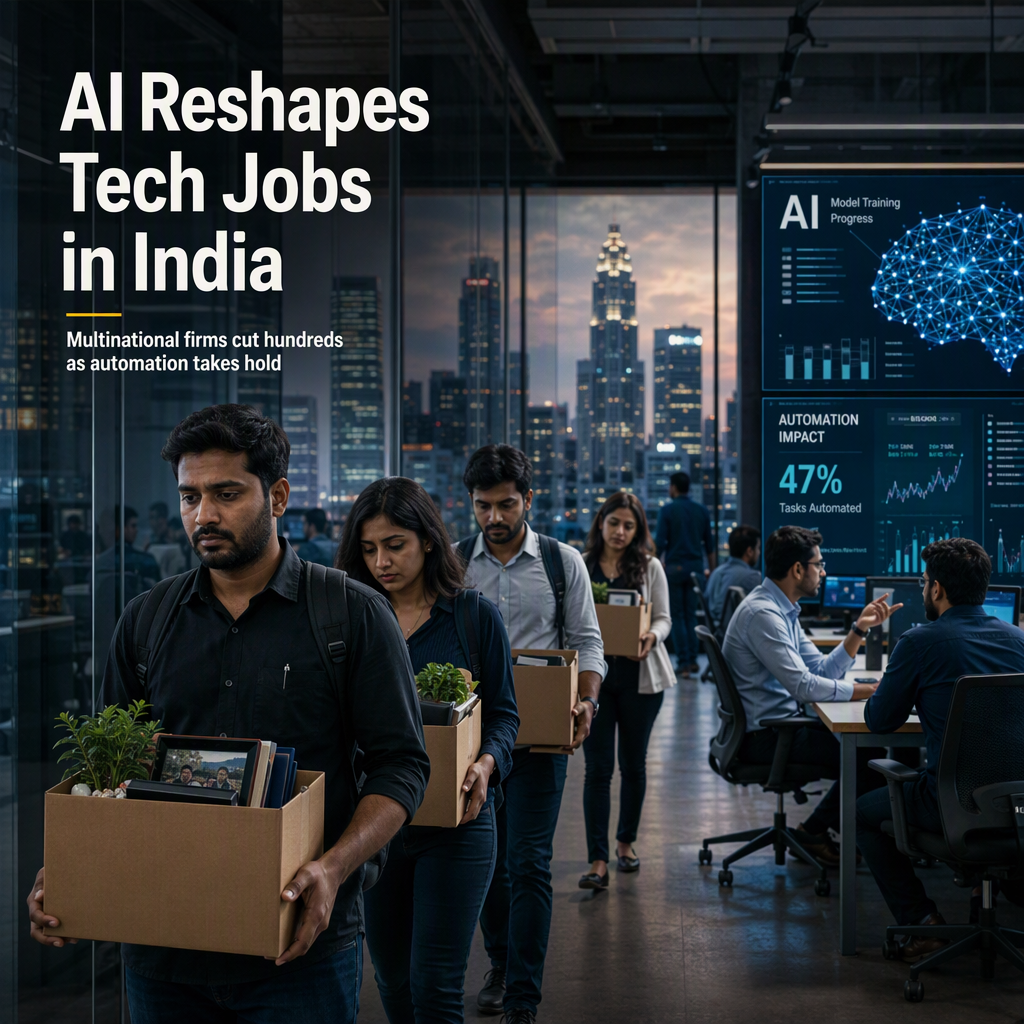
Multinational technology companies including Visa, Technicolour, PayPal, and Fidelity have each eliminated hundreds of positions at their Indian tech offices, known as global capability centers, as artificial intelligence prompts a reassessment of workforce needs [1]. Industry executives report that the adoption of AI is compelling these companies to streamline operations, reduce costs, and improve efficiency, resulting in significant job cuts among key employers in India's technology sector [1].
The trend follows a period when multinational tech firms had been expanding their presence in India, providing relief to a workforce already under pressure from domestic software companies that were reducing hiring due to stagnant revenues [1]. However, the increasing integration of AI is now reshaping the employment landscape, with companies prioritizing investments in automation and digital transformation over maintaining large traditional workforces [1].
Financial analysts cited in the article note that while the job reductions are substantial, they are part of a broader market movement toward AI and machine learning, which is expected to continue influencing workforce dynamics in the sector [1]. Market observers also suggest that although traditional tech jobs are being cut, new opportunities may arise in specialized fields such as data science, machine learning, and cybersecurity [1].
The article emphasizes the need for close monitoring of future hiring trends and evolving skill requirements for technology professionals in India, as the shift toward AI-driven operations continues to unfold [1].
CONCLUSION
The adoption of artificial intelligence is driving significant job cuts at multinational tech firms in India, reflecting a broader market shift toward automation and digital transformation. While immediate impacts are negative for traditional tech roles, there may be future opportunities in emerging technology fields as companies continue to invest in AI capabilities.