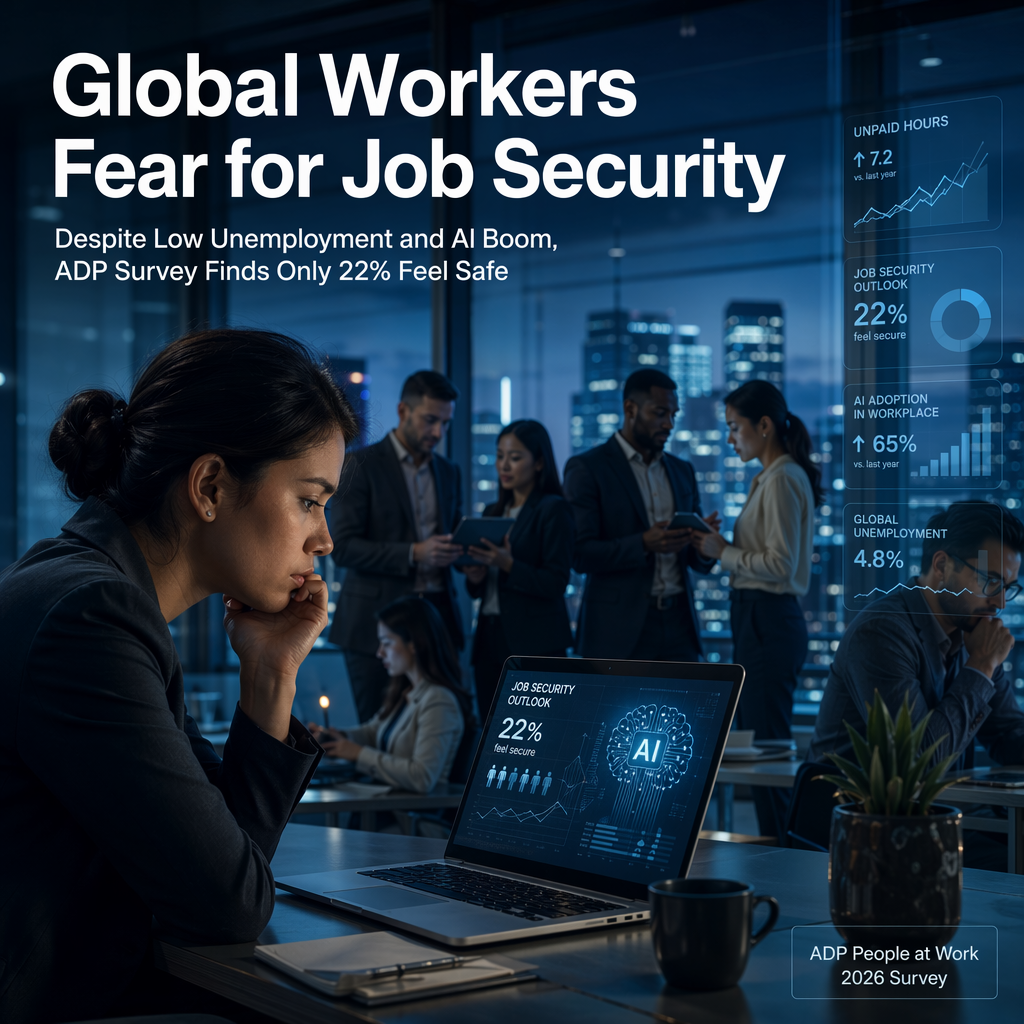
According to the People at Work 2026 report by ADP, which surveyed more than 39,000 adult workers across 36 markets in 2025, only 22% of workers globally strongly agreed that their job was safe from being eliminated, despite historically low global unemployment rates [1]. No market surveyed had a majority of workers feeling confident in their job security; Nigeria had the highest share at 38%, while Japan had the lowest at 5%. In the U.S., 28% of workers felt safe, and in the U.K., only 25% shared this sentiment [1].
The survey also highlighted that unpaid work is widespread, with 62% of workers worldwide reporting up to five unpaid hours each week. Additionally, 26% reported working six to 15 unpaid hours, and 12% said they worked 16 or more unpaid hours per week. This trend was especially pronounced among managers and senior leaders, with half of upper managers and C-suite executives putting in at least six unpaid hours weekly, and 20% working 16 or more unpaid hours [1]. ADP cautioned that while those working the most unpaid hours were highly engaged and found meaning in their jobs, they also reported feeling less productive, were less likely to be thriving, and were more likely to be seeking other employment [1].
Regarding technology in the workplace, the report found that daily users of AI tools were four times more likely than nonusers to say they were less productive than they could be. However, frequent AI users also reported higher engagement, less stress, and more positive perceptions of their teams. Specifically, 30% of daily AI users were fully engaged at work, compared to only 14% among those who never used AI [1]. ADP noted that increased AI use correlated with a greater likelihood of feeling part of the best team [1].
Overall, the findings suggest that despite technological advancements and low unemployment, job insecurity and unpaid work remain significant issues for workers globally, with implications for productivity, engagement, and workforce stability [1].
CONCLUSION
The ADP survey underscores a disconnect between low unemployment rates and workers' perceptions of job security, with only a minority feeling their positions are safe. Widespread unpaid work and mixed impacts from AI adoption highlight ongoing challenges for employee engagement and productivity. These trends may influence workforce stability and employer strategies moving forward.