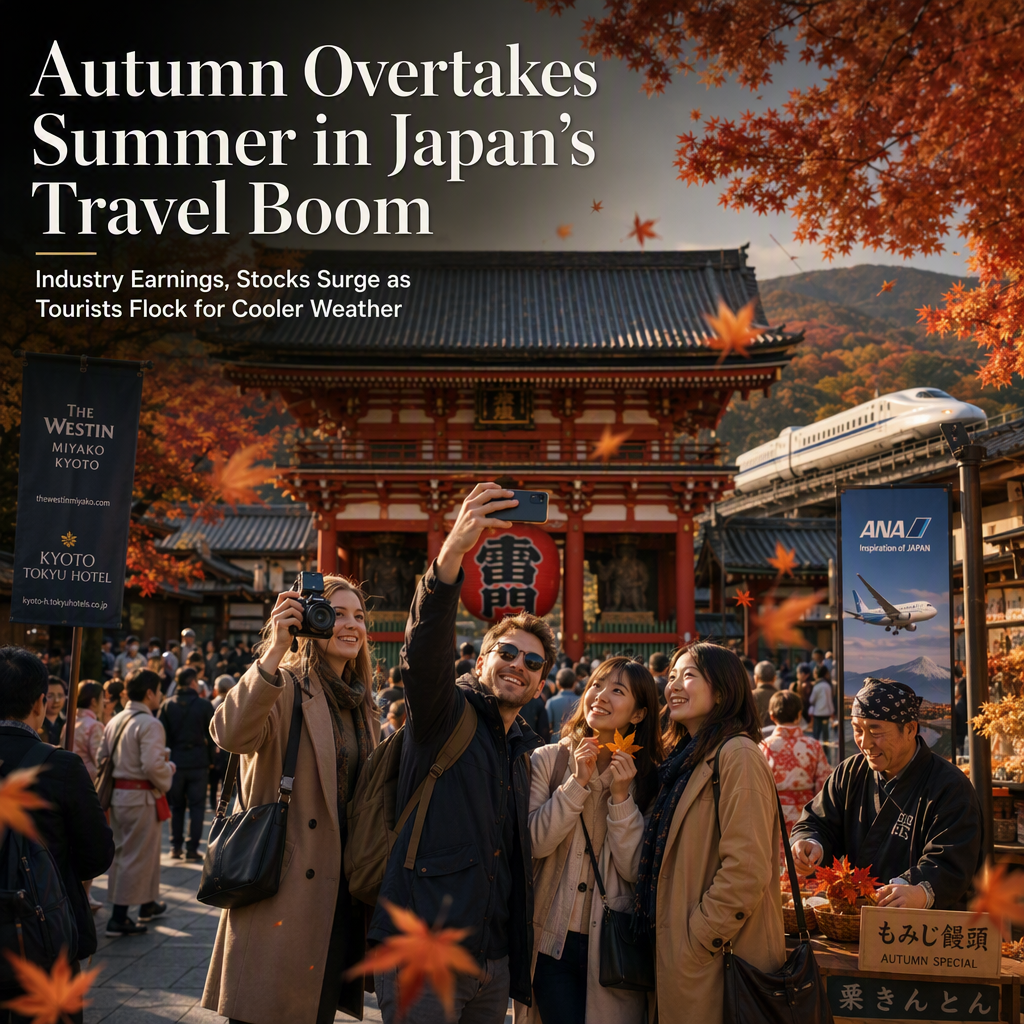
Japan's travel industry is experiencing a significant shift in its peak earnings season, moving from the traditional summer months to the cooler autumn period of September, October, and November. This change is attributed to extreme summer heat and a surge in foreign tourists, who are increasingly avoiding the sweltering temperatures of July and August in favor of autumn travel [1]. Airlines such as All Nippon Airways and Japan Airlines are responding by adjusting their capacity planning and promotional campaigns to target fall travelers, while railway companies and hotel operators are revising their seasonal revenue projections to anticipate extended demand into the autumn [1].
Industry executives report a clear shift in booking patterns, with September and October now rivaling the former summer peak. The trend is driven by record-breaking summer temperatures and a global surge in inbound tourism, particularly from Asia and the West, which has introduced new travel preferences [1]. Financially, this delayed seasonal peak is expected to stabilize quarterly earnings for listed travel and leisure companies, reducing the risk of sharp off-season declines. Analysts at major brokerages are updating their models to reflect stronger fall performance, and some have raised full-year guidance for firms most exposed to inbound travel [1].
Sector-wide, revenue per available room (RevPAR) for hotels in key tourist destinations is projected to increase by 8-12% year-on-year during the September-November period [1]. The Nikkei Travel Index, which tracks the performance of major Japanese travel-related stocks, has shown resilience through the summer, with several components hitting new highs as investors factor in robust autumn demand. Technical analysts note that support levels for leading stocks in the sector have shifted higher, reflecting positive market sentiment about the fall travel boom [1].
Market participants are closely monitoring whether this trend will become a permanent fixture of Japan's tourism cycle or if it will revert should weather patterns and traveler preferences shift. For now, the fall season is delivering strong earnings momentum, and the industry is preparing for what could be its most lucrative autumn yet [1].
CONCLUSION
Japan's travel industry is seeing its most profitable period shift to autumn, driven by extreme summer heat and a surge in foreign tourists. This trend is boosting earnings forecasts and stock performance for travel-related companies, with hotel revenues projected to rise 8-12% year-on-year in the fall. The market is optimistic about continued strong demand, though the permanence of this seasonal shift remains under observation.