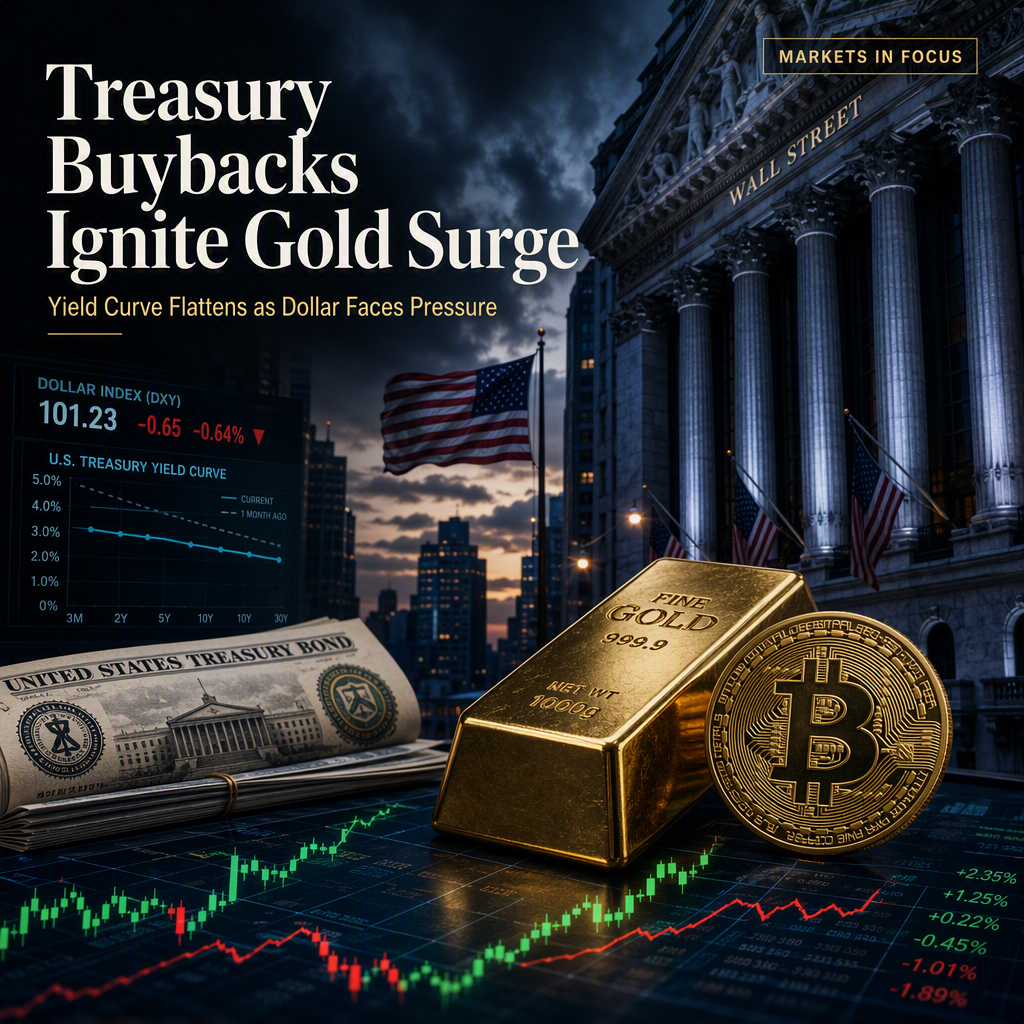
The US Treasury's decision to expand buybacks in the 10-30 year maturities has triggered notable market reactions across asset classes. According to BNY Mellon's Geoff Yu, gold surged past $4,500/oz. as investors reassessed the implications of Treasury buybacks on inflation and fiscal policy, with Bitcoin also briefly touching $70,000. Yu notes that while the intervention has calmed bond markets, it may shift investor focus toward alternative stores of value like gold and Bitcoin, reflecting structural fiscal doubts and potential conflict with Federal Reserve objectives. He cautions that official-sector intervention may prove counterproductive over time, as fiscal restraint remains elusive globally, leaving inflation with a near-permanent fiscal markup [1].
ING’s Padhraic Garvey highlights that the Treasury's doubling of buybacks in longer maturities has contained upward pressure on long-end yields, with 10-30 year yields initially dropping 5-10 basis points. The buyback program, originally launched in May 2024 to bolster liquidity, is seen as impactful, with the possibility of further expansion if needed. Garvey expects continued upward pressure on long-end yields, projecting the 10-year yield could move into the 4.75% to 5% range, but notes that any move above 5% would likely be actively resisted by the Treasury Department [2].
Brown Brothers Harriman (BBH) observes that US long-term Treasury yields have retraced most of their initial decline following the buyback announcement, while the US Dollar has extended its decline. BBH explains that the buyback is a debt-management swap, shifting the composition of US debt toward newer, more liquid securities, with the additional buyback size likely financed through greater bill issuance. This is expected to flatten the yield curve, though the impact is limited given the small size of the operations relative to the $31.4 trillion Treasury market. BBH warns that the timing of the buyback announcement, coming after the 30-year yield reached its highest level since 2007, risks creating the perception that the Treasury is managing yields rather than liquidity, potentially undermining US fiscal credibility and weighing on the Dollar [3].
Across all sources, the Treasury's actions are seen as impactful but not fully reversing upward yield pressures. The interventions have calmed bond markets and provided relief, but concerns persist about their long-term effectiveness and implications for inflation, fiscal credibility, and alternative asset demand. Analyst opinions suggest continued vigilance, with the possibility of further buyback expansions and active resistance to yields rising above key thresholds.
CONCLUSION
The US Treasury's expanded buyback program has temporarily calmed bond markets, flattened the yield curve, and fueled demand for alternative assets like gold and Bitcoin. However, analysts highlight ongoing risks to fiscal credibility, persistent upward pressure on long-end yields, and negative sentiment for the US Dollar. Market participants remain cautious, anticipating further interventions and continued volatility in response to fiscal and monetary policy developments.