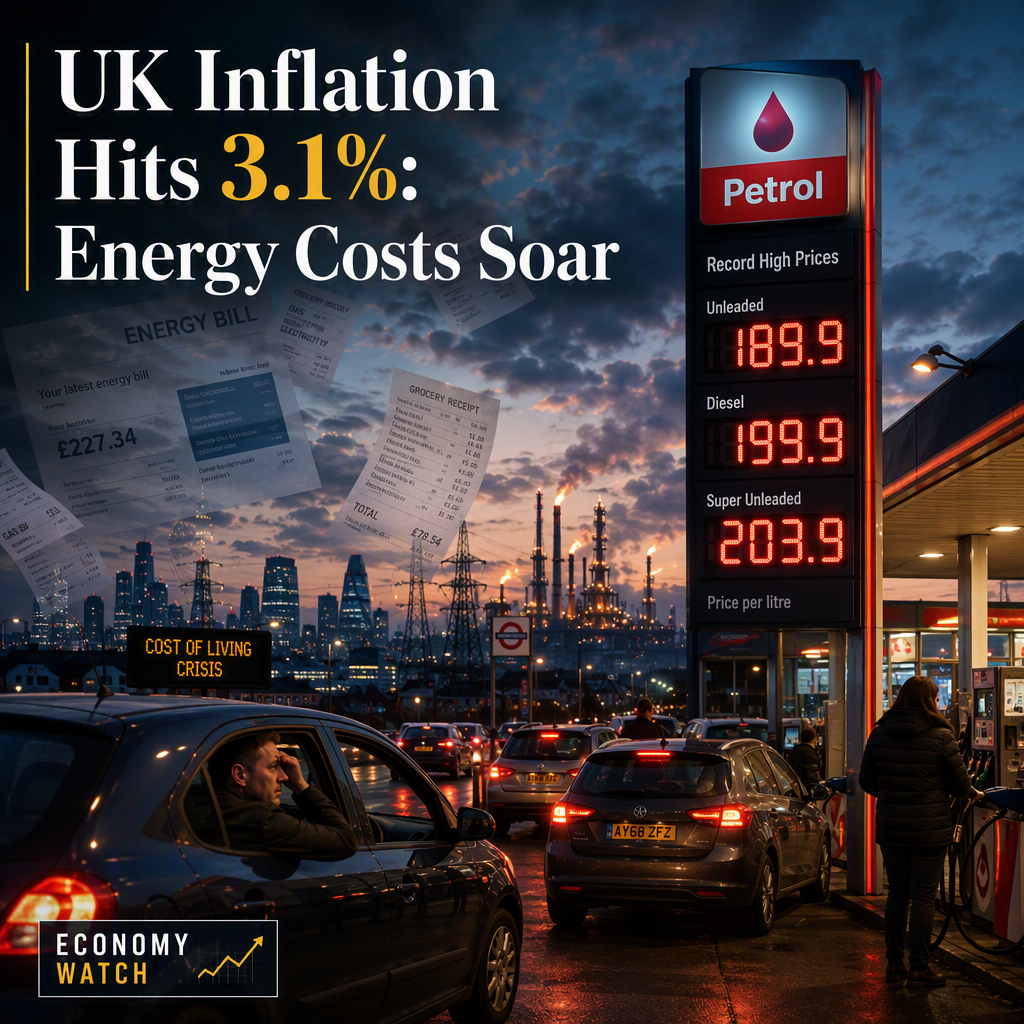
The United Kingdom's annual inflation rate climbed to 3.1% in August, marking the first time since March that inflation has exceeded the 3% threshold, according to the Office for National Statistics (ONS) [1]. This increase was primarily driven by a sharp rise in motor fuel costs, with gasoline and diesel prices surging 23% year-on-year [1]. The ONS reported that the average price of gasoline rose by 9.1 pence ($0.12) per liter between July and August, reaching its highest level since November 2022, while diesel prices increased by 14.2 pence per liter in August [1].
The inflation rate had already risen to 2.9% in July, following a significant upward revision of the government-regulated energy price cap [1]. In August, the cost of electricity, gas, and other household fuels jumped 6% year-on-year, further exacerbating the inflationary pressures [1]. Crude oil prices remaining above $100 a barrel have contributed to the ongoing rise in energy costs [1]. The RAC, a British motoring body, noted that petrol and diesel prices have reached new highs not seen in four years, a situation intensified since the onset of the Iran war [1].
The U.K., as a net importer of energy, remains particularly vulnerable to external energy shocks, and the current inflationary environment is compounded by the lingering effects of the post-pandemic cost-of-living crisis and the surge in energy prices following Russia's full-scale invasion of Ukraine in 2022 [1].
Economists had anticipated the 3.1% inflation print, but the persistent rise in energy and fuel costs continues to pose significant challenges for households and policymakers alike [1].
CONCLUSION
UK inflation accelerated to 3.1% in August, driven by soaring energy and fuel prices. With energy costs at multi-year highs and ongoing external shocks, the inflation outlook remains challenging, signaling continued pressure on consumers and the broader economy.