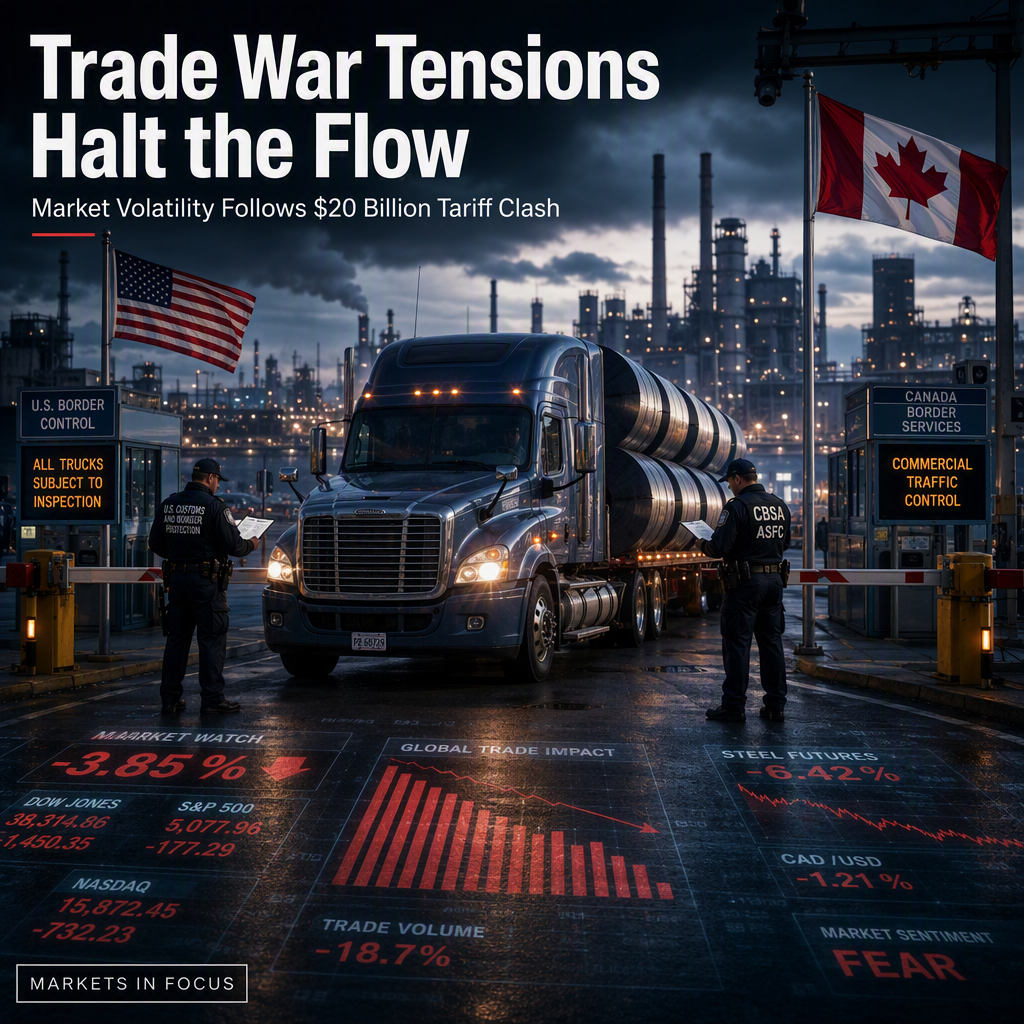
A new trade war has erupted between the United States and Canada, with the U.S. imposing 50% tariffs on approximately $20 billion worth of Canadian imports, making Canada the second-biggest trading partner affected after Mexico [1]. In response, Canada announced $20 billion in retaliatory tariffs, set to take effect on September 8, targeting more than 700 U.S. goods with tariffs ranging from 15% to 50%. These countermeasures are designed to mirror the scale of the U.S. tariffs, impacting products such as wine, cement, hockey sticks, dairy, seafood, appliances, wood and paper products, and clothes [1].
The immediate market reaction saw metals and materials stocks surge early in the week, with companies like Nucor, Steel Dynamics, Cleveland-Cliffs, and Century Aluminum experiencing notable gains after the breakdown of U.S.-Canada trade talks. The VanEck Steel ETF (SLX) rose 1.6% on Monday, while the State Street Materials Select Sector SPDR (XLB) reached an intraday all-time high, surpassing its previous record from February [1]. However, the rally was short-lived: XLB ended the five-day trading week in negative territory, and SLX was nearly flat. Despite this, both ETFs have outperformed the S&P 500 year-to-date, with SLX up over 28% and XLB up over 18% as of August 28, 2026, according to Morningstar data [1].
The complexity of cross-border supply chains, particularly in sectors like automotive manufacturing where parts repeatedly cross the U.S.-Canada border, has contributed to market uncertainty. Economists, companies, and investors are now focused on forecasting the volatility these dueling tariff regimes may introduce to corporate balance sheets and stock prices [1]. Atsi Sheth, chief credit officer at Moody's Ratings, emphasized the prevailing uncertainty, stating, "Expect much more of this uncertainty for some time to come" [1].
Overall, while some market segments saw short-term gains, the broader outlook remains clouded by the unpredictable impact of escalating tariffs and the intricate nature of North American supply chains.
CONCLUSION
The U.S.-Canada trade war has triggered significant market volatility, with initial gains in metals stocks quickly reversing as uncertainty over supply chains and future trade relations dominates investor sentiment. With both countries imposing $20 billion in tariffs and no immediate resolution in sight, market participants should brace for continued uncertainty and potential disruptions across multiple sectors.