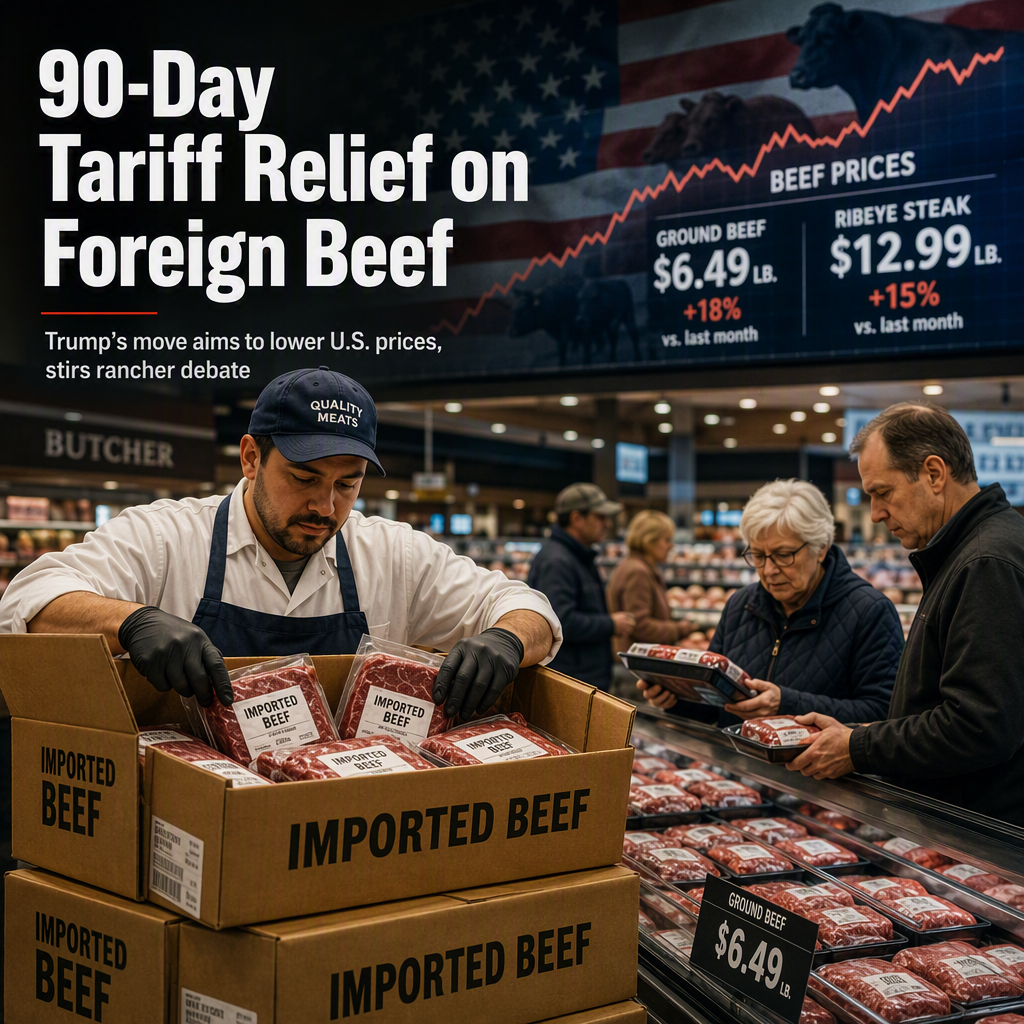
President Donald Trump has enacted a 90-day tariff relief measure, increasing the amount of foreign beef allowed into the United States at a lower tariff rate by 300,000 metric tons in an effort to address elevated ground beef prices for American consumers [1]. This temporary increase applies specifically to lean beef trimmings under the U.S. beef tariff-rate quota and will be released in three tranches of 100,000 metric tons each, beginning September 1, 2024 [1]. The first tranche will be available from September 1 through September 30, the second from October 1 through October 30, and the final tranche from October 31 until the quota is filled or November 30, whichever comes first [1].
The administration's action comes as the U.S. cattle herd has reached its lowest level in 75 years, with domestic beef production forecasted by the Department of Agriculture to decline by about 4% this year compared with 2025 [1]. The White House attributes these supply pressures to factors such as restrictions on live cattle imports from Mexico (to prevent the spread of New World screwworm), as well as drought and wildfire conditions in cattle-producing regions [1]. Despite these challenges, USDA data cited by the administration indicates the cattle herd began showing early signs of growth in July 2024 [1].
The administration expects domestic beef consumption to increase through the remainder of 2026, which could further strain supplies [1]. The move follows a previous action in February that raised the 2026 quota for lean beef trimmings from Argentina by 80,000 metric tons; the new 300,000 metric ton increase applies to 'other countries or areas' and does not affect the Argentina allocation [1].
The policy has faced criticism from Republican lawmakers in cattle-producing states, who argue that increased foreign beef imports could harm domestic ranchers attempting to rebuild the U.S. herd [1]. In response, the administration maintains that domestic supplies are currently insufficient to meet demand at reasonable prices [1]. Additionally, the expanded quota is tied to pricing: if beef imported under the new quota is not sold at prices at least 25% below the market price for lean beef trimmings, the agriculture secretary and U.S. trade representative must notify President Trump, who could then eliminate the remaining increase [1].
CONCLUSION
President Trump's 90-day tariff relief on foreign beef aims to address high ground beef prices amid historically low U.S. cattle herds and declining domestic production. While the measure is intended to benefit consumers, it has sparked concerns among domestic ranchers about increased competition. The administration has linked the expanded quota to price reductions, signaling a focus on consumer affordability while monitoring market impacts.