
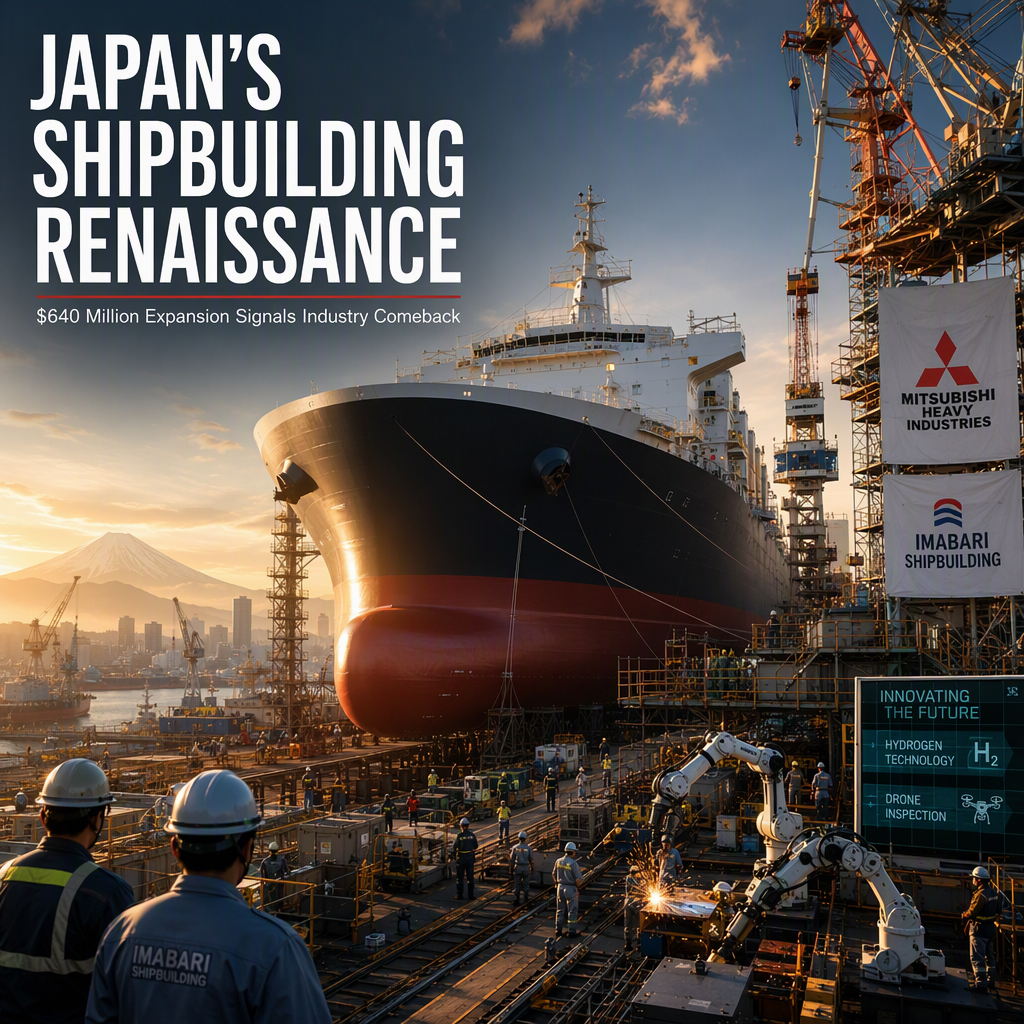
Japan's shipbuilding industry is experiencing a significant resurgence, driven by a government fund aimed at revitalizing the sector and attracting private investment. The fund has already catalyzed major projects, including Mitsubishi Heavy Industries' recently announced $640 million commercial shipyard expansion. In addition, the government has provided $1.4 billion in subsidies to Imabari and other shipbuilders, further bolstering industry growth and confidence in the sector's future prospects [1].
This wave of investment comes as Japanese shipbuilders reverse previous downsizing trends in response to booming demand. Hakodate Dock's shipyard, for example, currently faces a more-than-three-year order backlog, highlighting the rapid rebound in the sector. Japan is also planning to construct its first large shipbuilding dock since 2017, a move that aligns with the country's goal of doubling shipbuilding capacity by 2035 to meet rising global demand and increased competition from South Korea and China [1].
The revival has prompted a focus on advanced technologies, with Japanese shipbuilders developing large-ship hydrogen engines capable of reducing CO2 emissions by 95% and producing drone boats for both domestic and international markets, including the US. Despite the positive momentum and optimistic market sentiment, industry executives and analysts caution that significant challenges remain. These include supply chain constraints, labor shortages, and the need for ongoing technological innovation to maintain competitiveness in the evolving global market [1].
Stakeholders emphasize that sustained government support and strategic private investment are crucial to ensuring the long-term success and capacity expansion of Japan's shipbuilding industry [1].
CONCLUSION
Japan's shipbuilding sector is undergoing a robust revival, fueled by substantial government funding and private investment. While market sentiment is optimistic and capacity expansion is underway, the industry must address persistent challenges to secure its long-term global competitiveness.