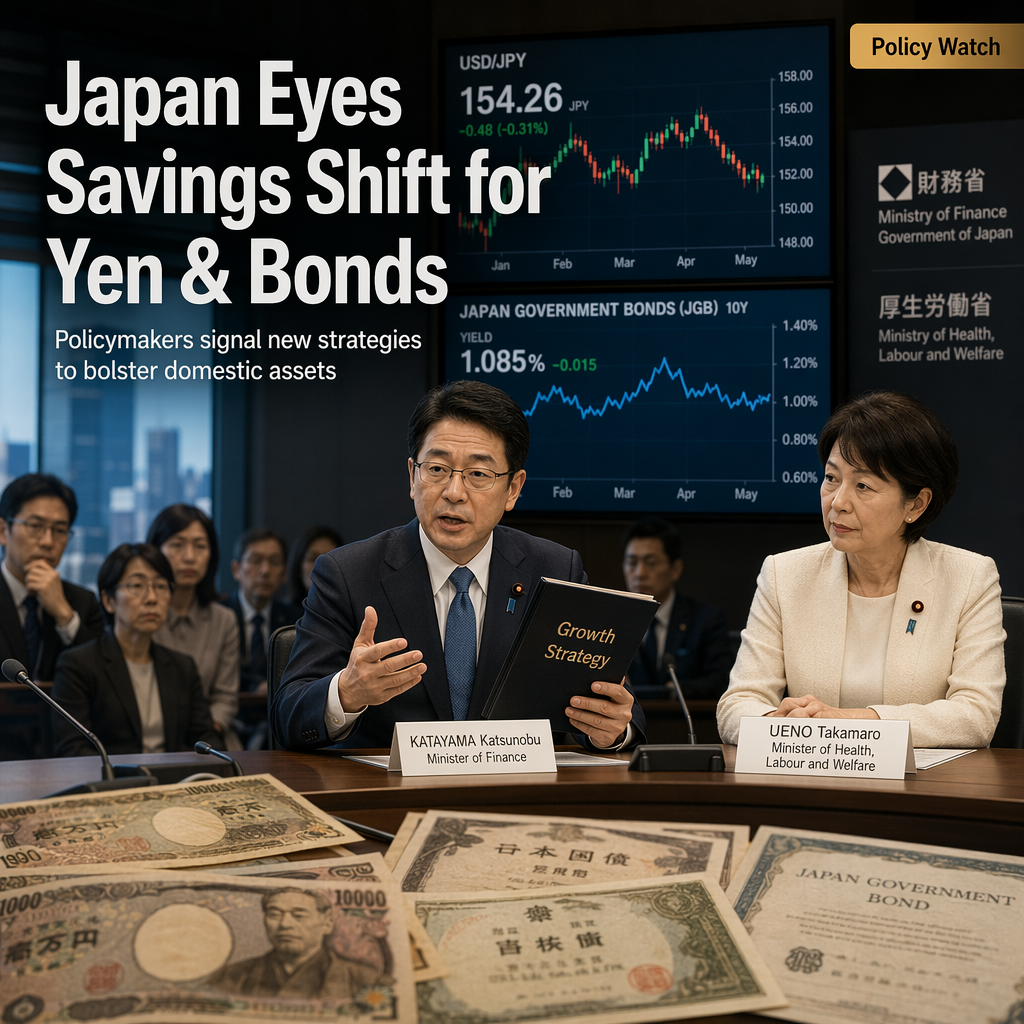
Japanese government bond (JGB) yields have declined despite a backdrop of rising global yields, according to MUFG’s Lee Hardman. This trend is attributed to increased verbal intervention from Japanese policymakers, who are signaling potential policy changes aimed at encouraging domestic investors to allocate more of their savings to domestic assets, including JGBs and the Japanese Yen (JPY) [1].
Finance Minister Katayama reiterated the government's growth strategy, stating that 'if we successfully advance our growth strategy, yen-denominated assets will become more attractive.' She also mentioned receiving petitions regarding these matters and expressed that 'the time has come to move forward with these initiatives,' though no final decisions have been made yet [1]. Health Minister Ueno also indicated the possibility of a Government Pension Investment Fund (GPIF) portfolio review and the introduction of tax-advantaged treatment for JGBs [1].
These policy discussions are expected to redirect Japan’s substantial retail savings toward domestic bonds, which could indirectly bolster both JGBs and the yen. The ongoing commentary from policymakers is fueling speculation that Japan’s large pool of savings could be more effectively utilized to support domestic financial markets [1].
While there is no explicit mention of immediate market reactions or analyst forecasts, the policy signals are seen as underpinning support for JGBs and the yen, with the potential for further market impact if concrete measures are implemented [1].
CONCLUSION
Japanese policymakers are signaling a shift in domestic savings toward JGBs and the yen through potential policy changes and verbal intervention. While no final decisions have been made, these initiatives are already providing support for Japanese government bonds and the currency. Market participants are watching for further developments that could strengthen this trend.