
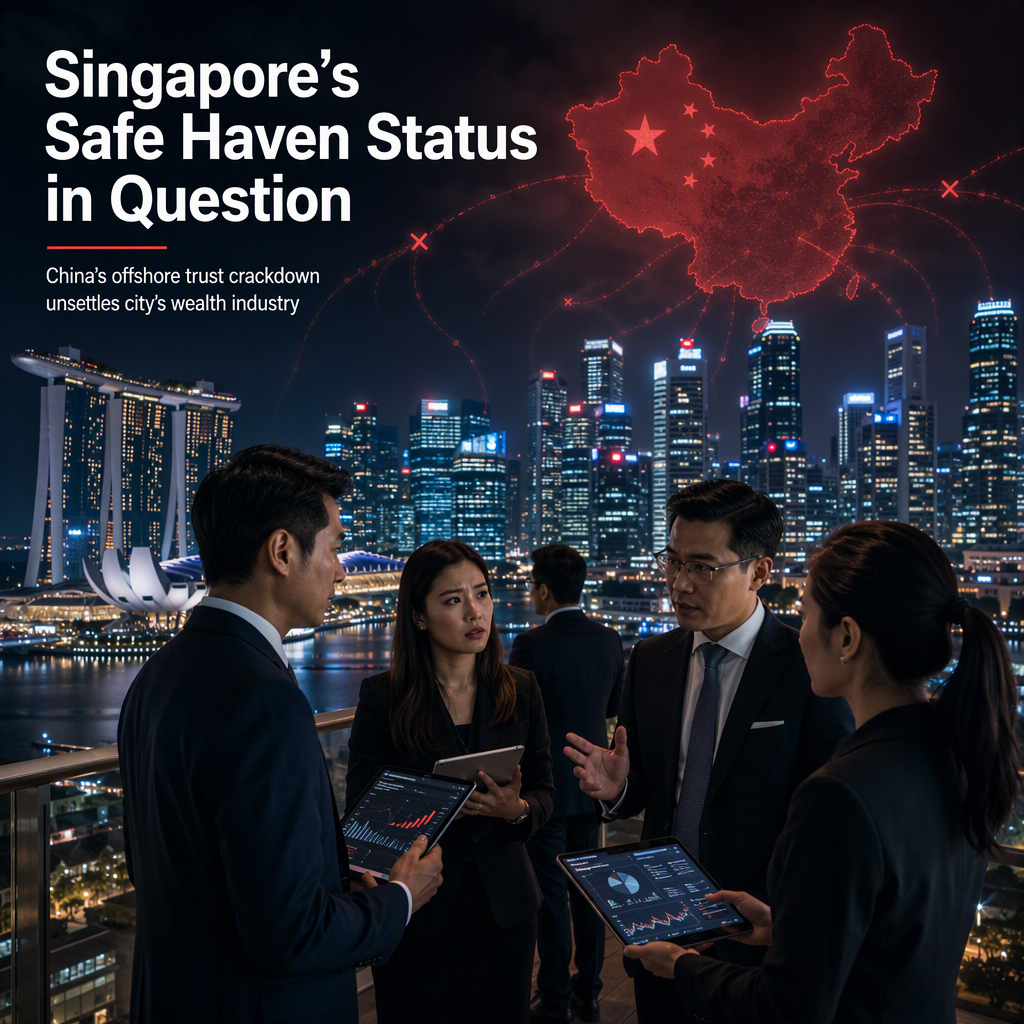
China's recent clampdown on the movement of assets overseas and the overhaul of its tax rules on offshore trusts have generated significant uncertainty in Singapore, a major financial hub in Southeast Asia. The new regulations are not only impacting China's wealthy individuals but are also causing concern among Singaporean lawyers and Members of Parliament, who are questioning whether the city-state will remain an attractive destination for foreign wealth, particularly for those seeking to establish single family offices [1].
From 2023 to 2025, Hong Kong experienced a notable increase in the number of investment entities, suggesting that wealthy Chinese families may be shifting their preference toward jurisdictions perceived as offering more secure and favorable regulatory environments for their assets [1]. This trend has prompted market participants in Singapore to reassess the country's appeal as a safe haven for offshore wealth [1].
Financial experts have highlighted that stricter Chinese regulations could lead to reduced capital inflows from China into Singapore, potentially impacting the city-state's asset management sector, including private banking and wealth management services [1]. Market sentiment in Singapore remains cautious, with industry insiders closely monitoring further regulatory developments and their potential effects on capital flows and wealth management strategies [1].
While the article does not provide specific trading advice or technical analysis, it notes that the ongoing shift in family office trends and regulatory tightening are expected to influence future market dynamics in both Singapore and Hong Kong, especially regarding the attraction of foreign wealth and the support of investment entities [1].
CONCLUSION
China's tightening of offshore trust regulations is creating uncertainty for Singapore's wealth management industry, as market participants reassess the city-state's attractiveness for foreign wealth. The evolving regulatory landscape is expected to shape future capital flows and competitive dynamics between Singapore and Hong Kong.