
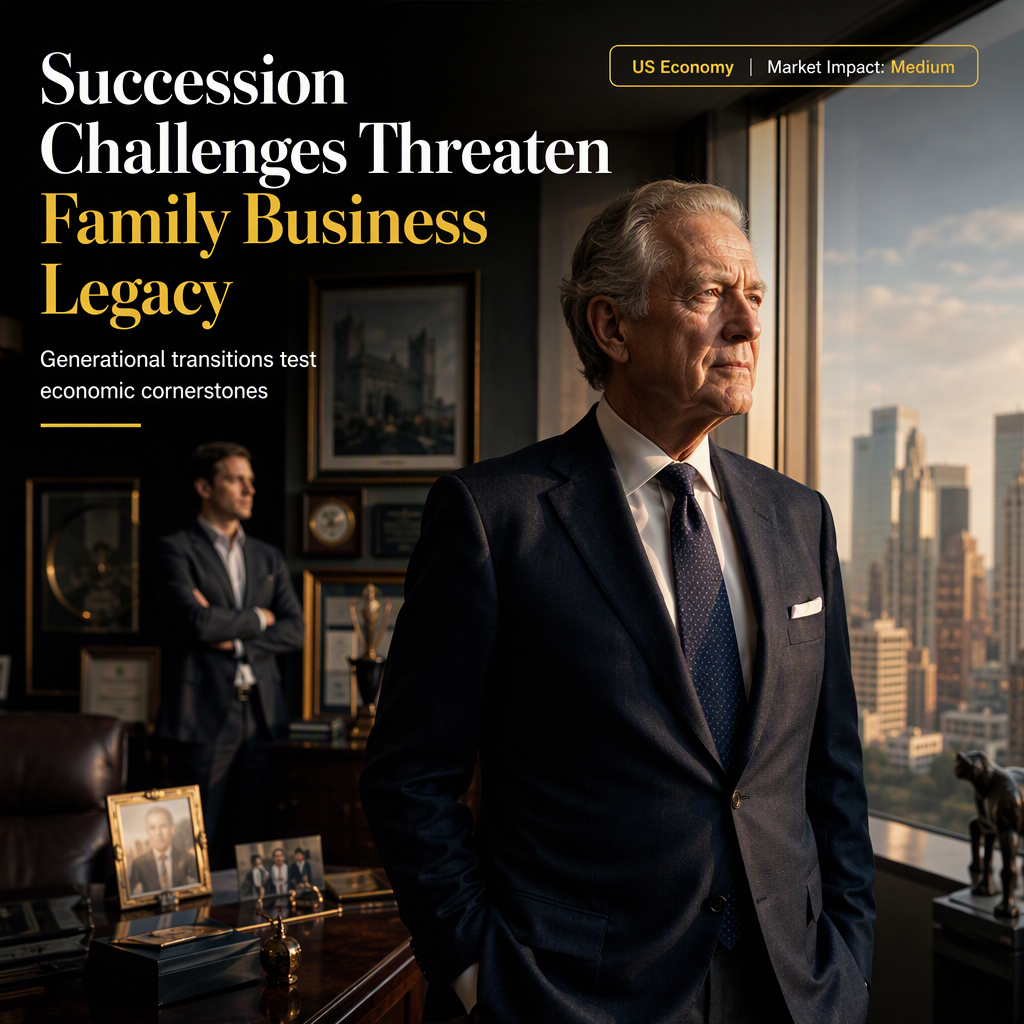
Family-owned businesses are a cornerstone of the US economy, with over 32 million such enterprises representing more than 80% of all businesses in the country, according to FX de Mallmann, chairman of investment banking at Goldman Sachs [1]. These businesses account for over 60% of GDP and employ more than 60% of the overall workforce in the US [1]. Furthermore, approximately 35% of Fortune 500 companies are either family-controlled or have significant family ownership, underscoring their substantial influence in both private and public sectors [1].
Globally, family-owned businesses contribute about 70% of economic output and 60% of jobs, highlighting their critical role beyond US borders [1]. However, succession remains a major challenge. Goldman Sachs reports that only three in ten family-owned businesses successfully transition to a second generation, and just one in ten make it to a third generation [1]. This rarity of generational handover is attributed to the complexities founders face when deciding whether the family should remain involved in management and how ownership should be transferred [1].
Experts emphasize the importance of early planning for generational transitions. FX de Mallmann advises that mechanisms for exit rights and conflict resolution should be established before the family grows too large, as these can help mitigate disputes and facilitate smoother transitions [1]. Tucker York, chief of global wealth management at Goldman Sachs, notes that investors must adopt a long-term orientation when considering succession, shifting focus from short-term needs to future investment strategies [1].
The capital requirements for business expansion and the impact of new investors on family equity are also critical considerations during succession planning, further complicating the process [1].
CONCLUSION
Family-owned businesses are vital to both the US and global economies, but succession planning remains a significant hurdle. Early and strategic planning, including conflict resolution and exit mechanisms, is essential for ensuring generational continuity. The market impact is medium, as these challenges could affect long-term stability and growth for a substantial portion of the economy.