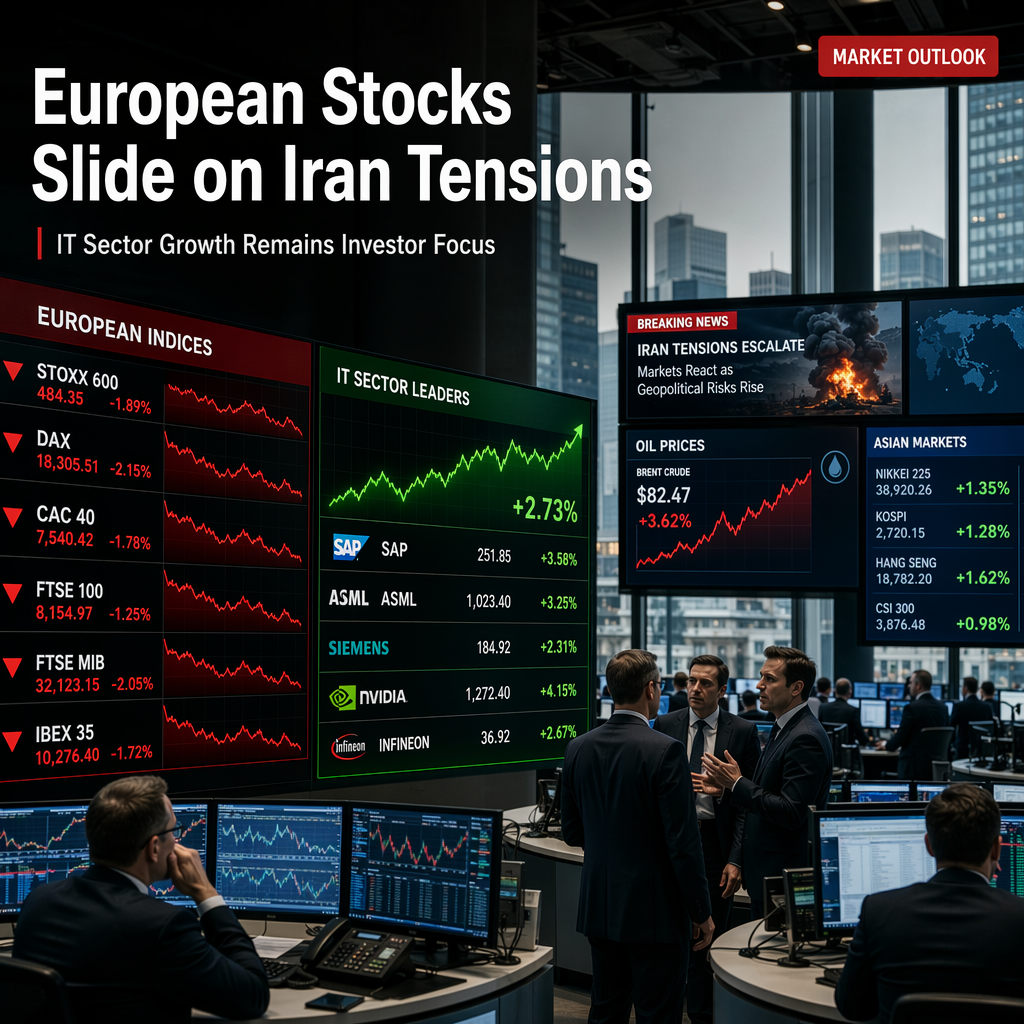
Equity markets experienced a decline on Friday, with the downturn primarily led by European stocks. This movement was attributed to renewed concerns surrounding Iran and stalled diplomatic talks, which weighed on investor sentiment and prompted a defensive rotation in the market. The absence of US market activity, due to closures, and the shutdown of several European markets meant that price action was largely concentrated in Europe [1].
The Danske Research Team highlighted that the setback was driven by the failure of Vice President Vance to travel to Switzerland to continue negotiations with Iran, which were aimed at securing a final peace agreement and resolving the conflict around Iran and the Strait of Hormuz. This development led to an increase in oil prices and a broader shift towards defensive assets [1].
In contrast, the previous week saw a significant rotation out of energy stocks and into cyclicals, particularly IT stocks. The Danske Research Team emphasized the importance of focusing on the strong underlying economy and the exceptional earnings growth in the IT sector, rather than attempting to micro-time market movements based on geopolitical headlines. They noted that while further volatility related to Iran is likely, investors should prioritize long-term fundamentals over short-term news-driven fluctuations [1].
Looking ahead, Asian markets opened mixed, but major tech-heavy indices in Japan, South Korea, and Taiwan traded higher, indicating ongoing optimism in the IT sector. Meanwhile, European and US futures pointed lower, reflecting continued caution in Western markets [1].
CONCLUSION
European equities faced pressure due to renewed Iran-related risks and stalled peace talks, prompting a defensive market rotation. However, strong IT sector earnings and economic fundamentals remain a key focus for investors, with Asian tech markets showing resilience. The market takeaway is one of cautious optimism, with attention shifting from short-term geopolitical headlines to long-term growth prospects.