
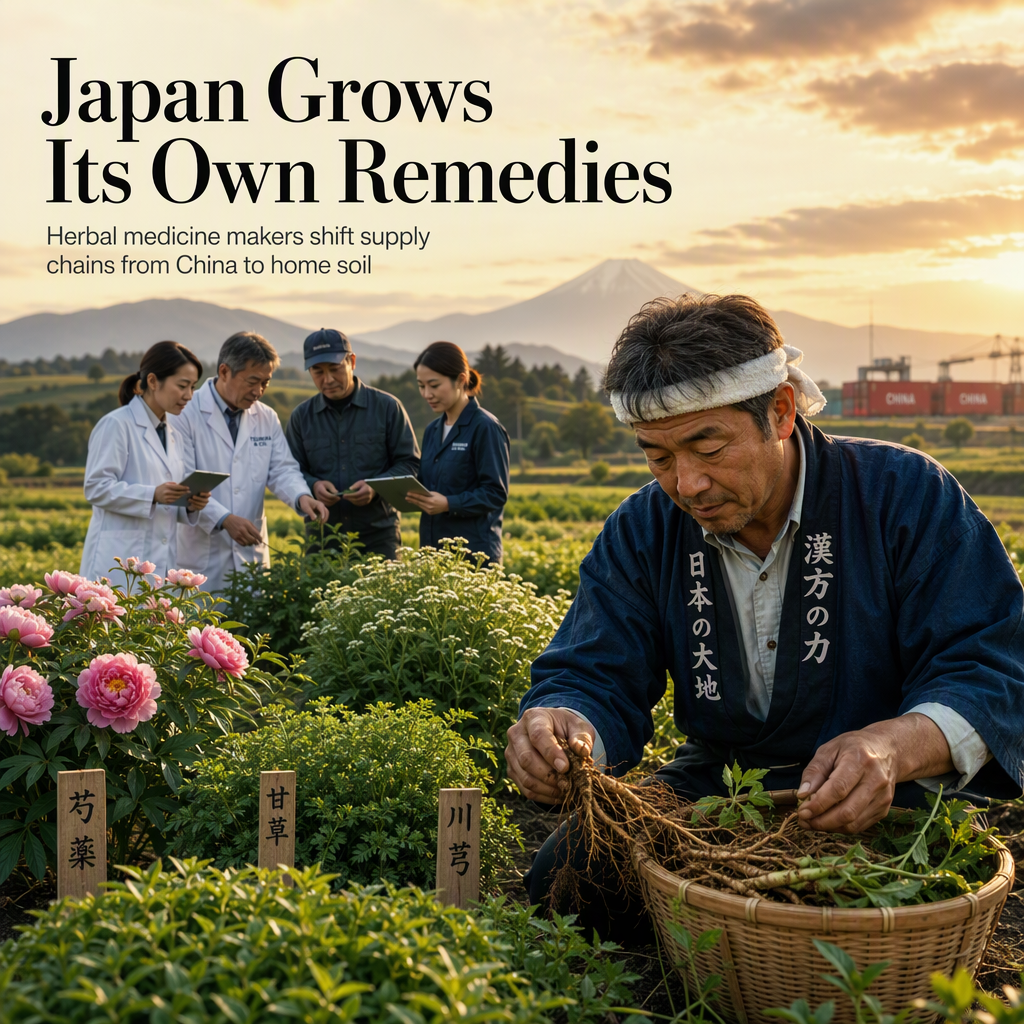
Japanese traditional drugmakers, led by Tsumura & Co., are actively developing domestic supply chains to reduce reliance on Chinese imports for raw materials used in Kampo medicines [1]. This strategic shift is motivated by concerns over the reliability and stability of sourcing from China, which has historically supplied many of the 128 herbal components essential to Kampo formulations [1]. Tsumura & Co. has increased procurement from Japanese farmers, investing in contracts, technical assistance, and financial support to boost domestic cultivation of key medicinal herbs such as peony root, cnidium, and licorice [1]. The proportion of domestic sourcing for these ingredients has risen steadily over the past five years, according to the company [1].
Industry sources report that prices for certain Chinese-sourced herbs have become volatile, with some rising as much as 50% over the previous year due to export restrictions and supply shortages [1]. A Tsumura spokesperson emphasized the importance of ensuring a stable supply of high-quality ingredients, stating that strengthening ties with domestic farmers is intended to mitigate risks and maintain competitive pricing [1].
The domestic Kampo market has experienced steady growth, supported by increasing interest in traditional remedies and recognition of their efficacy by the Japanese Ministry of Health, Labour and Welfare [1]. Analysts estimate the Japanese herbal medicine market was valued at over 170 billion yen ($1.1 billion) in 2025, with expectations for continued expansion as the population ages and demand for alternative therapies rises [1].
Other Japanese herbal remedy makers are also pursuing similar strategies, forming cooperatives and investing in research to improve cultivation techniques [1]. Market analysts view these efforts as positive for supply chain resilience, though they caution that achieving full independence from Chinese imports may take several years due to the time required to scale up domestic production [1].
CONCLUSION
Japanese herbal remedy makers are responding to supply chain volatility and geopolitical risks by increasing domestic sourcing and reducing dependence on China. While these efforts are seen as positive for market resilience and long-term growth, full independence from Chinese imports will require significant time and investment. The market is expected to continue expanding as demand for traditional therapies rises.