
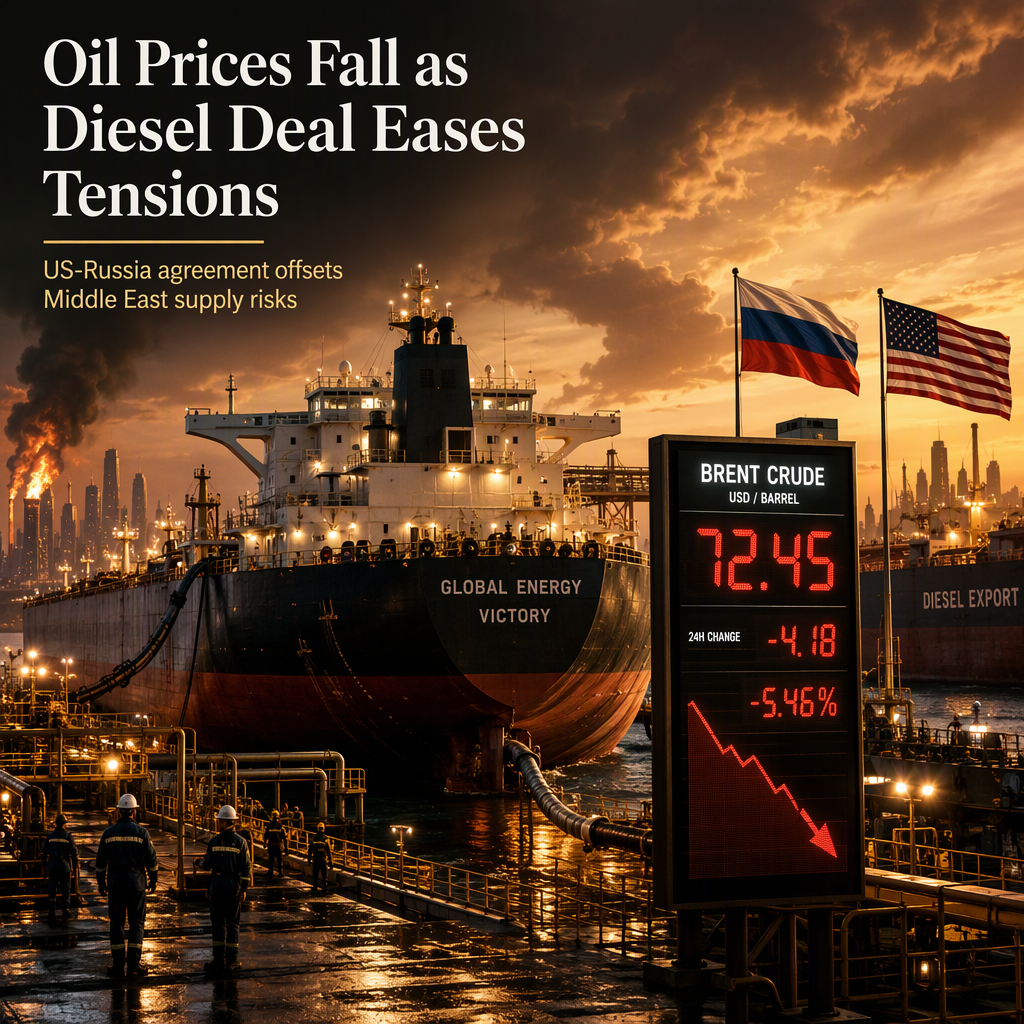
Oil prices weakened even amid heightened tensions in the Middle East, with ICE Brent falling more than 2% at one point, despite a deadly Houthi attack on an airport in Riyadh, Saudi Arabia [1]. ING analysts Warren Patterson and Ewa Manthey attribute this decline to strong oil flows from the Persian Gulf and a newly announced US-Russia diesel deal, which is exerting downward pressure on the market [1].
According to ING, US President Donald Trump announced an agreement with Russia over the weekend that will allow Russia to export 300,000 tonnes of diesel immediately, 500,000 tonnes in November, and 1 million tonnes in December. As part of this deal, the US will temporarily ease sanctions on Russian diesel exports [1]. This influx of Russian diesel is pressuring middle distillate cracks, although it is not expected to fully resolve the tightness in the market [1].
Additionally, President Trump announced that Russia and Ukraine have agreed to an energy ceasefire, which is also contributing to downward pressure on oil prices [1]. Despite these developments, inefficient Middle East trade flows and high freight rates are keeping refined product prices elevated [1].
ING analysts caution that, with Brent trading above $100 per barrel and the US midterm elections approaching, the risk/reward profile for taking long positions in oil is not favorable. They also note the potential for President Trump to surprise markets, adding to the uncertainty [1].
CONCLUSION
The announcement of increased Russian diesel exports and a temporary easing of US sanctions has offset supply risks from Middle East tensions, leading to a decline in oil prices. Market participants remain cautious due to ongoing geopolitical risks and the potential for further surprises ahead of the US midterm elections.