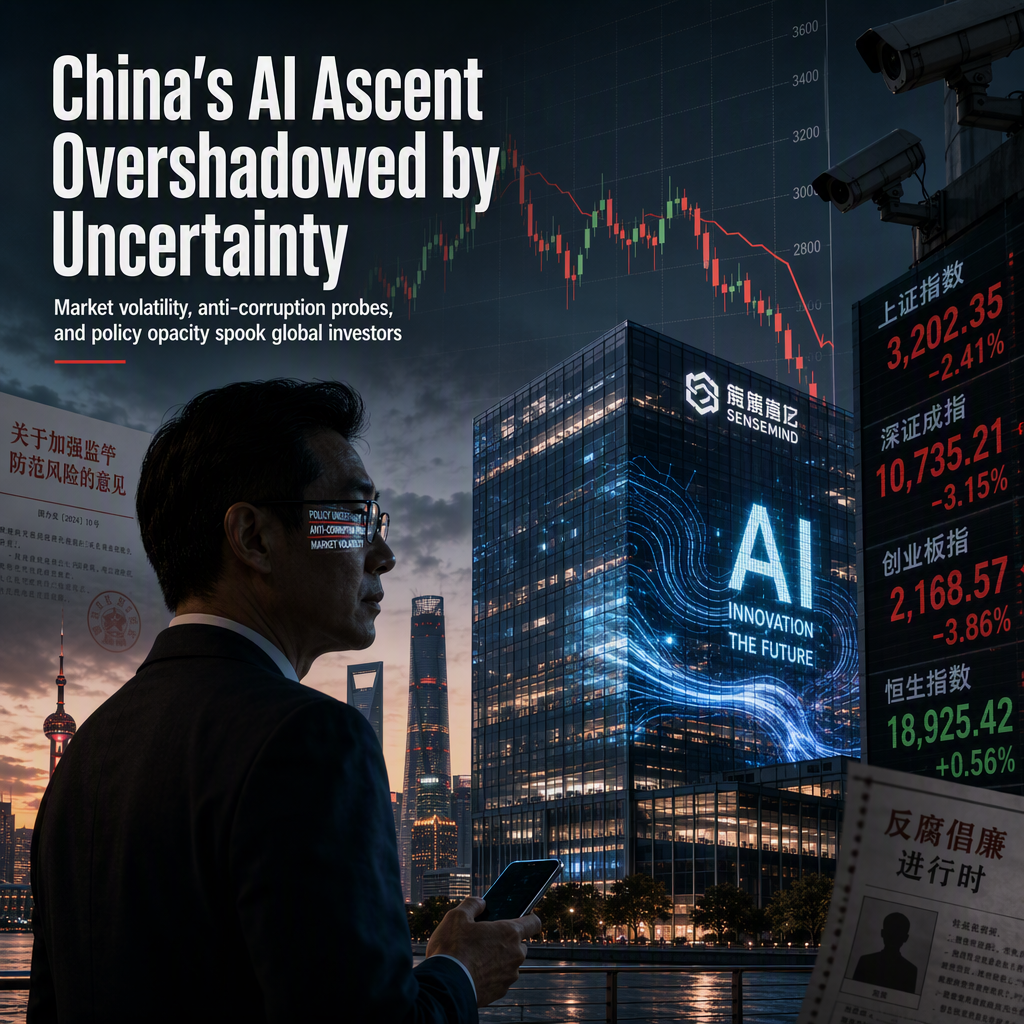
China's recent breakthroughs in artificial intelligence have not translated into broad market gains sufficient to attract foreign investors at scale, according to CNBC's The China Connection newsletter [1]. A key factor cited is Beijing's approach to policy communication, which differs significantly from the transparency standards expected by Wall Street [1]. The announcement of an anti-corruption probe into Fang Xinghai, former vice chair of China's securities regulator and a well-known figure among Wall Street investors, has heightened concerns. The probe was announced with limited detail, fueling discourse around Fang's support for algorithm-driven quantitative trading—a practice that has faced both public and regulatory criticism for contributing to market losses, despite the emergence of national AI champion DeepSeek from quant hedge fund High-Flyer [1].
Liqian Ren of U.S.-based fund manager WisdomTree emphasized that China's market volatility is not primarily due to quantitative trading, but rather to 'totally unexpected' policy information disclosures [1]. She noted that China's market swings are 'way higher' than those in Europe or Japan, which are favored by U.S. investors for their relative stability [1]. The newsletter also referenced a recent incident where shares of Trip.com, a company with BlackRock as a top investor, plunged nearly 20% in one day in January following abrupt policy news [1].
The article contrasts China's approach with that of the U.S. Federal Reserve, whose forward guidance has been credited by UBS with reducing market volatility over the past two decades [1]. In contrast, China's history of abrupt policy moves—including the surprise yuan devaluation in 2015 and recent crackdowns on various sectors—has contributed to its reputation for unpredictability [1].
Analyst commentary suggests that while technological competition is currently China's top priority, financial market competition and transparency have yet to reach the same level of focus [1].
CONCLUSION
China's AI progress is being overshadowed by concerns over policy transparency and abrupt regulatory actions, which continue to deter foreign investors. The recent anti-corruption probe into a prominent market figure has reinforced perceptions of unpredictability, resulting in heightened market volatility and selective foreign participation.