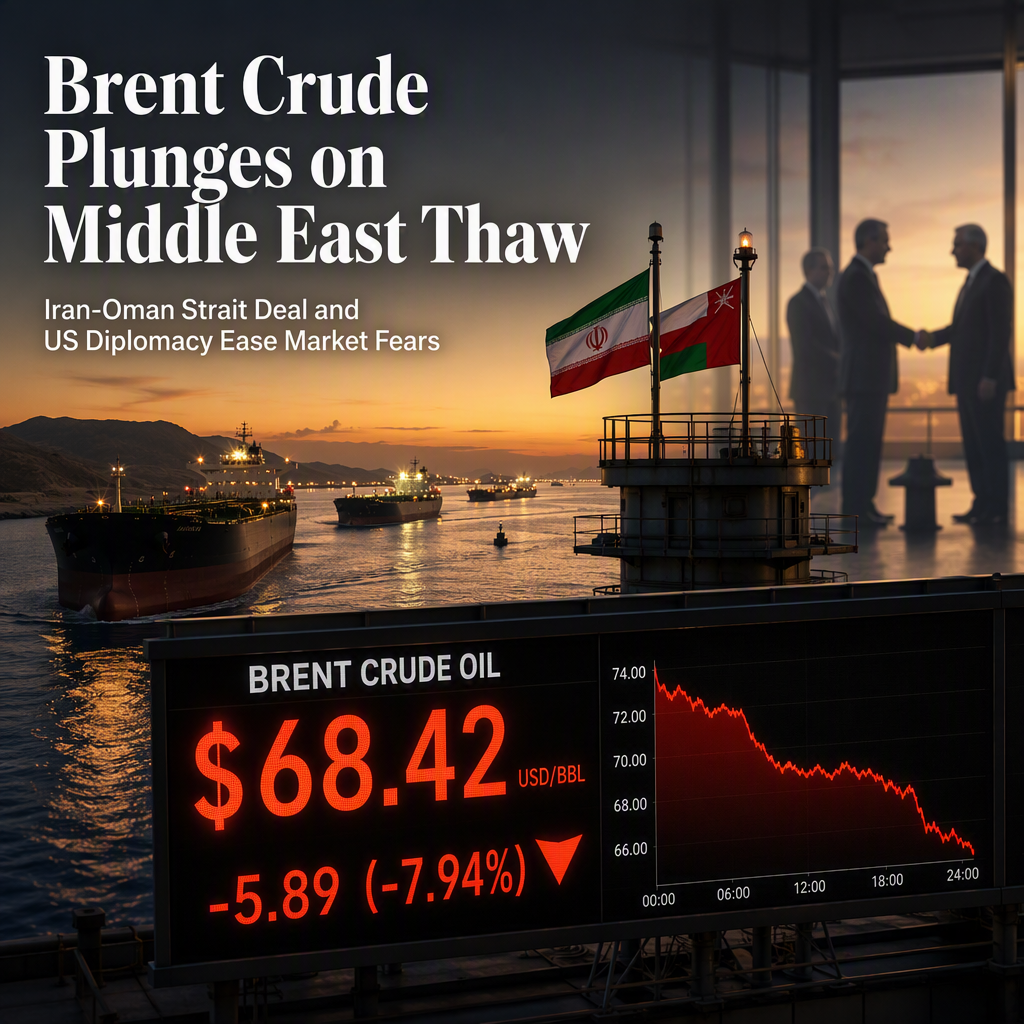
Brent crude oil prices have experienced a sharp decline this week, reversing more than half of a recent 13% rally, as a series of diplomatic developments in the Middle East have eased concerns over supply disruptions. According to Deutsche Bank, Brent crude is down -8.6% since Friday, marking what could be its largest weekly drop since June, with prices settling -3.89% lower yesterday and trading another -2.60% lower at just over $86 per barrel this morning [1]. CNBC reports that Brent crude fell below the $90 per barrel mark overnight in response to these developments [2].
The primary catalyst for the selloff has been a flurry of headlines suggesting de-escalation in the region. Iran and Oman announced in a joint statement that their foreign ministers had discussed a 'proposed framework' to establish a joint temporary navigational corridor through the Strait of Hormuz and to implement a joint project to clear the strait of mines [2]. Technical negotiations are ongoing to agree on a permanent navigational corridor and future administration of the strait, including mechanisms for information-sharing, traffic management, and security services [2]. On Tuesday, only five commodity vessels transited the Strait of Hormuz, well below the 10-day average of 15, highlighting the strategic importance of the corridor [2].
Further supporting the decline in oil prices, reports indicate that the US is returning diplomats to Gulf states and does not expect renewed full-scale conflict with Iran [1][2]. Russia's RIA Novosti reported, citing Iranian and Pakistani sources, that the US and Iran have agreed to a new ceasefire expected to be announced in the coming days, which would include freedom of shipping via Hormuz [1][2]. However, CNBC notes that this report could not be independently verified, and the White House did not respond to requests for comment [2].
In the background, US Treasury Secretary Scott Bessent threatened new economic measures against Iran, including a list of 60 individuals, entities, and vessels, but the US has so far refrained from imposing significant secondary sanctions on other nations, notably Chinese financial firms suspected of facilitating Iran's oil trade [2]. China, which purchases around 90% of Iran's oil, warned it would retaliate if the US expanded economic pressure on nations trading with Tehran [2].
The combination of diplomatic progress on the Strait of Hormuz, the prospect of a US-Iran ceasefire, and the US's current restraint on secondary sanctions has created a supportive backdrop for global bonds and equities, while weighing heavily on energy markets [1][2].
CONCLUSION
Brent crude prices have dropped sharply this week as diplomatic efforts between Iran and Oman, along with signs of US de-escalation, have eased fears of supply disruptions in the Strait of Hormuz. The market is responding to the potential for a new ceasefire and improved shipping security, with oil prices reversing much of their recent gains. The situation remains fluid, but for now, the outlook for energy markets is more stable amid ongoing negotiations.