
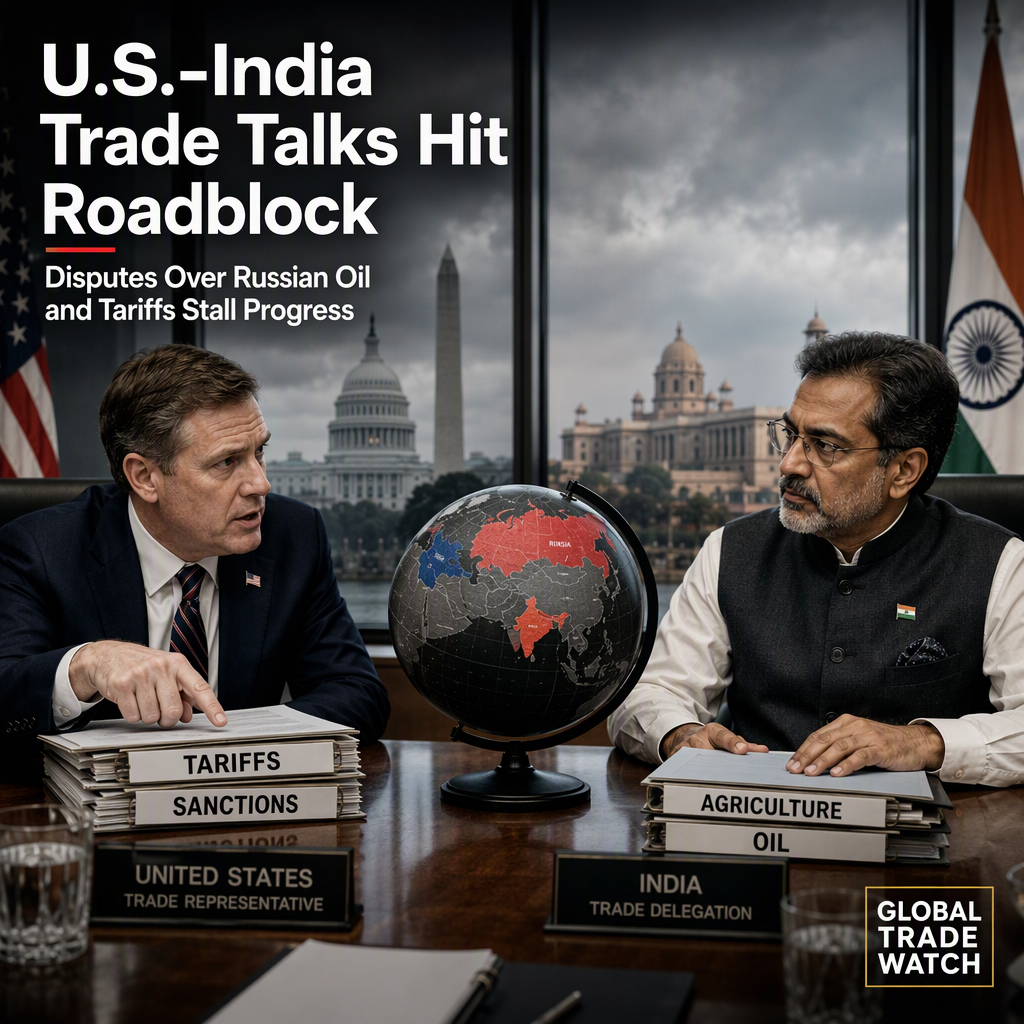
Negotiations between the United States and India for a trade agreement remain ongoing, but a deal is not expected in the near future, according to U.S. trade representative Jamieson Greer. Greer stated, 'I don't think there is something imminent,' highlighting that both sides are still working through key sticking points in the discussions [1]. His comments followed a phone call between Indian Prime Minister Narendra Modi and U.S. President Donald Trump, which Modi described as 'productive,' though Trump did not provide details [1].
Indian Commerce Minister Piyush Goyal, currently in the U.S. for trade negotiations and the G20 trade ministers meeting, expressed optimism about the talks, emphasizing efforts toward an 'early conclusion of a mutually beneficial interim agreement under the India-US Bilateral Trade Agreement' [1]. However, Greer and Goyal appear to differ in their outlooks, with Goyal focusing on resolved issues and Greer emphasizing those that remain [1].
A major point of contention is India's continued purchase of Russian oil, which the U.S. views as a source of funding for the Ukraine war. In response, the U.S. imposed a 25% punitive tariff on India in August of the previous year for buying Russian oil, raising duties on imports from New Delhi to 50%. These duties were reduced to 18% in February, but the risk remains that Washington could impose tariffs of up to 100% if the dispute continues [1]. For India, protecting its agricultural sector and maintaining preferential tariffs for its exports are top priorities [1].
The ongoing disagreements have strained U.S.-India relations for over a year, and the potential for higher tariffs poses a threat to the progress of trade talks. Both sides acknowledge that the remaining issues are the most challenging to resolve, and no clear timeline for an agreement has been provided [1].
CONCLUSION
Trade negotiations between the U.S. and India are facing significant hurdles, particularly over Russian oil purchases and tariff policies. While both sides express a willingness to continue discussions, the prospect of an imminent deal appears unlikely, and the risk of escalating tariffs could further complicate relations.