
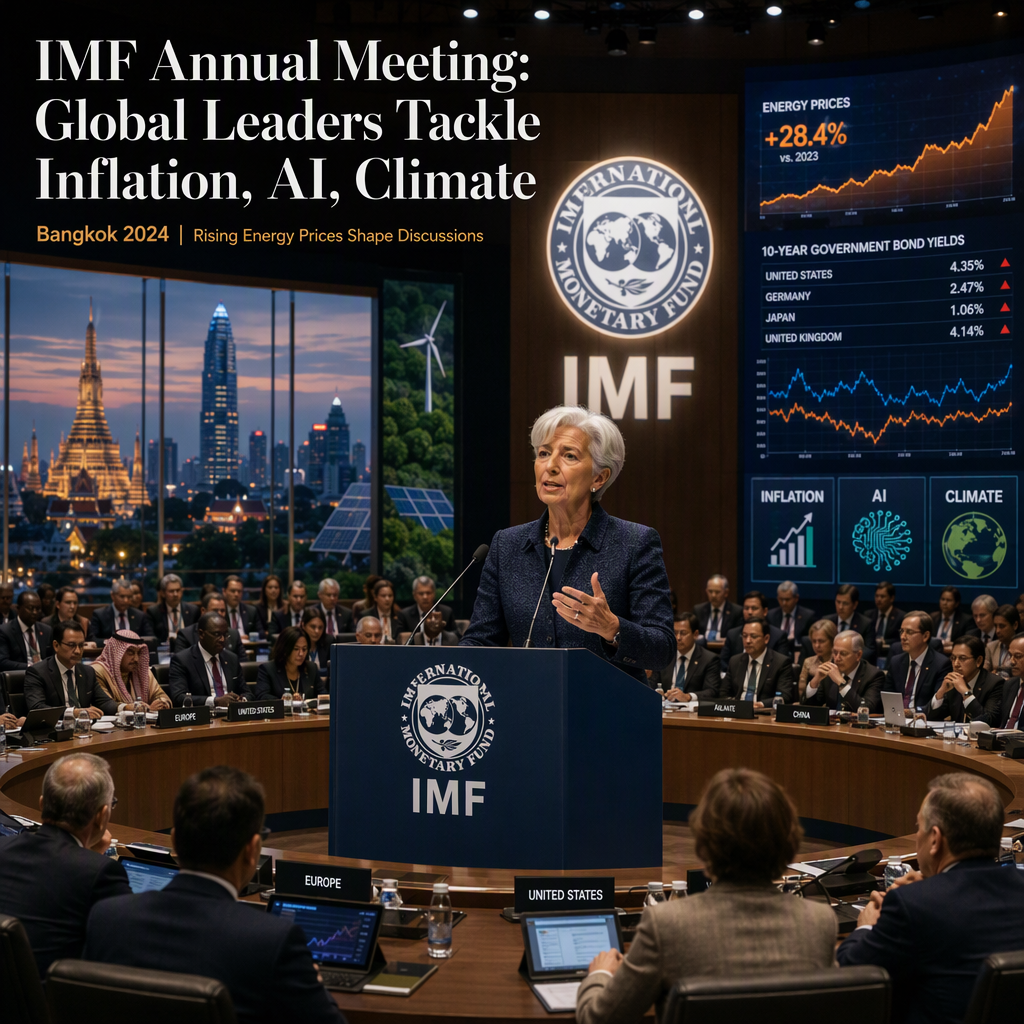
Finance officials and central bankers from around the world are convening in Bangkok this week for the International Monetary Fund's annual meeting, which begins on Monday [1]. The discussions are expected to focus on three major topics: persistent inflation, the integration of artificial intelligence in financial systems, and the economic impact of climate change [1].
Energy prices and bond yields are highlighted as significant concerns for policymakers, with many anticipating that these factors will influence the global economic outlook during the weeklong talks [1]. The meeting occurs at a time when inflation remains stubbornly high in several major economies, leading to speculation about potential further rate adjustments by central banks [1].
Delegates are set to address strategies for managing inflationary pressures, evaluate the effects of rising energy prices on growth prospects, and discuss the role of fiscal and monetary policy amid shifting bond yields [1]. The integration of artificial intelligence and climate-related risks are also key agenda items, reflecting broader concerns about technological and environmental challenges facing the global economy [1].
The IMF annual meeting is regarded as a crucial forum for policymakers to coordinate responses to these global economic challenges and share insights on market developments, including inflation trends and climate-related risks [1].
CONCLUSION
The IMF's annual meeting in Bangkok brings together global finance leaders to address persistent inflation, rising energy prices, and the integration of AI and climate concerns. While no specific market reactions or forward-looking statements are provided, the event is positioned as a critical platform for shaping coordinated policy responses to current economic challenges.