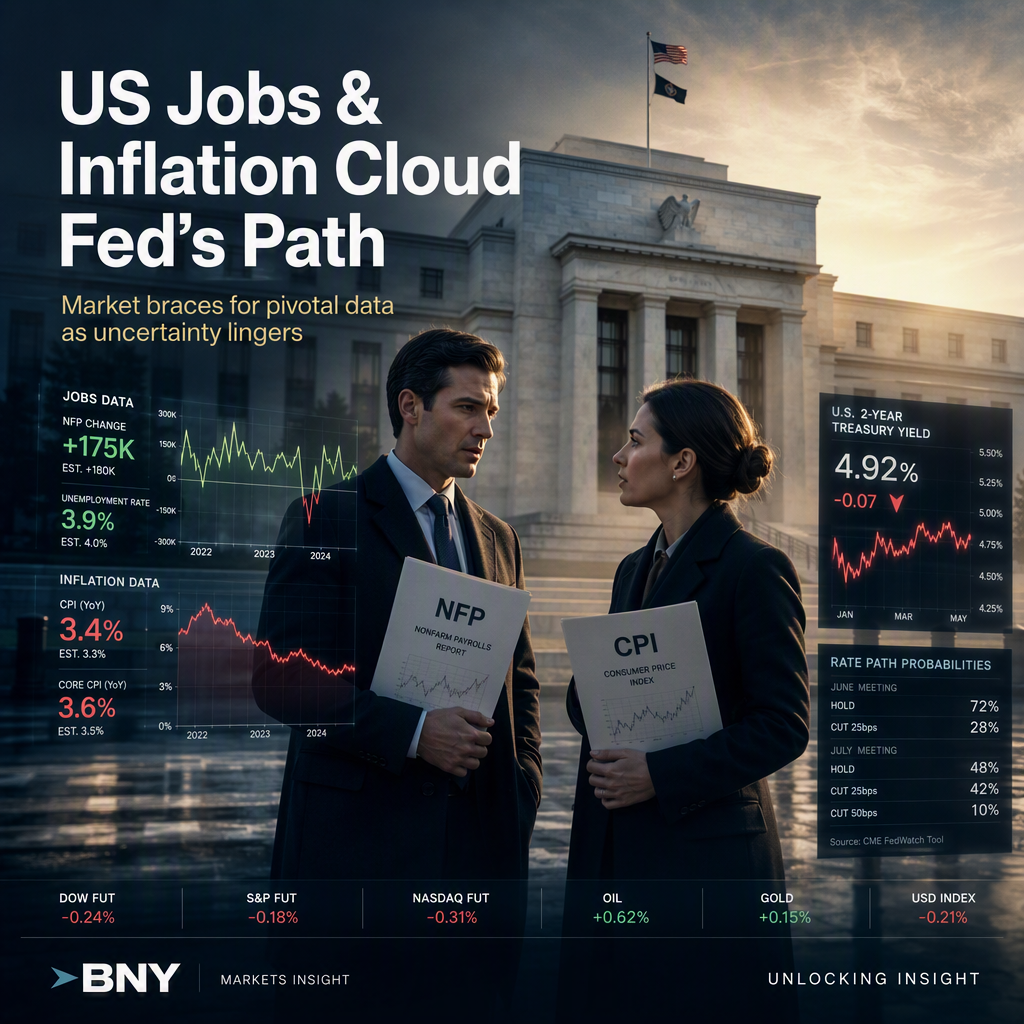
BNY strategists John Velis and David Tam emphasize that the upcoming July Nonfarm Payrolls (NFP) report and Consumer Price Index (CPI) releases are critical for shaping the Federal Reserve's policy direction. Market expectations for the July NFP are centered around 80,000 new jobs, with the strategists noting that the breakeven rate to keep unemployment steady is close to 50,000 jobs per month due to slower labor force growth compared to pre-pandemic levels [1].
The strategists highlight that if the NFP print is weaker than expected, it could lead to lower 2-year Treasury yields and reduced expectations for further rate hikes [1]. They also point out that inflation remains persistent, influenced by ongoing supply shocks, while the rise of AI-related capital expenditures is creating uncertainty about future job growth and productivity [1].
Labor supply constraints are making it difficult to interpret job market data, and the Federal Reserve's policy approach under Warsh is still evolving, adding to market uncertainty. The strategists note that after Friday's NFP report, there will be two additional CPI releases before the end of the month, and Warsh's speech at Jackson Hole is seen as a potential event, though they do not expect significant clarity on rates from it due to his limited track record [1].
Overall, the combination of sticky inflation, supply shocks, and labor market uncertainties is keeping US rates pricing unsettled, and both markets and economists are still adapting to the new Fed leadership [1].
CONCLUSION
The upcoming NFP and CPI data are pivotal for the Federal Reserve's next moves, but persistent inflation and labor market uncertainties are complicating the outlook. Market participants remain cautious, with no clear consensus on the Fed's future rate path as they await further data and guidance.