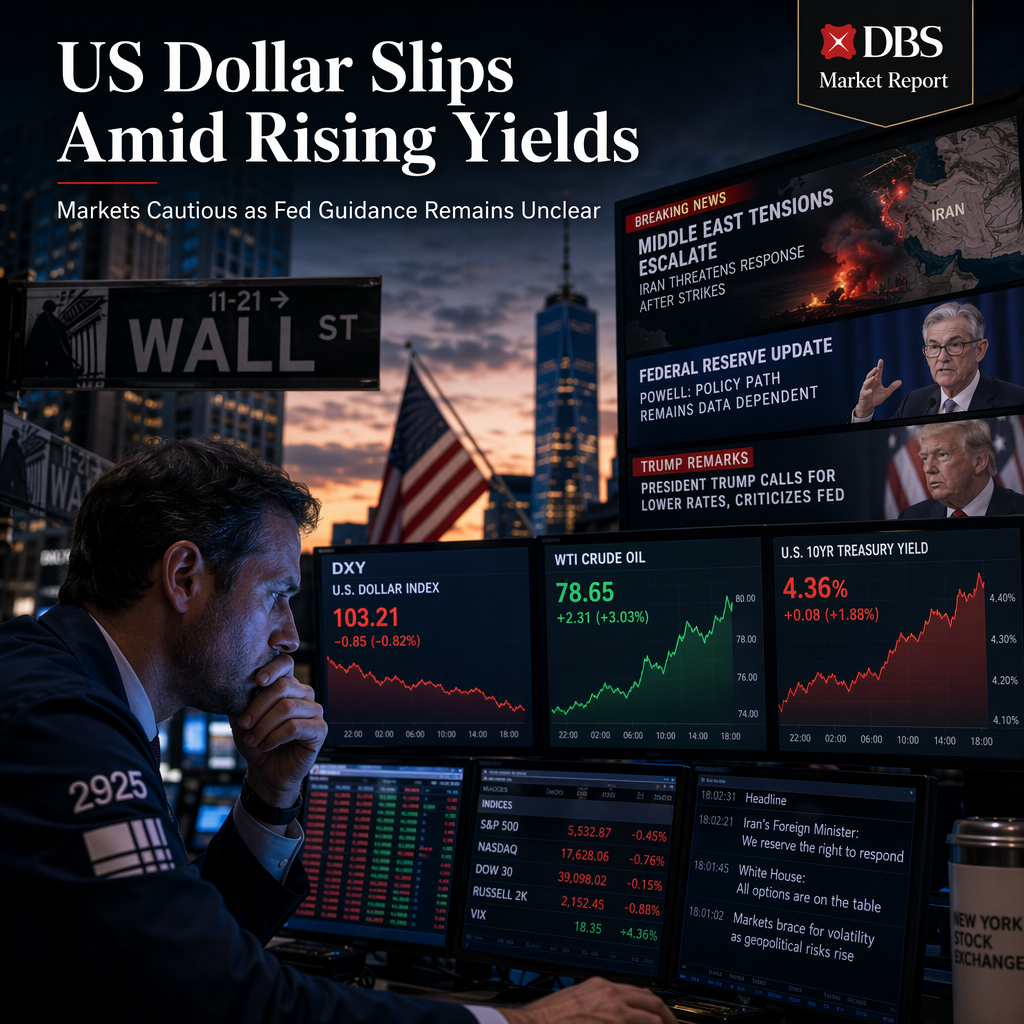
The US Dollar Index (DXY) slipped from 101.28 to 101 late in the US session, even as the US Treasury 2-year yield rose and crude oil prices remained supported by ongoing Middle East tensions, according to DBS Group Research economist Philip Wee [1]. This decline in the DXY occurred despite its usual strong correlation with crude oil prices, which have been influenced by President Donald Trump's announcement that the interim ceasefire agreement with Iran was over [1].
Futures pricing now indicates that the odds of a Federal Reserve rate hike in September have risen above 50%. However, the latest FOMC Minutes reveal a divided committee and do not convey the same urgency for a rate hike, with limited forward guidance expected from Fed Chair Kevin Warsh [1]. Trump clarified that the US blockade would apply strictly to Iranian ports, while Treasury Secretary Scott Bessent stated that safe and secure oil should trade at a premium, highlighting ongoing headline risks in the market [1].
Looking ahead, markets are cautious as Fed Chair Kevin Warsh is not expected to provide forward guidance during his upcoming congressional hearings, especially with an anticipated softer US CPI print next week [1].
CONCLUSION
The US Dollar Index's decline, despite rising yields and geopolitical tensions, reflects market uncertainty over the Fed's next moves and ongoing volatility in oil markets. With a divided FOMC and limited forward guidance expected, traders remain cautious ahead of key inflation data. Market sentiment is slightly negative, and the overall impact is medium as investors await further clarity.