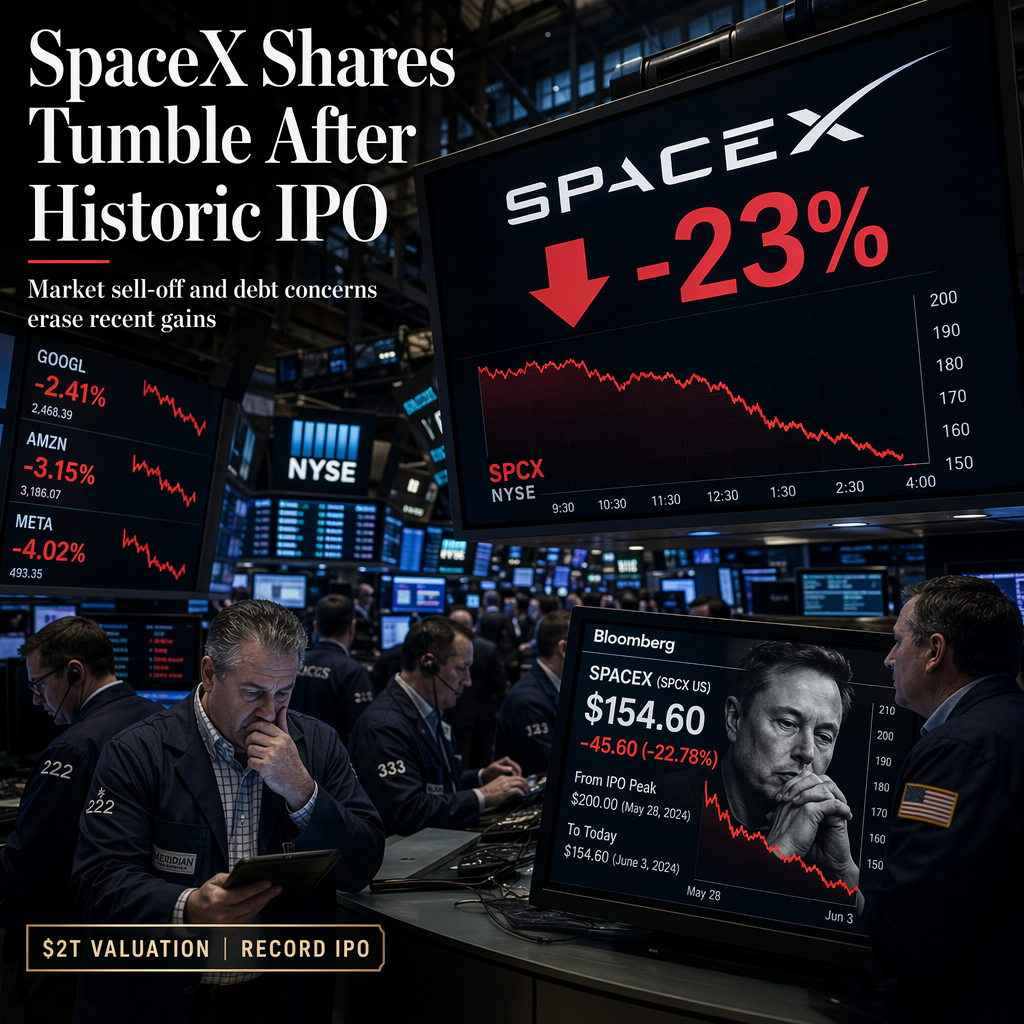
Shares of SpaceX, led by Elon Musk, fell 16% on Monday, closing at $154.60 per share, which is below their June 12 IPO price of $160.90. This marks the third consecutive day of declines for the company, which recently completed the largest initial public offering ever just ten days prior. At their peak on June 16, SpaceX shares reached $201.80, but by Monday's close, they had dropped approximately 23% from that high, erasing most gains for average investors who bought after the debut [1].
Despite the sharp sell-off, SpaceX maintains a market capitalization of about $2 trillion, making it more valuable than Walmart or Meta, and the IPO itself generated over $85 billion for the company and holders of its previously private shares [1]. The decline in SpaceX shares occurred alongside a broader market downturn, with the S&P 500 Index closing down 0.43% and the Nasdaq falling 1.3%. Other major tech and consumer stocks, including Alphabet (Google parent), Amazon, Chipotle, McDonald's, Home Depot, and Netflix, also saw significant declines, with Alphabet experiencing its worst one-day performance in over a year [1].
The sell-off was further fueled by reports from Bloomberg News that SpaceX is seeking to raise at least $20 billion through a bond sale. This move raised concerns among investors about the substantial cash required to fund the company's technological ambitions. Jose Torres, a senior economist at Interactive Brokers, noted that investors are wary of the increased debt burden, especially as short-term inflation could make borrowing more expensive for mega-cap companies investing heavily in artificial intelligence infrastructure [1].
Oil prices also declined to their lowest levels since March due to progress in U.S.-Iran talks, but this provided little relief for tech investors facing inflation and debt concerns [1].
CONCLUSION
SpaceX's stock has experienced a dramatic reversal, falling 23% from its post-IPO high and erasing most gains for recent investors. The combination of a broader market sell-off and concerns over a potential $20 billion bond sale have heightened investor caution. Despite the downturn, SpaceX remains a highly valuable company, but faces scrutiny over its funding needs and exposure to market volatility.