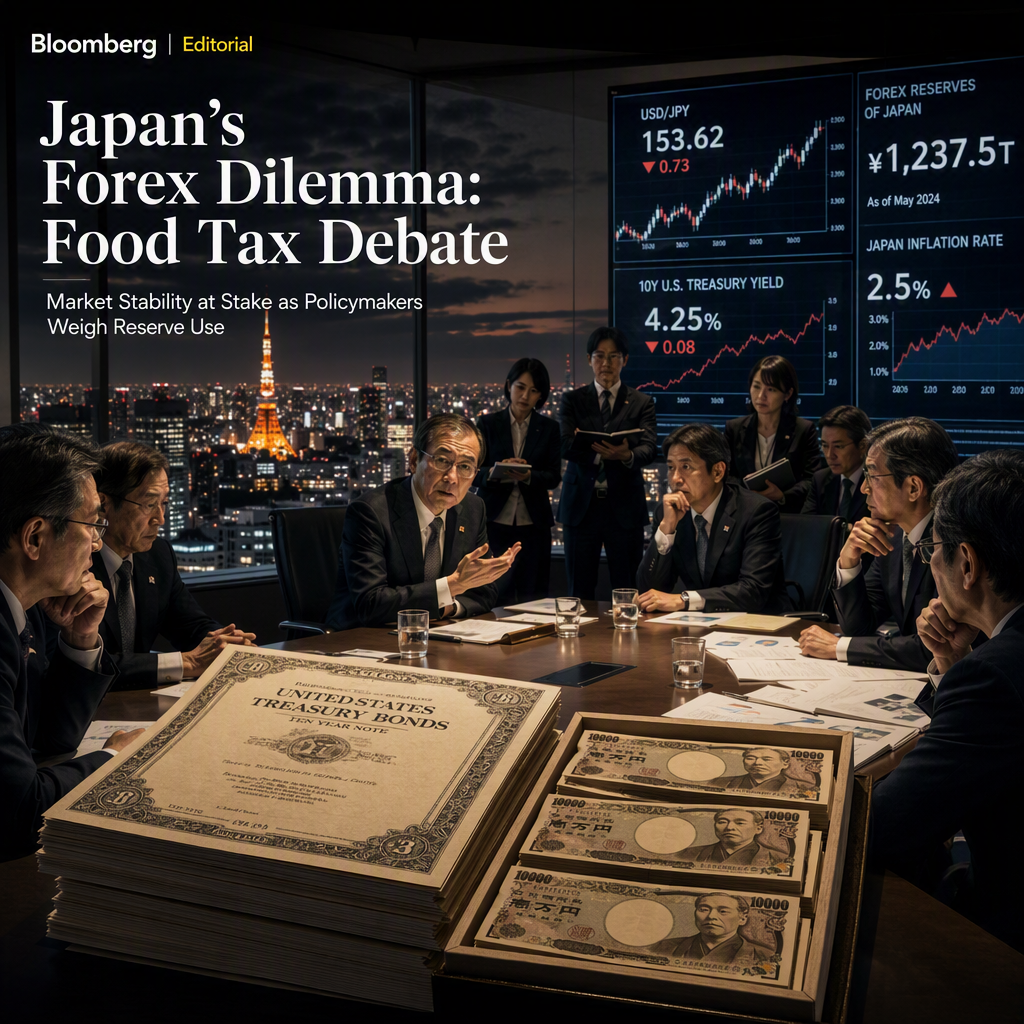
A heated debate is underway in Japanese politics regarding the funding of a proposed food consumption tax cut, with particular focus on whether Japan should tap into its substantial foreign exchange reserves for this purpose [1]. The reserves, which are primarily held in U.S. Treasuries, are traditionally used as a buffer for currency interventions and to maintain market stability, not for domestic fiscal measures [1].
Earlier this summer, Japanese Finance Minister Satsuki Katayama and U.S. Treasury Secretary Scott Bessent coordinated a yen-buying intervention to stabilize the currency amid aggressive market selling and speculation [1]. Market analysts caution that using forex reserves to fund the tax cut could have significant repercussions. Liquidating U.S. Treasuries to raise funds would increase supply in the U.S. bond market, potentially pushing up yields and putting downward pressure on bond prices [1].
Furthermore, diverting reserves for domestic spending could undermine confidence in Japan's ability to defend the yen, possibly weakening the currency further and triggering capital outflows and increased volatility in both the yen and Japanese government bonds [1]. Such a move could also raise doubts about Japan's fiscal discipline and its status as a major holder of U.S. Treasuries [1].
A Tokyo-based currency strategist emphasized, "Japan's reserves are a symbol of financial strength and stability. Using them for a domestic tax cut would be a mistake, risking both global market confidence and the yen's credibility" [1]. Policymakers are still deliberating, with many urging the government to seek alternative funding sources that do not jeopardize Japan's international financial standing [1].
CONCLUSION
The proposal to use Japan's forex reserves for a food tax cut has sparked significant concern among market analysts and policymakers, who warn of potential negative impacts on the yen, U.S. Treasury markets, and investor confidence. The prevailing sentiment is that alternative funding methods should be pursued to avoid undermining Japan's financial stability and credibility.