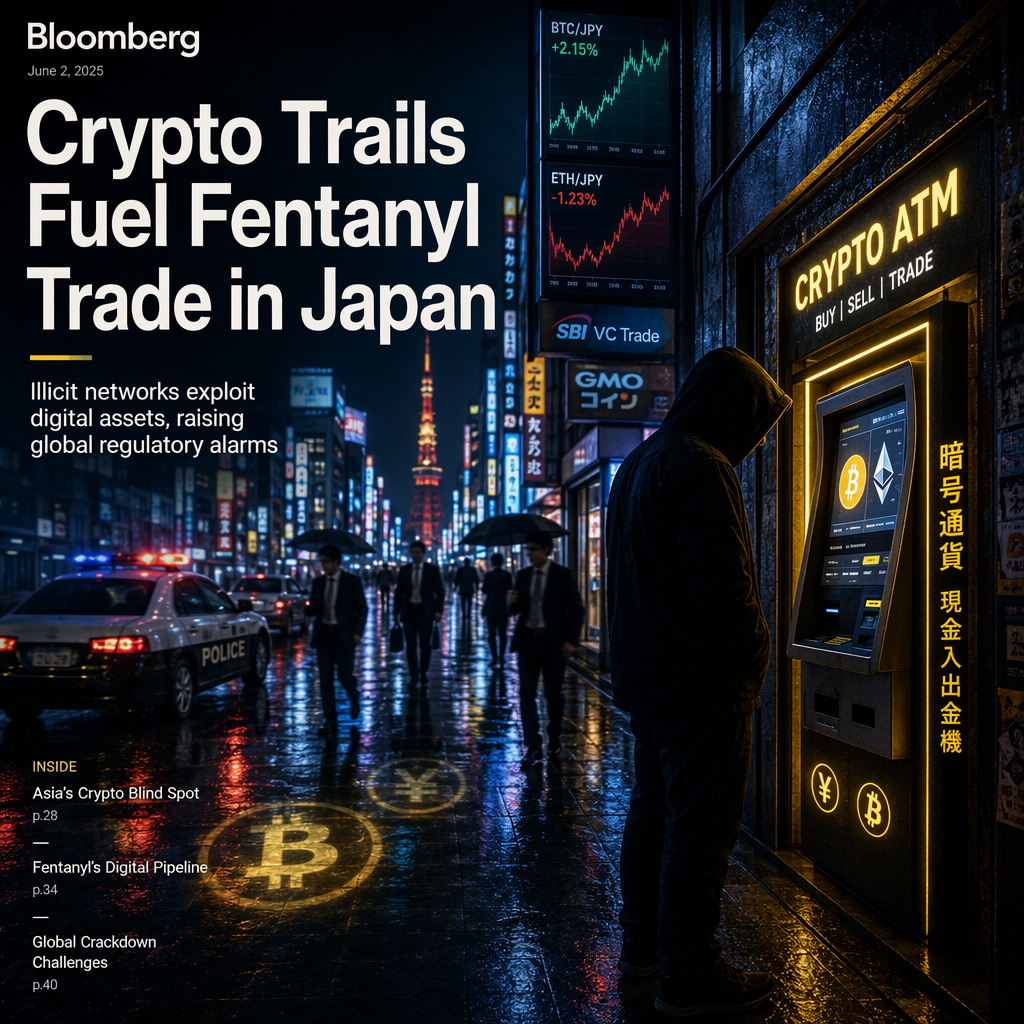
A recent investigation has revealed that a Chinese organization involved in illicit fentanyl exports has established a base in Japan, with the country now serving as a key transit hub for smuggling activities, according to the U.S. Drug Enforcement Administration [1]. Nikkei developed a custom program to trace the flow of cryptocurrencies used by this smuggling network, uncovering that crypto transactions are central to the movement of funds and coordination of trafficking operations. These activities are believed to be part of a larger, more sophisticated operation linked to a Chinese drug kingpin [1].
The article does not provide direct financial market data, but it emphasizes the increasing convergence of illicit drug trafficking, cryptocurrency fraud, and international financial flows [1]. As law enforcement agencies gain greater awareness of the role digital assets play in cross-border smuggling, there is an expectation that regulators and market participants will intensify scrutiny of crypto transactions, especially those involving criminal networks and high-risk jurisdictions such as Japan, China, and Mexico [1].
The ongoing use of cryptocurrency for illicit purposes continues to be a concern for authorities and financial markets, as it erodes trust in digital assets and could lead to stricter compliance requirements for exchanges and financial institutions handling crypto transactions [1]. This heightened regulatory focus may influence trading sentiment and the regulatory landscape for digital assets, particularly in regions identified as critical nodes in global trafficking routes [1].
CONCLUSION
The exposure of Japan as a transit hub for fentanyl smuggling, facilitated by cryptocurrency transactions, underscores growing regulatory and market concerns about the use of digital assets in illicit activities. Increased scrutiny and potential regulatory tightening could impact sentiment and compliance requirements in the crypto sector, especially in high-risk regions.