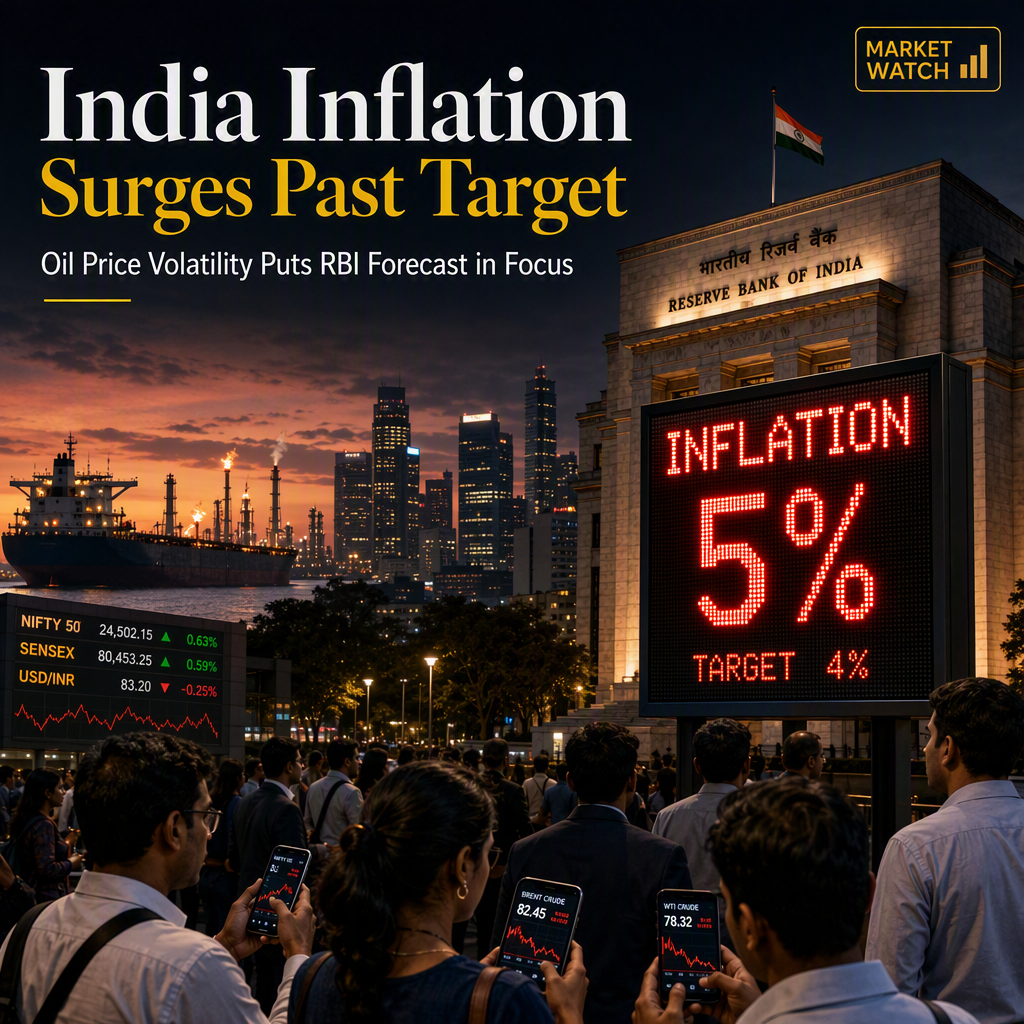
India is set to release its consumer inflation data for July, following a period of continued volatility in oil prices. The inflation indicator breached the central bank's target level of 4% in June for the first time in approximately one-and-a-half years, as rising energy costs filtered through the economy [1]. Despite this breach, inflation remains within the Reserve Bank of India's (RBI) tolerance band of 2% to 6% [1]. The RBI has predicted that inflation will come in at 5% for the fiscal year ending March 2027, with expectations for a slowdown after the third quarter of the fiscal year [1].
Market participants are closely watching these developments, as the inflation data and RBI's forecasts could influence monetary policy decisions and investor sentiment. The breach of the 4% target, driven by energy costs, highlights ongoing challenges for the Indian economy, particularly regarding job opportunities and inequality, which have been central themes in recent political discourse [1].
The RBI's forward-looking statement suggests a cautious optimism, anticipating a moderation in inflation later in the fiscal year. This outlook may provide some reassurance to markets, although continued oil price volatility remains a risk factor [1].
CONCLUSION
India's July inflation data reflects persistent pressures from volatile oil prices, temporarily breaching the central bank's target. However, the RBI's forecast of a slowdown and inflation remaining within the tolerance band offers a measured outlook, with markets likely to monitor future policy signals and energy price trends closely.