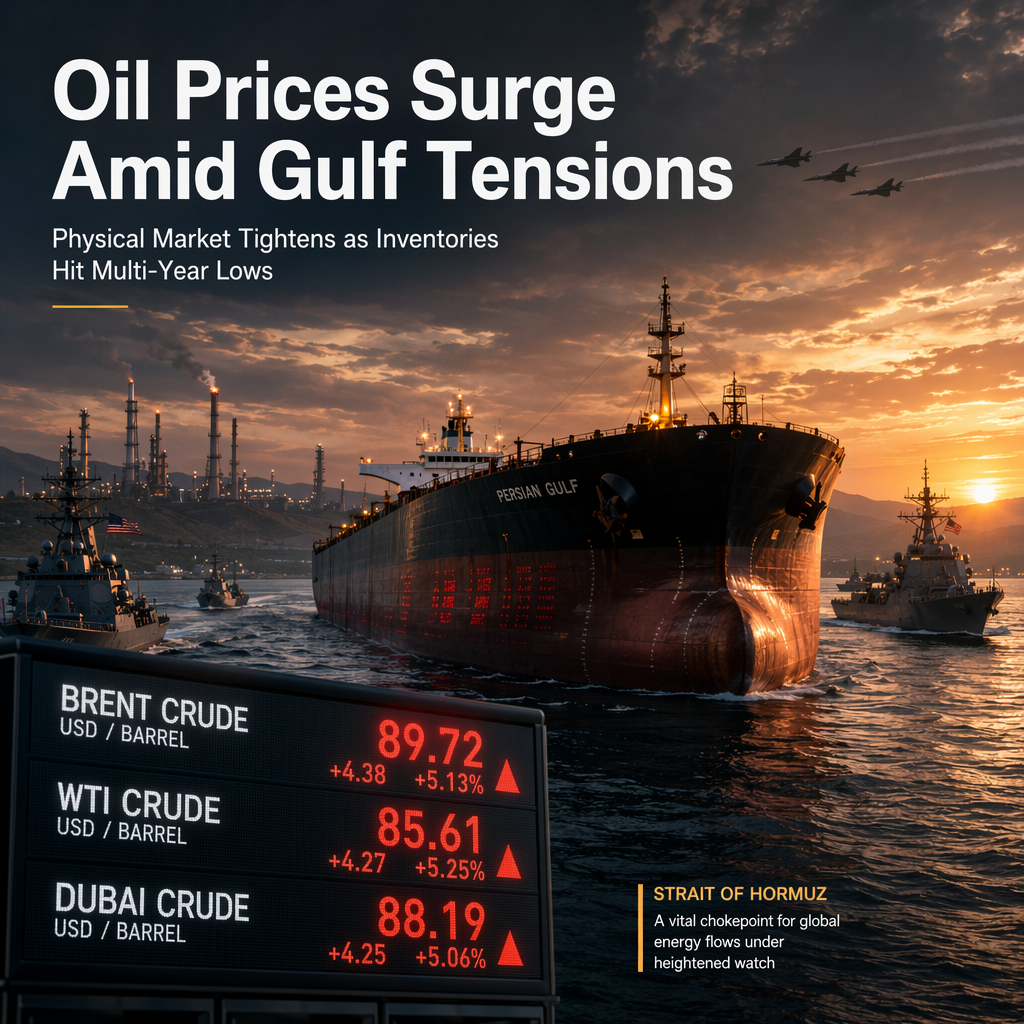
Oil prices have extended their gains for a third consecutive day as tensions between the US and Iran escalate, with the US conducting additional strikes against Iran and reports suggesting potential increases in US military operations in the region [1]. These developments have heightened concerns about renewed oil supply disruptions, particularly as they coincide with significant inventory drawdowns during the second quarter and the imminent conclusion of global Strategic Petroleum Reserve (SPR) releases, which have previously supported the market [1].
The reduction in Persian Gulf energy flows is having a pronounced effect on the physical oil market. Physical benchmarks such as Dated Brent have moved to a premium of $1.30 per barrel over front-line Brent futures, reversing a previous discount observed in late June and early July. Similarly, US Mars crude differentials have strengthened, reflecting tighter supply conditions [1].
According to the US Energy Information Administration (EIA), US commercial crude oil inventories declined by 1.69 million barrels over the last week. When factoring in SPR releases, total crude oil inventories fell by 4.68 million barrels. US commercial crude oil inventories are now near their lowest levels since 2022, and seasonally, they are at their lowest point since 2018 [1].
Additionally, middle distillate markets in both the US and globally remain very tight, as evidenced by the strength in middle distillate cracks [1].
CONCLUSION
Escalating US–Iran tensions and reduced Persian Gulf energy flows are tightening the physical oil market, driving up prices and differentials. With inventories at multi-year lows and SPR releases ending soon, the market remains highly vulnerable to further supply disruptions.