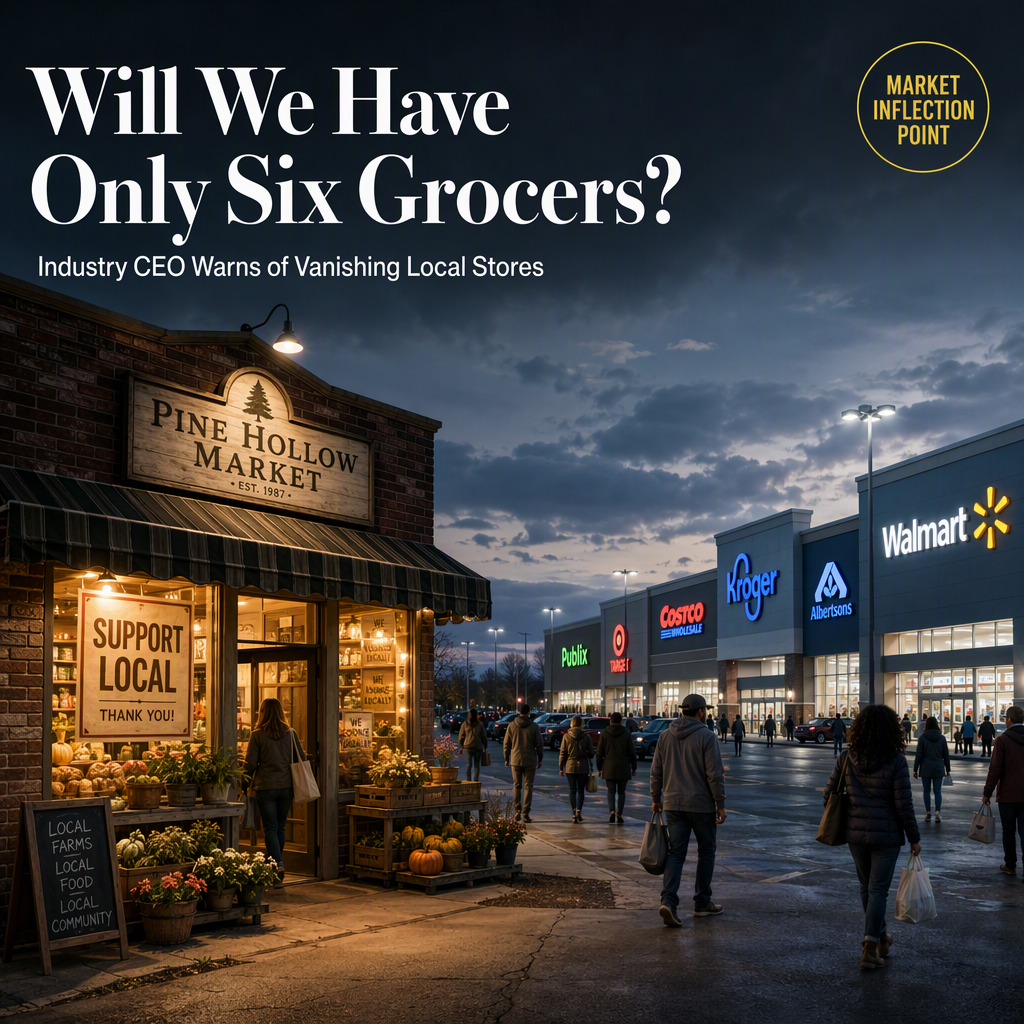
Greg Ferrara, president and CEO of the National Grocers Association (NGA), has raised concerns about the increasing consolidation in the U.S. grocery industry, warning that the country could soon be left with just five or six national grocery chains if current trends continue [1]. Ferrara stated that independent grocers are struggling to maintain access to products and competitive terms as national retailers grow larger, putting pressure on smaller stores and threatening their survival [1].
Ferrara emphasized that independent grocers are not seeking special treatment but are asking for a fair chance to compete. He highlighted that independents represent more than 38% of total supermarket spending and are capable of purchasing efficiently and at scale, but often face challenges such as being unable to access new products or promotions that are offered exclusively to large chains for a period of time [1]. This situation, according to Ferrara, forces consumers to shop at national chains for certain products, reducing choice and competition [1].
The NGA CEO also pointed out that independent grocers operate on net profit margins of less than 2%, leaving them with little ability to absorb additional costs or competitive disadvantages [1]. He warned that if the current trajectory continues, it would be detrimental not only to independent grocers but also to American communities and consumers, as reduced competition could lead to higher prices and fewer choices [1].
Ferrara described the current state as an 'inflection point' for the industry and called for measures to ensure open and competitive markets, arguing that greater competition would benefit consumers by driving down prices and increasing options [1].
CONCLUSION
The National Grocers Association CEO's warning highlights the mounting challenges faced by independent grocers amid industry consolidation. With independents representing a significant share of supermarket spending but operating on thin margins, the potential reduction to just a handful of national chains could negatively impact competition, consumer choice, and prices.