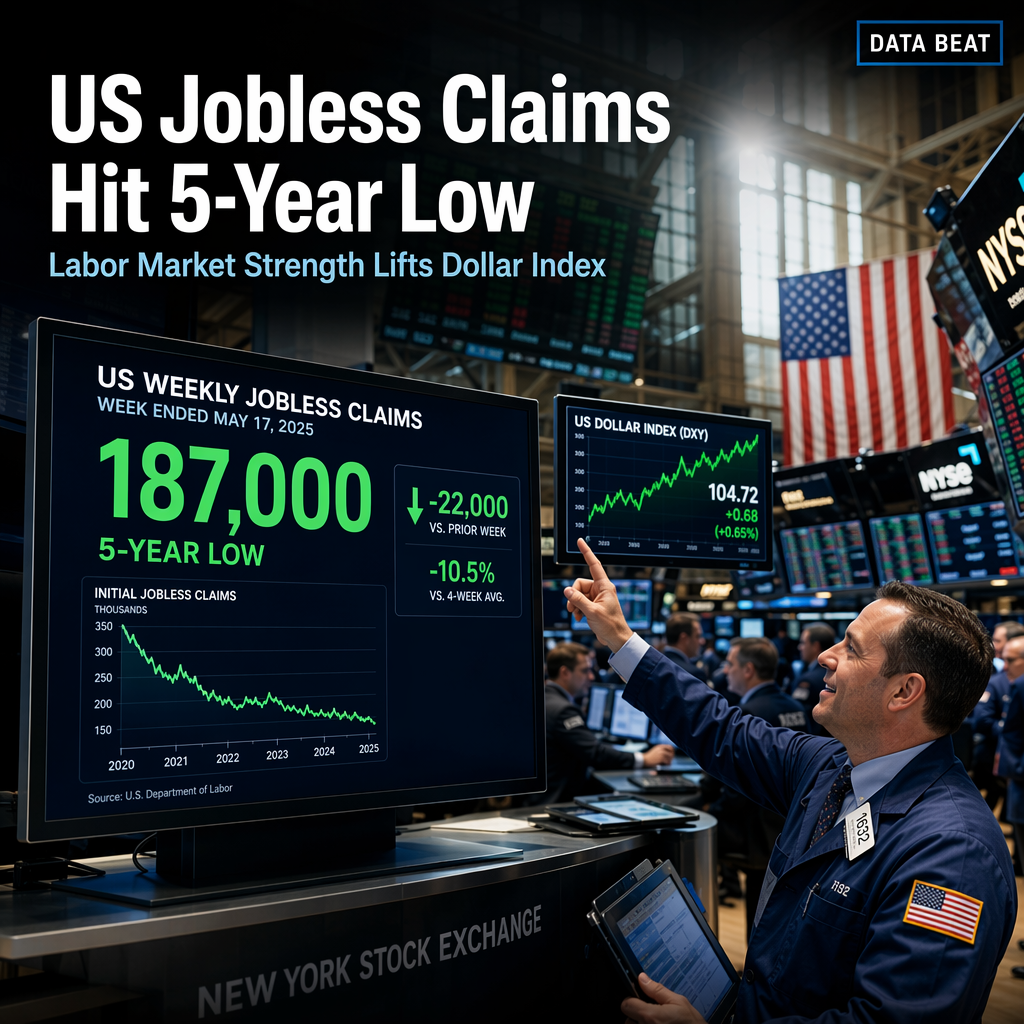
The US Department of Labor reported that Initial Jobless Claims for the week ending July 18 declined to 187,000, significantly lower than the market expectation of 212,000 and down from the previous week's reading of 209,000 [1]. The 4-week moving average also decreased, standing at 207,500, which is 7,250 lower than the prior week's revised average [1]. Additionally, seasonally adjusted insured unemployment for the week ending July 11 was 1,796,000, a decrease of 2,000 from the previous week's revised level [1].
The market responded positively to the data, with the US Dollar Index rising 0.22% on the day to 101.35 at the time of reporting, indicating that investors viewed the stronger-than-expected labor market data as supportive for the currency [1]. The article highlights that labor market conditions are a key driver for currency valuation, as high employment or low unemployment typically boosts consumer spending and economic growth, thereby strengthening the local currency [1].
The report also notes that the US Federal Reserve pays close attention to labor market data due to its dual mandate of promoting maximum employment and stable prices, suggesting that continued labor market strength could influence future monetary policy decisions [1]. Wage growth is also emphasized as a critical factor for policymakers, as persistent increases in salaries can drive underlying inflation [1].
CONCLUSION
US weekly Initial Jobless Claims fell sharply to 187,000, well below expectations, signaling ongoing labor market strength. The data supported a rise in the US Dollar Index, reflecting positive market sentiment. Continued labor market resilience may influence future Federal Reserve policy decisions.