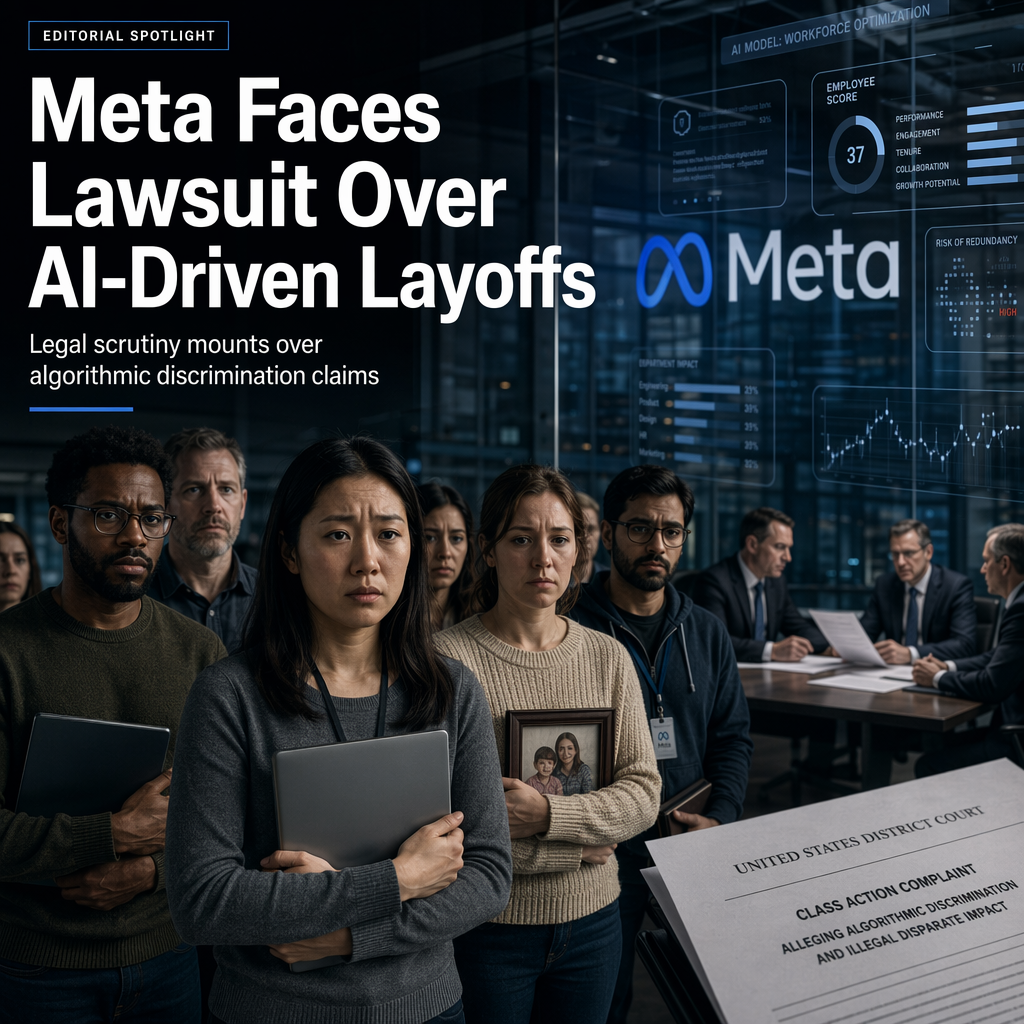
A group of current and former employees has filed a lawsuit against Meta, alleging that the company used artificial intelligence systems to conduct layoffs in a manner that discriminated against certain workers, particularly those on protected medical or family leave, or with disabilities [1]. The lawsuit, filed in the United States Northern District Court of California, claims that Meta's internal AI systems failed to account for approved absences when determining which employees to cut, and that metrics such as performance ratings, calibration scores, productivity and output metrics, 'AI-native' ratings, and AI-token consumption were used in a way that disadvantaged employees unable to accumulate these metrics due to their protected status [1].
The plaintiffs, represented by attorneys, are among the 10% of Meta's workforce affected by the company's May layoff round, and they are seeking to pursue their claims individually in arbitration [1]. They are requesting a preliminary injunction to maintain their employment status at Meta pending an independent audit of the algorithmically assisted selection process and the resolution of their claims [1].
A Meta spokesperson responded to the allegations by stating that the claims "lack merit and are not based on facts," and emphasized that workforce management and organizational decisions were made by people, not AI [1]. The lawsuit highlights growing concerns about the impact of AI on employment decisions, particularly for people with disabilities [1].
The filing comes shortly after a federal judge in California ruled against Workday in a separate case involving the use of AI for hiring decisions, requiring Workday to face claims about alleged violations of state and federal employee discrimination laws [1]. Workday has denied those allegations, asserting that its technology only considers job qualifications and is rigorously tested to avoid harming protected groups [1].
Market sentiment regarding Meta is described as mixed, with some analysts noting the potential implications of the lawsuit for the company's reputation and workforce management practices [1].
CONCLUSION
The lawsuit against Meta underscores increasing legal and public scrutiny of AI's role in employment decisions, particularly regarding potential discrimination. While Meta denies the allegations, the case may have medium-term implications for the company's workforce policies and reputation as it navigates the ongoing legal process.