
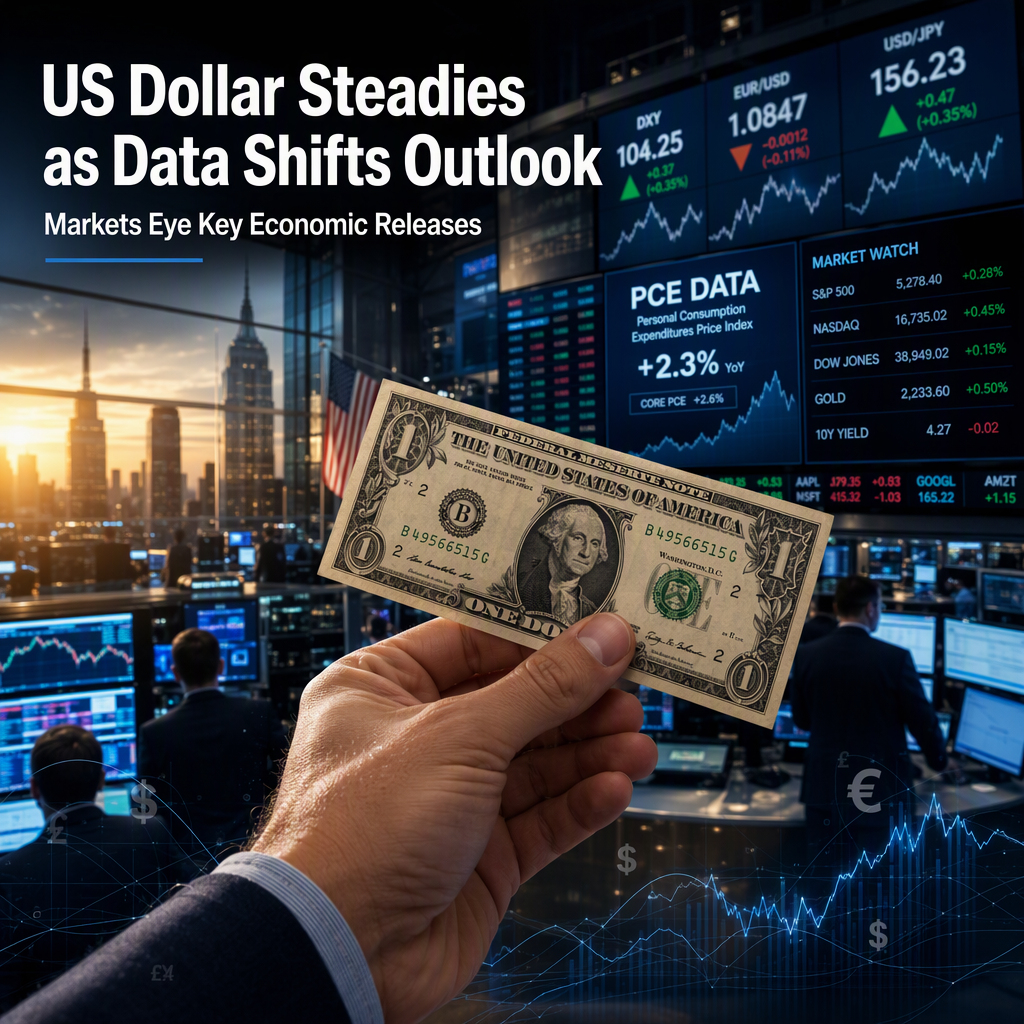
The US Dollar (USD) experienced marginal gains, reaching daily highs near 101.50 before coming under pressure as investors digested softer-than-expected Personal Consumption Expenditures (PCE) data for August. This data prompted market participants to trim bets on further tightening by the Federal Reserve in the coming months, though the US Dollar Index (DXY) managed to revisit the 101.50 region, contributing to a weekly recovery supported by rising US Treasury yields [1].
Market attention is focused on several upcoming US economic indicators, including the weekly Initial Jobless Claims, Challenger Job Cuts, ISM Manufacturing, the final S&P Global Manufacturing PMI, and Construction Spending. Additionally, speeches from Federal Reserve officials Kashkari, Barkin, Collings, Schmid, and Williams are anticipated, which could provide further insight into the Fed's policy outlook [1].
In the currency markets, EUR/USD maintained its bearish bias, quickly reversing an early move toward 1.1380 and settling back into the 1.1340-1.1330 range. The final S&P Global Manufacturing PMI for Germany and the Eurozone, as well as the Eurozone Unemployment Rate, are due for release. The European Central Bank's Lagarde, Cipollone, Machado, Montagner, and Schnabel are also scheduled to speak [1]. GBP/USD briefly advanced past 1.3300 before slipping to the 1.3260 zone, with the final S&P Global Manufacturing PMI as the main data point for the UK [1].
Elsewhere, USD/JPY traded in the low 157.00s, reflecting a continued sidelined mood ahead of the Bank of Japan's Summary of Opinions and other key Japanese economic data. AUD/USD faced additional downside pressure, falling toward 0.6950, marking new two-month lows, with upcoming Australian manufacturing and trade data in focus [1].
In commodities, front-month WTI crude futures regained momentum but stalled just below $92.00 per barrel amid ongoing US-Iran tensions and declining US stockpiles. Gold, after rising past $4,200 per troy ounce following the PCE release, retreated to the $4,150 region as the US Dollar recovered and Treasury yields climbed [1].
CONCLUSION
The US Dollar's modest gains reflect a cautious market response to softer PCE data and shifting expectations for Federal Reserve policy. Upcoming economic releases and central bank commentary are likely to influence near-term market direction, while currency and commodity markets remain sensitive to evolving macroeconomic signals.