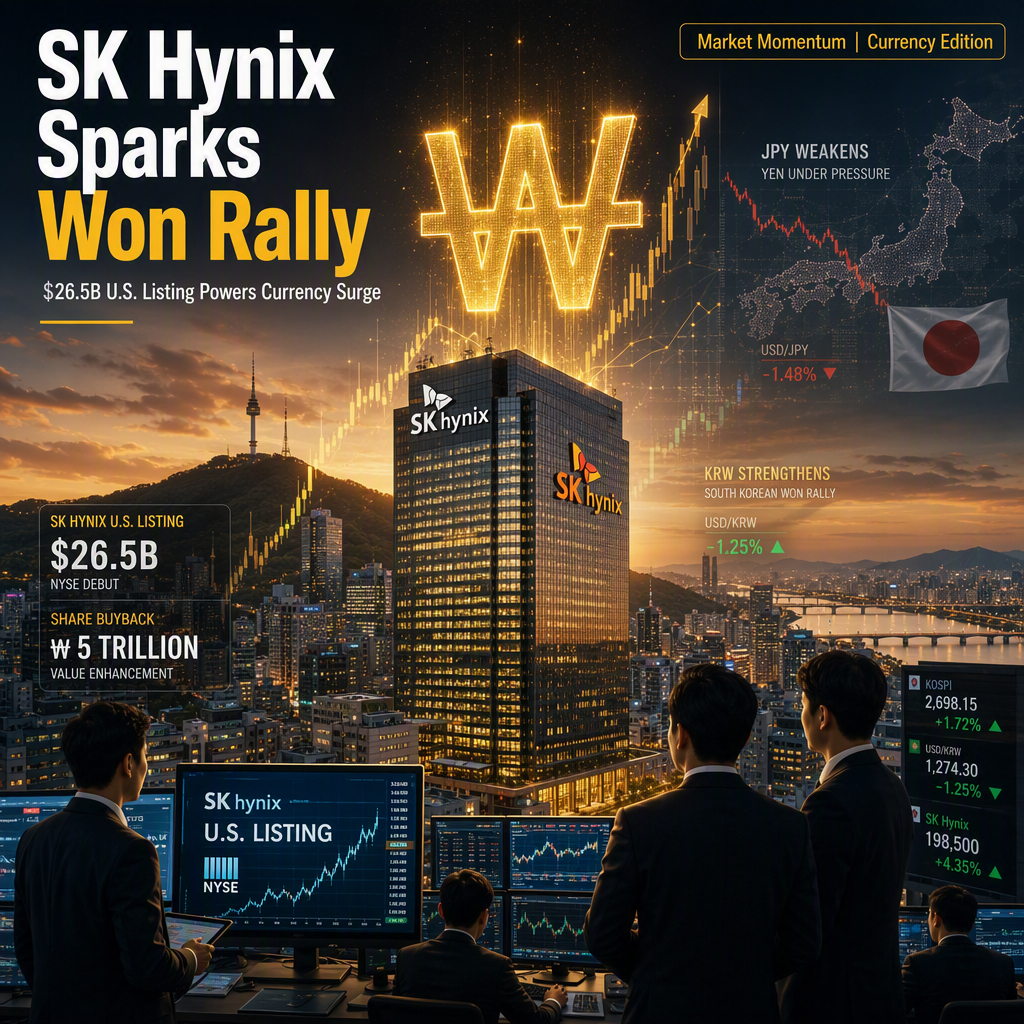
The South Korean won has rallied on foreign exchange markets, driven by SK Hynix's successful U.S. listing and a series of policy measures aimed at strengthening the currency. SK Hynix raised $26.5 billion through its U.S. listing, which has provided a significant boost to the won as large amounts of capital flow back into South Korea. In addition, SK Hynix announced a $28.6 billion buyback plan to support its stock price, further encouraging repatriation and investment in domestic assets [1].
The South Korean government has been actively encouraging exporters to repatriate overseas profits, adding further upward pressure on the won. The Bank of Korea's back-to-back interest rate hikes, implemented in response to inflation, have also reinforced the won's position against the U.S. dollar. Market analysts attribute the won's rally to robust export performance and these supportive policy measures, noting that technical indicators show resistance levels being tested [1].
In contrast, the Japanese yen has weakened, with Japan conducting $96 billion in yen-buying interventions during July and August. Despite these efforts, the yen continues to face volatility, prompting speculation about further interventions and discussions of a potential 'new Plaza Accord' as Japan seeks to counteract yen weakness [1].
Traders are closely monitoring support and resistance levels for the won, with its appreciation sustained by strong fundamentals. There is further upside potential if export momentum continues and the repatriation of funds remains robust [1].
CONCLUSION
SK Hynix's major U.S. listing and buyback plan, combined with central bank rate hikes and exporter repatriation policies, have significantly strengthened the South Korean won. The currency's rally sets it apart from the yen, which remains under pressure despite official interventions. Market participants see continued upside for the won if current trends persist.