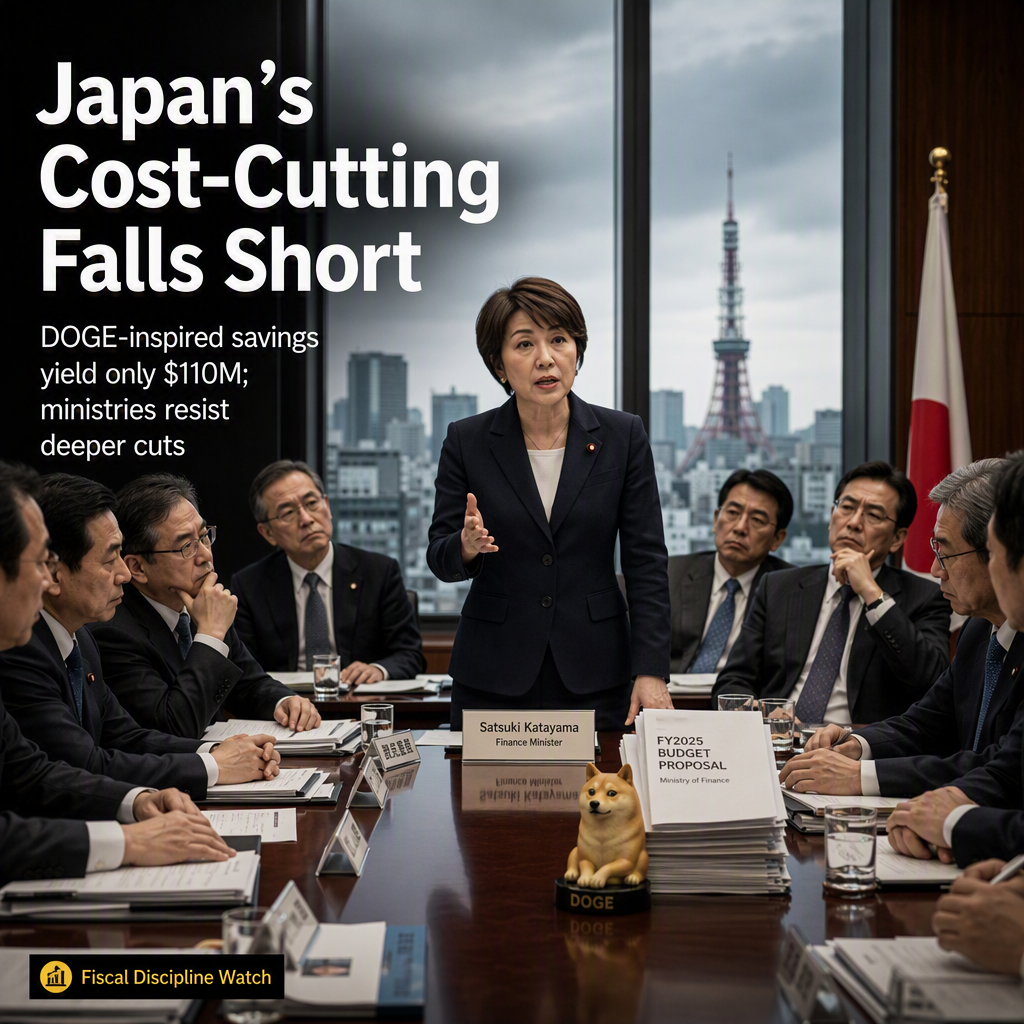
The Japanese government's attempt to rein in spending through a cost-cutting initiative modeled after the U.S. DOGE budget efficiency program has resulted in proposed budget cuts totaling just 17 billion yen ($110 million) so far [1]. Finance Minister Satsuki Katayama addressed cabinet ministers during a meeting focused on reviewing special tax measures and subsidies, emphasizing the need for further reductions [1].
Despite the initiative's goal of streamlining government spending and enhancing fiscal discipline, the savings achieved to date are considered modest and represent only a small fraction of what would be necessary to significantly impact Japan's overall budget [1]. There was no detailed breakdown provided regarding which programs would be affected by the proposed cuts, and ministries have reportedly shown reluctance to implement deeper reductions [1].
The Finance Ministry has been tasked with identifying additional programs for elimination as part of the ongoing budget review process. The ministry is expected to intensify its scrutiny and seek further measures to achieve more substantial savings in the future [1].
CONCLUSION
Japan's DOGE-inspired cost-cutting initiative has so far produced only limited savings, with ministries resisting deeper reductions. The Finance Ministry is expected to pursue further measures, but the current impact on the national budget remains modest.