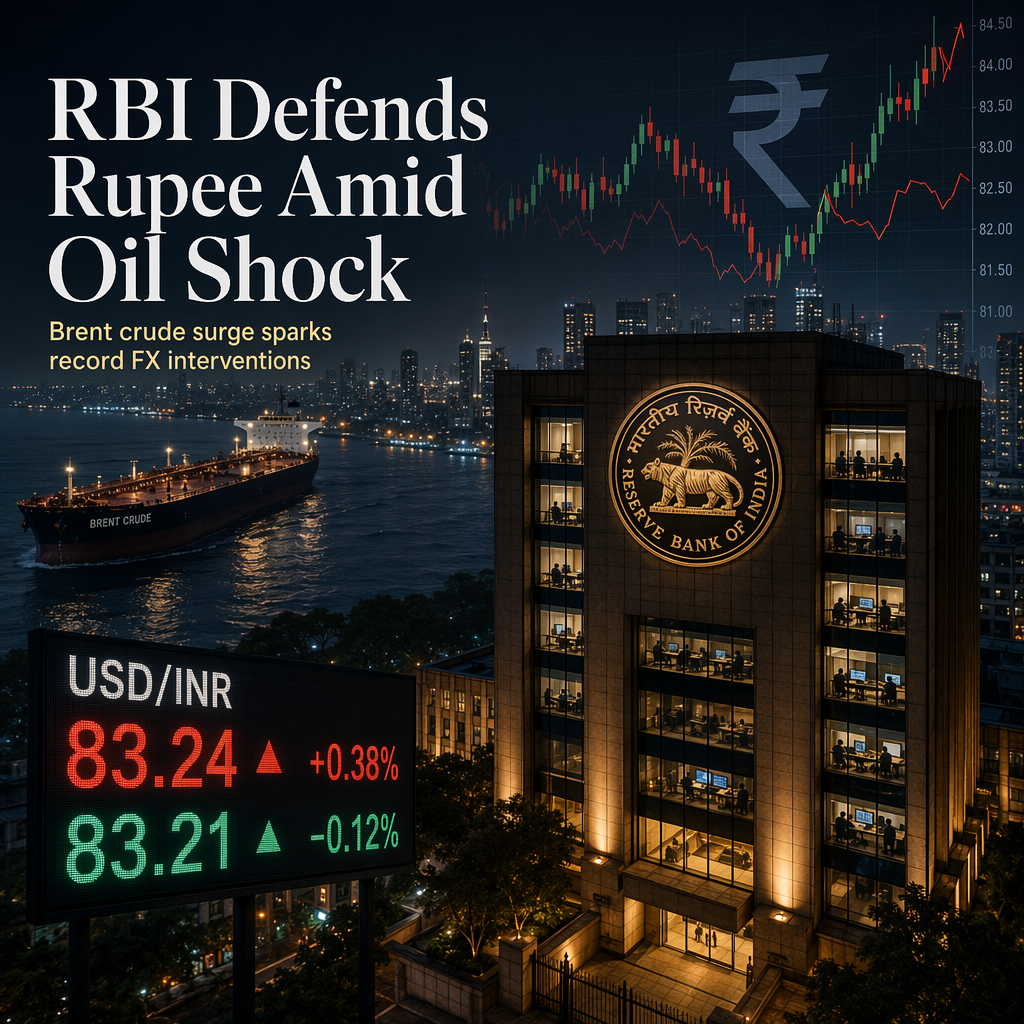
Societe Generale’s Asian FX strategists, including Santosh Ejanthkar and Tanmay Purohit, report that the Indian Rupee (INR) is at risk of retesting its record low near 96.9550/USD, a level last observed on May 20, following a rise in Brent crude oil prices above $90 per barrel [1]. In response to this pressure, the Reserve Bank of India (RBI) has intensified its foreign exchange intervention in both offshore and onshore markets to defend the currency [1].
To bolster the INR and address external funding concerns, the RBI has attracted over $20 billion in inflows since early June through various channels. Specifically, FCNR(B) deposits have brought in $17.4 billion, external commercial borrowings have contributed $1.34 billion, and overseas foreign currency borrowings by banks have added $1.97 billion [1]. The Indian government has set a target of approximately $90 billion in total inflows, which is significantly higher than prevailing market expectations [1].
These substantial inflows are expected to ease near-term external funding pressures and are viewed as net positive for the INR. However, ongoing risks related to Middle East tensions continue to weigh on the currency’s outlook [1].
CONCLUSION
The RBI’s aggressive intervention and successful attraction of foreign inflows have provided near-term support for the Indian Rupee amid rising oil prices. While these measures are expected to ease funding concerns, geopolitical risks in the Middle East remain a key challenge for the currency.