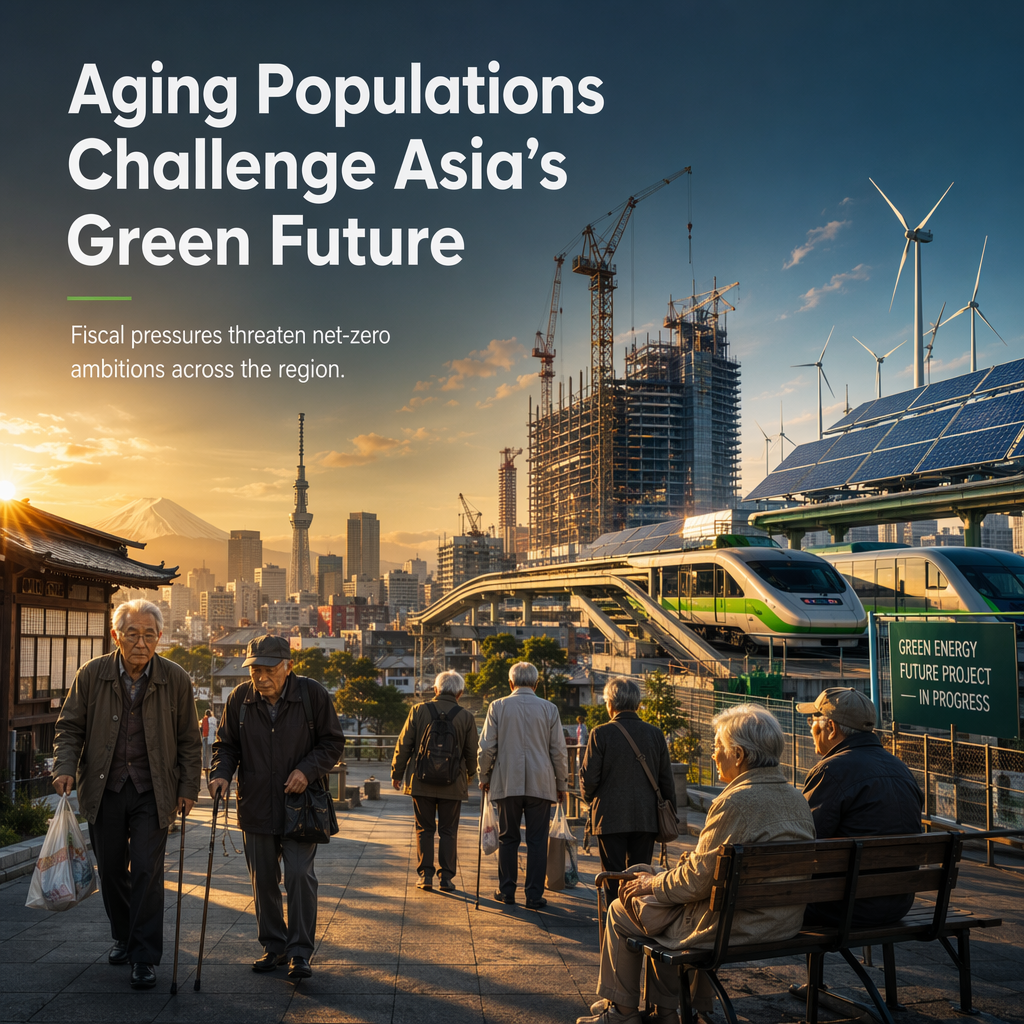
Asia-Pacific economies are facing a significant challenge as they attempt to reduce carbon emissions and shift to greener energy sources: the region's rapidly aging population is increasing fiscal pressures that could derail capital-intensive energy transitions [1]. The International Energy Agency (IEA) estimates that Asia will need to invest trillions of dollars in clean energy infrastructure over the next two decades to meet net-zero targets [1]. However, countries such as Japan, South Korea, China, and parts of Southeast Asia are experiencing rising pension and healthcare costs, which may limit the capital available for energy transition projects that require substantial upfront investment and long-term planning [1].
Japan already allocates more than 25% of its annual budget to social security, with costs expected to rise as its elderly population grows. The World Bank projects that by 2050, over a third of Japan's population will be aged 65 or above [1]. In China, the working-age population has begun to shrink, and the United Nations forecasts that nearly a quarter of Chinese citizens will be over 60 by mid-century [1]. An energy economist based in Singapore notes that while aging societies may consume less energy per capita, they also reduce the tax base and government revenues needed to fund the green transition [1].
Many Asian countries also contend with lower per-capita incomes and higher infrastructure needs compared to Western economies, intensifying the challenge. The economist warns that governments may be forced to prioritize short-term social spending over long-term climate goals [1]. The IEA’s 2023 World Energy Outlook cautions that delayed investment in clean power generation and grids could lock in fossil-fuel dependence, making net-zero targets more difficult to achieve [1].
While private capital could help bridge the funding gap, investors typically seek stable returns, and many green projects in emerging Asia carry policy or market risks. Tim Daiss suggests that financing models will need to evolve, with greater use of green bonds, blended finance, and public-private partnerships [1]. Ultimately, the success of Asia’s energy transition may depend on how well the region manages the demographic headwinds that threaten to slow the flow of capital toward a greener future [1].
CONCLUSION
Asia’s aging population is creating fiscal pressures that could impede the region’s transition to clean energy, despite the urgent need for investment. Without innovative financing solutions and effective management of demographic challenges, Asia risks falling behind in global decarbonization efforts.