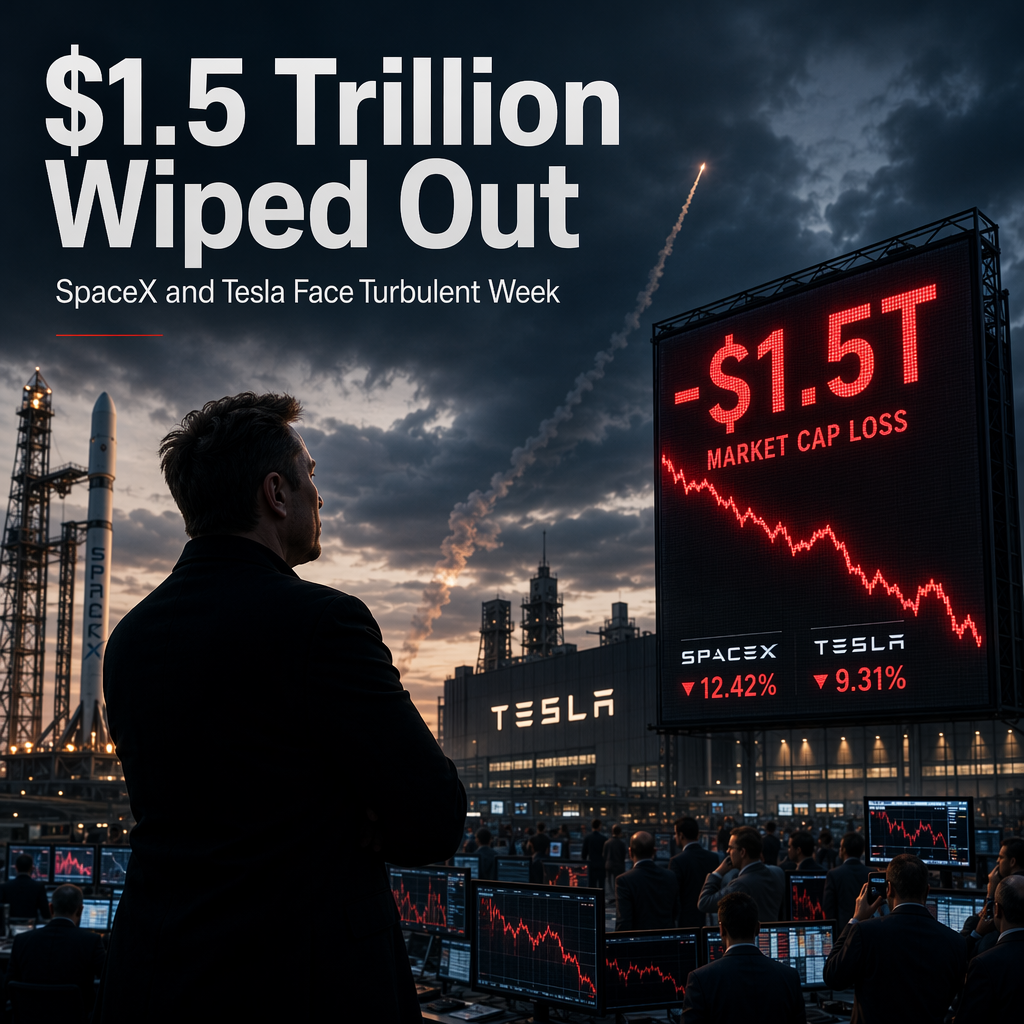
Elon Musk's companies, SpaceX and Tesla, have experienced a significant decline in market capitalization, erasing a combined $1.5 trillion since mid-June. This downturn includes an almost 50% sell-off in SpaceX from its high and an 18% drop in Tesla's value since its earnings report last week [1].
The situation is expected to become even more volatile next week, as options pricing around SpaceX's upcoming earnings report on Tuesday suggests a potential 15% swing in the stock. The implied volatility for SpaceX stands at 122, which is higher than any company in the S&P 500 except SanDisk, which recently dropped 16% [1]. Following the earnings report, SpaceX will trigger its unique lock-up period, allowing insiders to sell more than 900 million shares—representing 20% of their eligible locked-up stock—two days after earnings [1].
This early lockup presents a complex scenario for options traders, who typically expect implied volatility to decrease after earnings. However, if insiders begin selling shares, volatility could remain high or even increase post-earnings. The implied volatility of SpaceX contracts expiring August 7 is 160, compared to 55 for Tesla, which currently trades with an implied volatility of 52 [1].
Despite the recent decline, SpaceX traders have shown continued optimism, with more call options traded daily than puts. On Tuesday, nearly 100,000 calls were bought compared to 46,000 puts. The most popular contract by volume was the 330-strike calls expiring next Friday, with $770,000 traded across 21,000 trades. However, larger traders are showing more caution, as evidenced by the 130-strike call expiring in November, which traded just 5,400 times but for $8.7 million in premium [1].
CONCLUSION
SpaceX and Tesla have faced a dramatic $1.5 trillion market cap loss, with further volatility expected around SpaceX's earnings and lockup period. While retail traders remain optimistic, larger investors are approaching the situation with increased caution, signaling ongoing uncertainty in the market.