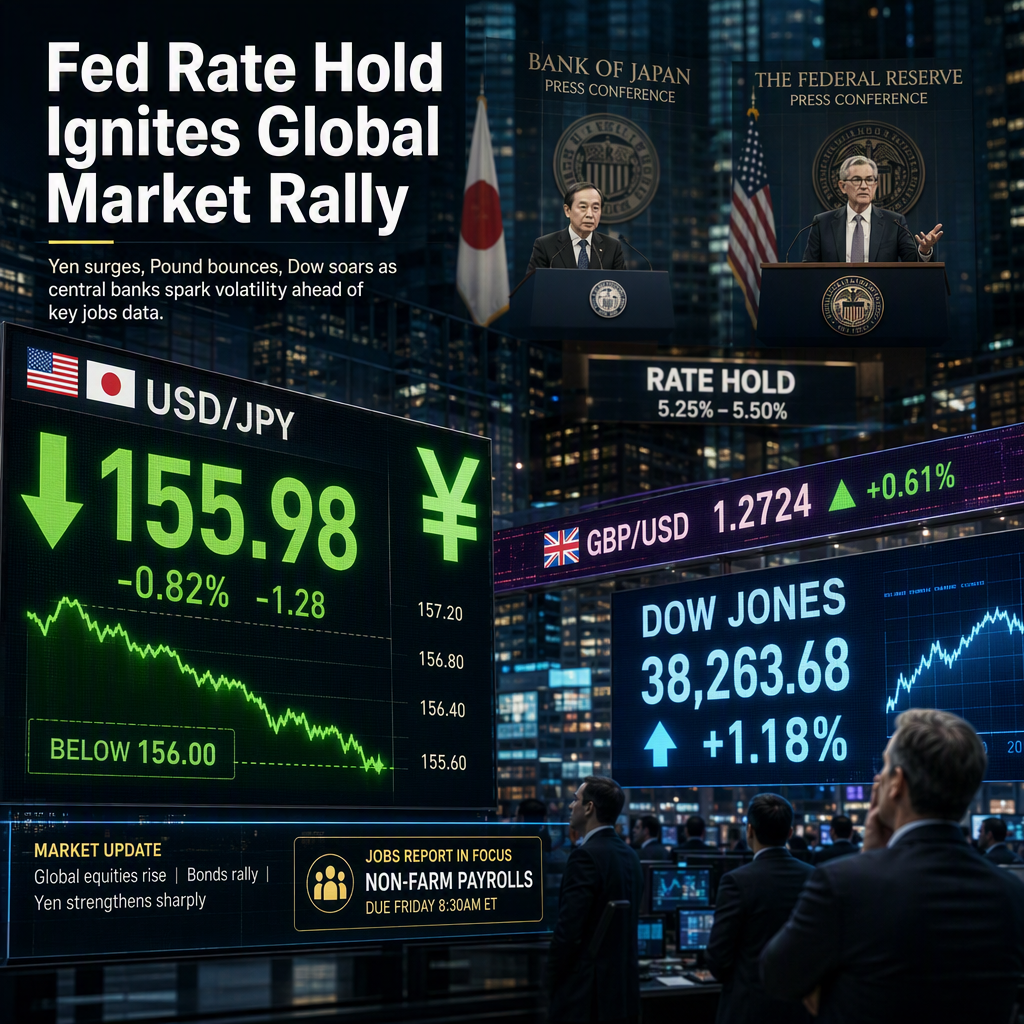
A pivotal shift in central bank policy expectations triggered significant moves across major markets on Thursday. The Japanese Yen rallied sharply, with USD/JPY dropping from just above 160.00 to below 156.00, marking a 3.7-Yen decline and passing through the 200-day EMA near 158.00 without pause. This move occurred without any reported intervention, contrasting with Japan's previous record ¥15.4 trillion ($98 billion) currency purchases between July 30 and August 26, which had failed to sustain such a rally. The Bank of Japan's hawkish signals, including a board member advocating nimble hikes and the Governor emphasizing upside price risks, led markets to fully price a quarter-point increase at the September 17-18 meeting, with expectations for a faster pace of tightening than previously assumed. Tokyo's top currency official described the Yen's rally as 'neither satisfying nor reassuring,' indicating a preference for even lower USD/JPY levels and ongoing vigilance from the finance ministry [1].
Simultaneously, the British Pound (GBP/USD) bounced near 1.3530, up about 0.3%, after the Bank of England's chief economist argued for a prompt rate hike from 3.75% to 4% in an Edinburgh speech. Despite being outvoted 6-3 in July, the minority's case for tightening, based on headline inflation at 2.9% and a projected peak near 3.2% in Q4, briefly lifted GBP/USD by forty pips. The market responded to the persistent dissent, even as the Governor maintained a wait-and-see stance, and the relief rally was seen as tentative pending further confirmation [2].
The Dow Jones Industrial Average (DJIA) surged nearly 1.2%, closing just under 53,700, its strongest session since August 4. The rally followed a Fed governor's statement supporting a rate hold at the September 15-16 meeting if inflation data remain favorable, which dropped September hike odds to 50.4% from 63.2%. The 10-year Treasury yield settled at 4.77%. The ISM services PMI beat expectations at 55.4 (consensus 54.3), with prices paid rising to 72.6 from 70.3, yet the Dollar Index weakened, and equities continued their ascent. Political pressure was evident, with Vice President JD Vance urging the Fed to lower rates to support home affordability, while Fed hawks and dissenters maintained calls for tightening. The July FOMC vote was 9-3 in favor of a hold, but the equity market's rally was seen as a bet on a compromise, with risks looming ahead of Friday's nonfarm payrolls report [3][2].
Looking forward, Friday's nonfarm payrolls report (consensus 56K after a 23K July loss, unemployment rate seen at 4.1%, average hourly earnings at 0.3% MoM and 3% YoY) is expected to be pivotal. Analysts note that a weak print would not support a rate hold, as the Fed Chair prioritizes prices, while a strong print could revive rate hike odds above 60% and reinforce hawkish dissenters' arguments [1][3].
CONCLUSION
Central bank policy signals, particularly from the Fed and Bank of Japan, drove sharp rallies in the Yen, Pound, and US equities, with markets pricing in a more dynamic rate outlook. However, the sustainability of these moves hinges on upcoming economic data, especially Friday's US payrolls report, which could quickly reverse sentiment and rate expectations. Investors remain alert to both policy and data-driven risks, as the current market positioning is highly sensitive to central bank actions.