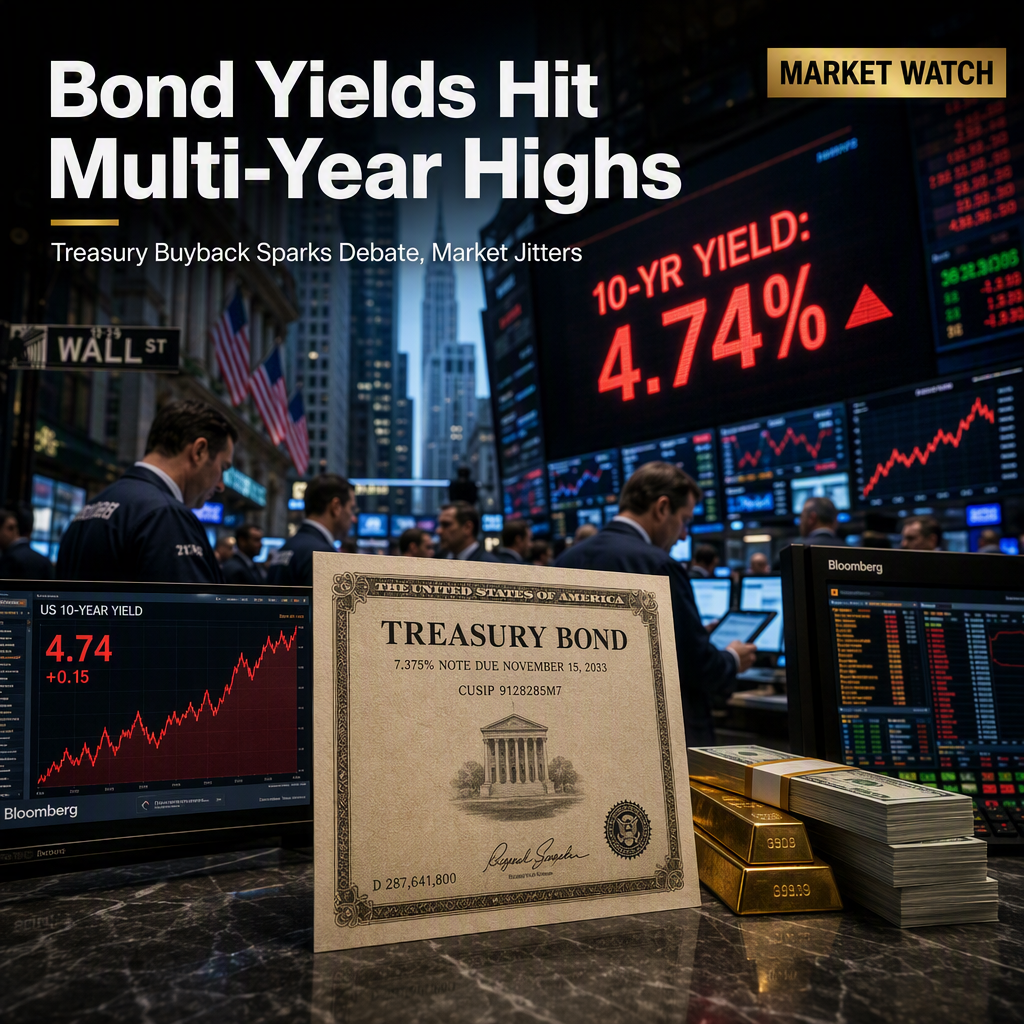
The recent surge in bond yields has drawn significant attention, with the 10-year Treasury yield rising by 4 basis points to 4.74% last week, a level it has reached a few times over the past three years, though only briefly each time [1]. This increase in yields comes as the bond market responds to strong demand for debt from governments and companies, pushing borrowing costs to multi-year highs [1]. Despite these higher yields, the impact on capital-raising and corporate investment has been limited so far, though there are concerns that other sectors, such as housing and consumer spending, could be negatively affected [1].
In response to the rising yields, Treasury Secretary Scott Bessent expanded an existing program to buy back small amounts of less-liquid government debt in the open market last week [1]. This move was met with criticism from market participants, who viewed it as either ineffective or inappropriate, especially given Bessent's previous criticism of his predecessor for similar actions [1]. The initial drop in yields following the announcement was quickly reversed, but the U.S. dollar saw sharp declines and gold prices jumped, which some interpreted as a vote of no confidence in the current financial-policy leadership [1].
Veteran technical strategist Rick Bensignor suggested that technology stocks may have peaked in relative terms, and that healthcare and financials are now better positioned [1]. Despite the rise in Treasury yields, the yield on investment-grade corporate debt remains below its peak from a few years ago due to tight spreads over Treasuries [1]. Nominal GDP growth is currently running near 5-6%, which may justify the current level of 10-year yields [1].
Market participants remain uneasy about the U.S.'s ability to finance structural deficits, with concerns flaring up during periods of market stress, such as the current environment of high capital expenditures and inflationary pressures [1]. However, the absolute level of yields is not yet broadly punitive to large companies or equity values [1].
CONCLUSION
The recent rise in bond yields has sparked debate and concern, but the overall impact on major companies and equity valuations remains limited for now. Treasury actions to restrain yields have met with skepticism, and market participants continue to monitor the situation for signs of broader economic stress.