
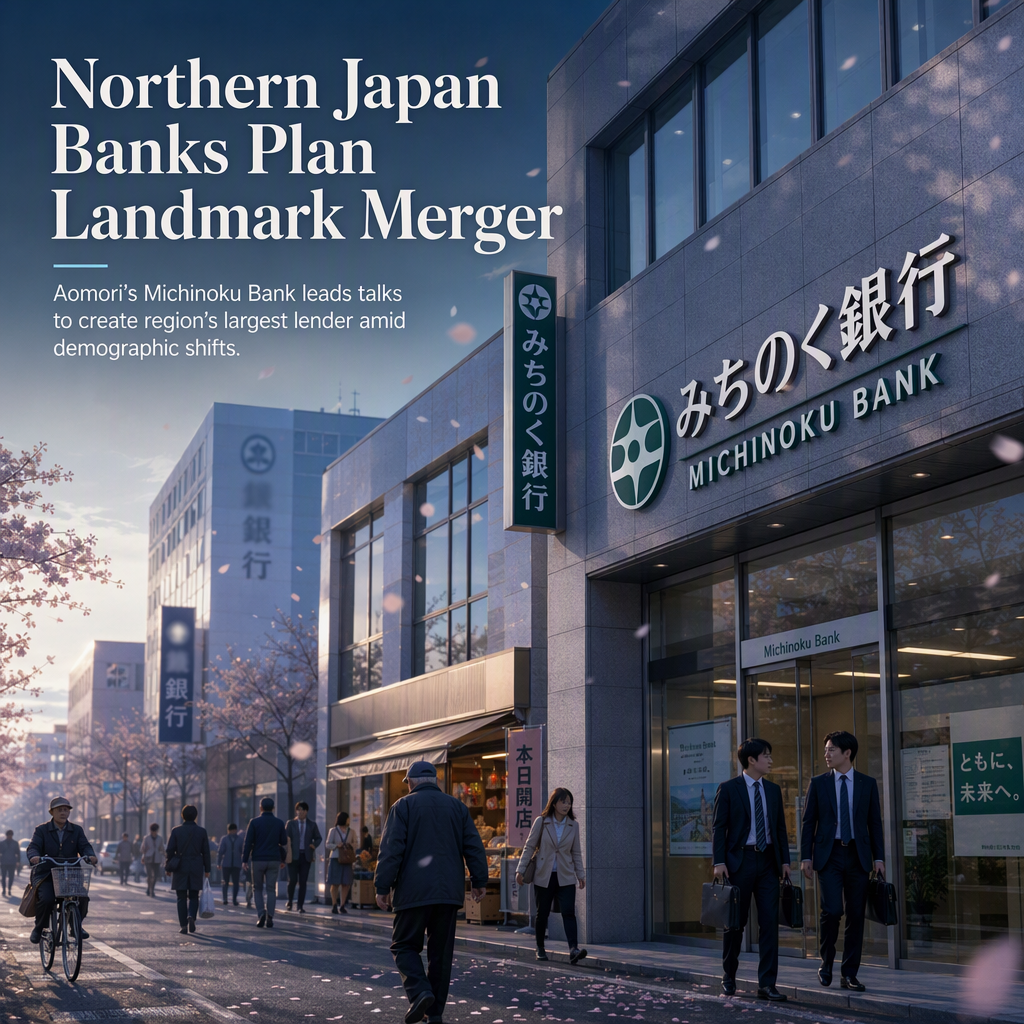
Three local banks in northeastern Japan, including Aomori-based Michinoku Bank, are set to begin discussions on a potential merger that would create the largest lender in the region [1]. The merger aims to address the challenges posed by rapid population decline, shrinking customer bases, and reduced loan demand, which are pressuring Japanese regional banks [1]. By combining their operations, the banks seek to strengthen their financial position, enhance efficiency through consolidation of overlapping operations, and streamline management structures [1].
The names of the other two participating banks have not been disclosed, and specific financial terms or a timeline for the merger talks have yet to be announced [1]. Industry analysts cited in the article note that such consolidations are increasingly common among regional banks in Japan, as they adapt to a tough operating environment driven by demographic changes [1].
The merger is viewed as a proactive measure to ensure the long-term sustainability of the banks and maintain access to financial services in rural areas most affected by population decline [1]. Further details regarding the structure of the merged institution, including shareholding ratios, management appointments, and integration strategies, are expected to be released as negotiations progress [1].
CONCLUSION
The planned merger of three northern Japan banks, including Michinoku Bank, represents a strategic response to demographic and economic pressures in the region. While key details remain undisclosed, the move signals a trend toward consolidation among regional lenders to ensure sustainability and competitiveness.