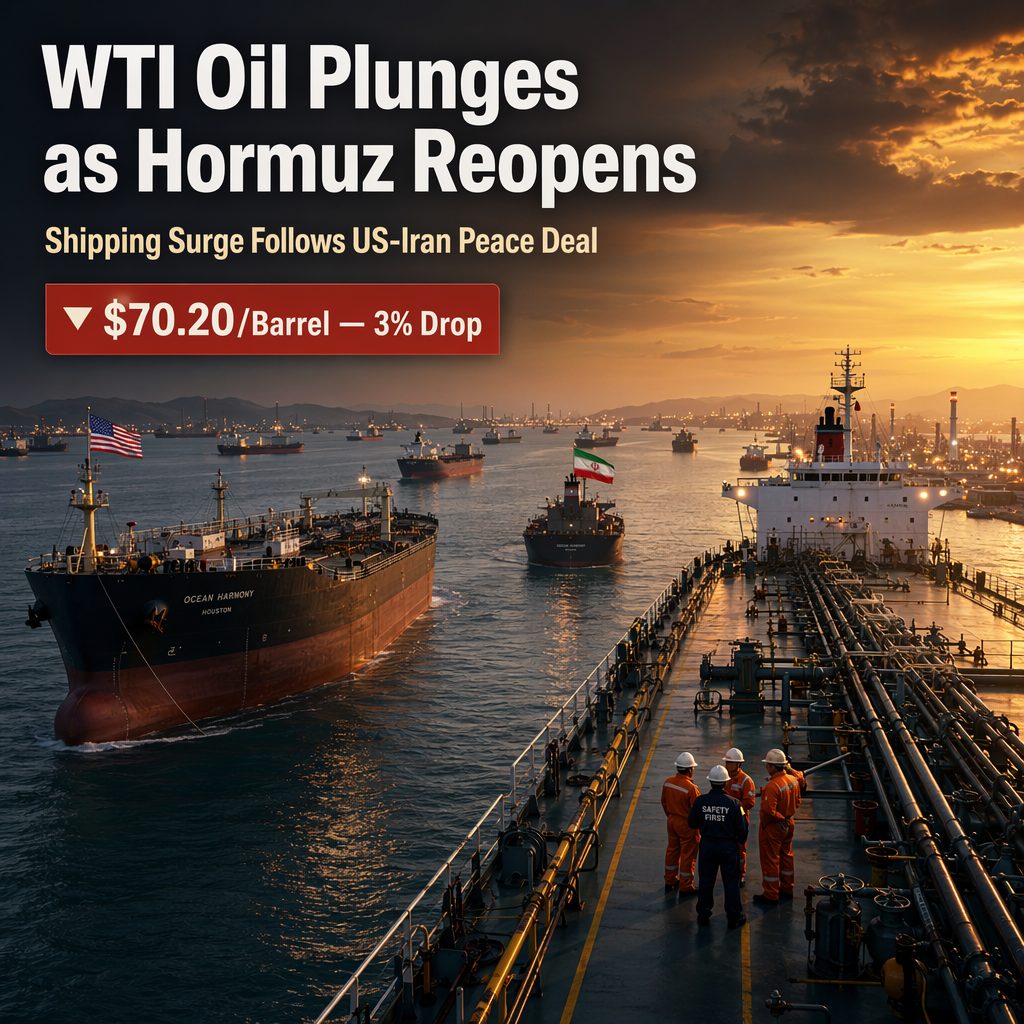
West Texas Intermediate (WTI) crude oil extended its decline on Wednesday, falling more than 3% to around $70.20 per barrel, marking its lowest level since early March when the US-Iran war began [1]. The drop comes as stranded crude cargoes in the Strait of Hormuz gradually return to the market following an interim peace agreement between the United States and Iran [1]. WTI has erased almost all of its Middle East war-driven gains as fears of supply disruptions fade, and the US decision to temporarily lift oil sanctions on Iran is expected to bring additional crude supplies to global markets [1].
US Energy Secretary Chris Wright stated that approximately 72 ships exited the Strait of Hormuz in the last 24 hours, carrying 20 million barrels of oil. He also noted that a full return to normalcy in Hormuz will take a few weeks [1]. Despite progress in the latest US-Iran talks, disagreements remain over Iran's nuclear program and the future of the Strait of Hormuz [1]. Tehran has emphasized that the Strait is unlikely to return to its pre-war status quo, with Iran and Oman expected to impose toll charges on vessels transiting the waterway [1]. US President Donald Trump warned that negotiations could collapse if Iran proceeds with plans to charge tolls [1].
On the data front, a sharp drop in US crude inventories provided little support to oil prices. The Energy Information Administration (EIA) reported that crude stockpiles fell by 6.088 million barrels last week, compared to expectations for a 5.1 million-barrel decline. However, this draw was smaller than the previous week's 8.262 million-barrel decrease [1].
Overall, the normalization of shipping through Hormuz and the potential for increased Iranian oil supply have weighed heavily on WTI prices, overshadowing bullish inventory data and ongoing geopolitical uncertainties [1].
CONCLUSION
WTI crude oil prices have fallen sharply as supply fears ease and shipping through the Strait of Hormuz normalizes following an interim US-Iran peace agreement. The market is reacting to the prospect of increased oil supply and lingering geopolitical risks, resulting in high volatility and a negative sentiment for oil prices.