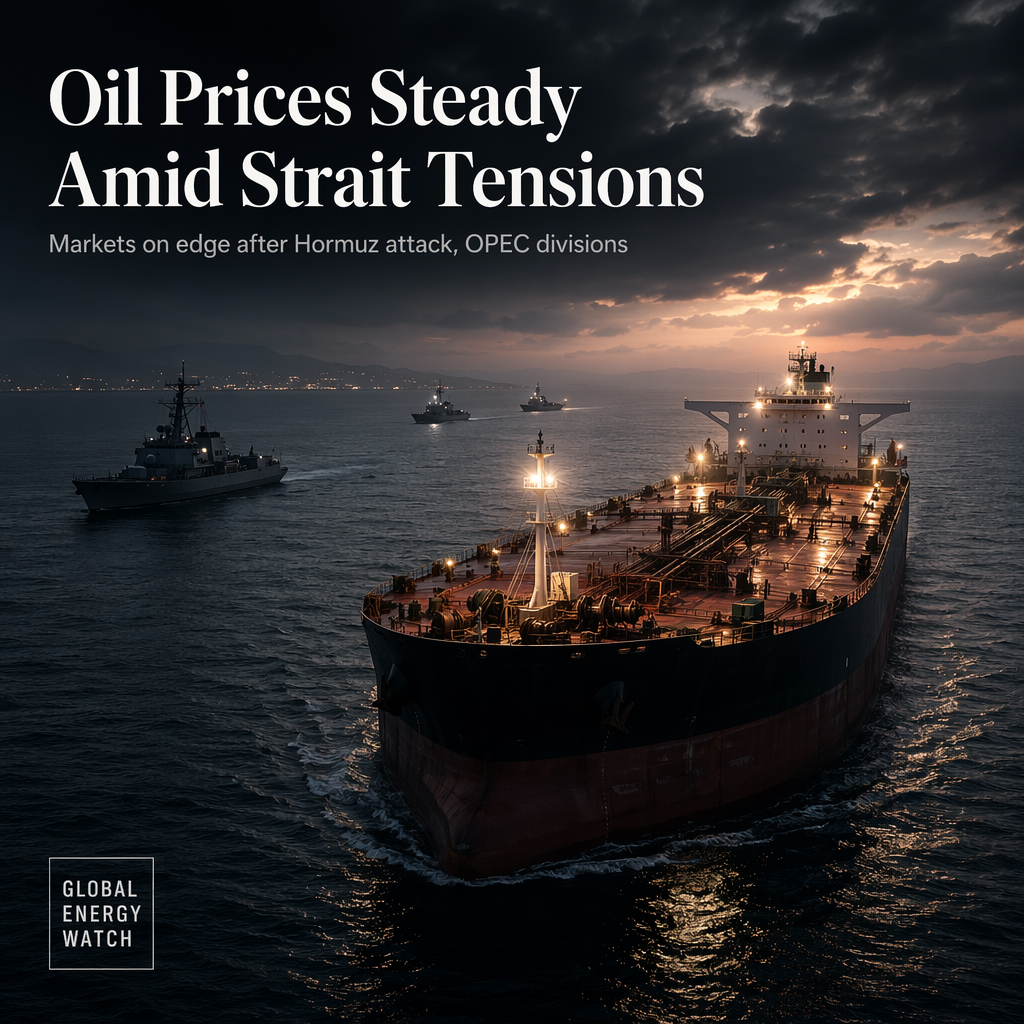
West Texas Intermediate (WTI) crude oil prices remained firm around $71.50 per barrel during Asian trading hours on Friday, marking the second consecutive day of gains following a suspected projectile attack on a cargo vessel near Oman in the Strait of Hormuz [1]. The incident, reportedly involving Iranian forces firing on a Singapore-flagged ship, has heightened concerns over the security of one of the world's busiest oil shipping lanes and the global energy supply [1][2]. The United Nations’ International Maritime Organization suspended its operations to guide ships safely through the corridor, raising fears that a preliminary agreement to end the war with Iran may be at risk [1]. Iranian authorities subsequently warned that the security of vessels outside designated Hormuz shipping routes is no longer guaranteed [1].
The geopolitical tension coincided with the conclusion of US Secretary of State Marco Rubio’s diplomatic tour of the Middle East, during which he assured Gulf allies that any finalized agreement with Iran would protect their regional security interests [1]. Meanwhile, fresh disagreements between Tehran and Washington emerged over the use of funds listed in their memorandum of understanding. The speaker of Iran's parliament rejected claims by the Trump administration that unfrozen Iranian assets would be used to purchase U.S. agricultural products, while U.S. officials insisted that any released funds would remain subject to American approval [2]. Vice President JD Vance reiterated that if Iranian assets are released, they will be used to purchase American agricultural products [2].
Further uncertainty in the energy landscape stems from OPEC dynamics. Following the United Arab Emirates' exit from OPEC in April, Iraq, the cartel's second-largest oil exporter, is reportedly seeking a higher output quota and has warned the group it could leave if demands are not met [2]. However, Iraq's oil ministry later clarified that reports suggesting Baghdad could end its membership in OPEC "did not reflect the Iraqi government's official position," though it emphasized the need to review production quotas [2].
Market reactions have been pronounced, with oil prices surging on renewed supply anxieties. The broader equity market, particularly technology stocks, showed mixed performance, with Micron surging 15% on strong earnings, while Asian chip stocks and Apple faced declines due to investor concerns and price hikes [2].
CONCLUSION
The attack on a cargo vessel in the Strait of Hormuz and rising tensions between Iran and the US have triggered renewed concerns over global oil supply, supporting WTI prices. OPEC uncertainty, particularly regarding Iraq's position, adds further volatility to the energy market. Overall, the event has had a high market impact, with oil prices responding positively to supply risks.